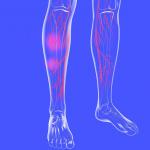


Your legs contain a complex network of veins working together every day to move blood back toward your heart. Among the most important and often least talked about is the small saphenous vein (SSV). This superficial vein runs along the back of your lower leg and plays a meaningful role in your circulation. When it does not function as it should, it can contribute to varicose veins, leg discomfort, and other signs of underlying vein disease.
Understanding the small saphenous vein, where it is, what it does, and what can go wrong, can help you recognize symptoms earlier and make more informed decisions about your vein health.
Where Is the Small Saphenous Vein Located?
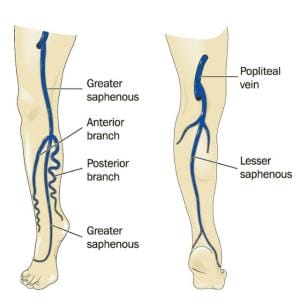
The small saphenous vein is a superficial vein, meaning it sits close to the surface of the skin rather than deep within the muscle tissue. It runs along the posterior (back) surface of the lower leg, the region most people recognize as the calf.
How the SSV runs from the ankle to the knee
The SSV begins at the outer edge of the foot near the lateral malleolus, the bony bump on the outside of your ankle. From there, it travels upward along the back of the calf. As it ascends, it passes between the two heads of the gastrocnemius muscle before entering the popliteal fossa, the soft area behind the knee.
In most people, the SSV terminates by joining the popliteal vein just above where the gastrocnemius heads diverge. This junction is called the saphenopopliteal junction (SPJ). The exact location of the SPJ can vary considerably from person to person, which is a key reason that accurate ultrasound mapping is essential before any treatment.
How the SSV connects to deeper veins
The small saphenous vein does not work in isolation. It receives blood from tributaries draining the lateral surface of the calf and from the dorsal venous arch of the foot. In many individuals, the SSV also gives rise to a branch called the vein of Giacomini, which extends upward into the thigh and may connect with the great saphenous vein or other deep veins.
The SSV also runs alongside the sural nerve, a sensory nerve in the lower leg, for much of its course. This anatomical relationship is clinically important and is one reason why precise, ultrasound-guided techniques are preferred when evaluating and treating SSV disease.
What Does the Small Saphenous Vein Do?
Like all veins, the small saphenous vein carries deoxygenated blood back toward the heart. Specifically, it drains blood from the outer (lateral) surface of the lower leg and foot, channeling it into the popliteal vein and ultimately back into the body’s central circulation.
How vein valves keep blood moving in the right direction
The small saphenous vein contains between 9 and 12 one-way valves along its length. These tiny flap-like structures open to allow blood to move upward and close to prevent it from falling backward due to gravity.
When these valves are healthy, blood flows efficiently from the feet and lower leg toward the heart. When they weaken or fail, a process called venous reflux, blood can flow backward and pool in the vein. Over time, this pooling increases pressure within the vessel and can lead to visible and physical symptoms.
Small Saphenous Vein vs. Great Saphenous Vein: What Is the Difference?
Both the small saphenous vein and the great saphenous vein (GSV) are superficial veins of the leg, and both can be affected by venous insufficiency. Here is how they compare:
| Small Saphenous Vein (SSV) | Great Saphenous Vein (GSV) | |
|---|---|---|
| Location | Back of lower leg (posterior) | Inner leg, ankle to groin (medial) |
| Path | Lateral ankle to back of calf to behind-knee junction | Medial ankle to inner leg to groin |
| Drains into | Popliteal vein at the saphenopopliteal junction | Femoral vein at the saphenofemoral junction |
| Drains blood from | Lateral and posterior lower leg and foot | Medial leg, thigh, and foot |
| Length | Shorter: lower leg only | Longer: entire leg; longest vein in the body |
| Disease frequency | About 10 to 20 percent of superficial vein insufficiency cases | About 80 to 85 percent of superficial vein insufficiency cases |
Both veins can contribute to similar symptoms, and in some patients, both are affected at the same time. A duplex ultrasound evaluation can identify which vein, or which combination of veins, is the source of a patient’s symptoms.
What Can Go Wrong with the Small Saphenous Vein?
What is small saphenous vein reflux?
SSV reflux occurs when the valves inside the small saphenous vein weaken or stop closing properly, allowing blood to flow backward. This backward flow, called venous reflux, causes blood to pool in the lower leg. Over time, this raises pressure within the vein and its tributaries.
SSV reflux accounts for approximately 10 to 20 percent of all superficial venous insufficiency cases. While less common than great saphenous vein reflux, it is an important and often overlooked cause of leg symptoms and varicose veins, particularly those appearing along the back or outside of the calf.
Symptoms associated with SSV disease
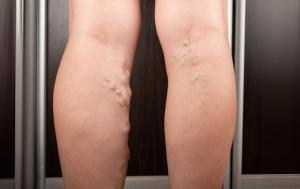
Symptoms from SSV insufficiency can be easy to miss or attribute to other causes. Common signs may include:
- Aching, heaviness, or fatigue in the back of the lower leg, especially toward the end of the day or after prolonged standing
- Varicose veins appearing on the back or outer surface of the calf
- Visible or bulging veins behind the knee
- Swelling in the lower leg or ankle, particularly on the outer side
- Skin changes on the lateral ankle, including discoloration or irritation
- Cramping or restlessness in the lower leg, especially at night
Symptoms of SSV reflux tend to concentrate in the posterior and lateral calf rather than the inner leg. In some cases, symptoms occur without any visible varicose veins, which is why an ultrasound evaluation is the most reliable way to identify the source of the problem.
For more on how chronic venous insufficiency progresses, see our guide to superficial versus deep vein disease.
If you are experiencing aching, heaviness, or swelling in the back of your calf, a vein evaluation can help identify whether the small saphenous vein may be involved. Schedule a consultation at a USA Vein Clinics location near you.
Why SSV disease is often overlooked
SSV insufficiency is less well-known than GSV disease, both among patients and historically in clinical settings. Several factors contribute to this:
- The SSV runs along the back of the leg, where varicose veins may be harder to notice without specifically looking.
- Symptoms may be attributed to muscle soreness, sciatica, or general leg fatigue rather than vein disease.
- The location of the SSV termination point, the saphenopopliteal junction, varies significantly between individuals, which means it requires ultrasound confirmation rather than anatomical assumption.
What happens if small saphenous vein reflux is left untreated?
SSV reflux tends to worsen gradually over time. Without evaluation and treatment, the following progression is possible:
- Symptoms worsen: aching, swelling, and heaviness in the calf may become more frequent and more severe, particularly after long periods of standing or sitting.
- Varicose veins expand: as pressure builds in the SSV and its tributaries, additional varicose veins may develop or enlarge along the back and outer surfaces of the leg.
- Skin changes: prolonged venous pressure can affect the skin near the lateral ankle, causing discoloration, thickening, or a rash-like appearance known as stasis dermatitis.
- Venous ulcers: in advanced cases of untreated chronic venous insufficiency, non-healing wounds called venous ulcers may develop near the ankle. These can be painful and slow to resolve without medical treatment.
Not every case of SSV reflux will progress to these advanced stages. However, early evaluation allows a vein specialist to assess the severity of reflux and recommend care before symptoms worsen. Most vein treatment options available today are minimally invasive and do not require surgery or extended recovery time.
How Is Small Saphenous Vein Disease Diagnosed?
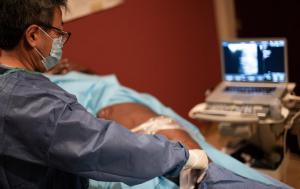
Duplex ultrasound is the standard diagnostic tool for evaluating small saphenous vein disease. This non-invasive imaging test allows a vein specialist to view blood flow in real time, locate the saphenopopliteal junction, and assess whether reflux is present.
During a duplex ultrasound evaluation, the specialist will:
- Evaluate the SSV from the ankle to the popliteal fossa
- Identify the location and function of the saphenopopliteal junction
- Check for reflux (backward blood flow) and its extent
- Assess adjacent tributaries, the great saphenous vein, and perforator veins as needed
- Map the anatomy to guide treatment planning if needed
This level of detail is especially important with the SSV because of its anatomical variability. The ultrasound creates a personalized vein map that helps your provider make recommendations tailored to your anatomy, not a one-size-fits-all approach.
A duplex ultrasound evaluation is painless, requires no downtime, and is covered by most major insurance plans including Medicare. Contact a vein specialist near you at USA Vein Clinics to schedule your evaluation.
Treatment Options for Small Saphenous Vein Insufficiency
If SSV reflux or insufficiency is confirmed, a range of minimally invasive, non-surgical outpatient options may be appropriate depending on the extent and pattern of disease.
Minimally invasive, non-surgical options
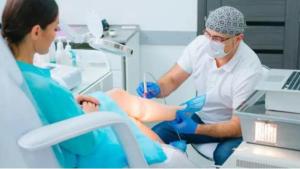
Modern vein treatments do not require surgical incisions, general anesthesia, or hospital stays. Options that may be used for back of calf varicose vein treatment and SSV disease include:
- Radiofrequency ablation (RFA): A small catheter delivers controlled heat to the vein wall, causing it to seal shut. RFA is a commonly used approach for SSV treatment and is performed under local anesthesia.
- Endovenous laser therapy (EVLT): Similar in concept to RFA, EVLT uses laser energy delivered through a thin fiber to close the diseased vein.
- VenaSeal: A medical adhesive is delivered through a small catheter to seal the vein. No heat is used, and compression stockings are generally not required afterward.
- Ultrasound-guided sclerotherapy: A chemical solution is injected into the vein under ultrasound guidance, causing it to close. Often used for smaller tributaries or when thermal techniques are not preferred.
- ClariVein (MOCA): A rotating catheter tip mechanically disrupts the vein lining while simultaneously delivering a sclerosant solution.
Because of the SSV’s proximity to the sural nerve, precise technique and ultrasound guidance are especially important during treatment. Your vein specialist will determine which approach is most appropriate based on your ultrasound findings, anatomy, and symptom history.
What to expect during treatment
Most SSV treatments are performed in an outpatient setting and take under an hour. Local anesthesia is used to minimize discomfort. Patients are typically able to walk and resume light daily activities the same day. Some temporary tenderness, bruising, or tightness in the treated area is normal and usually resolves within a week or two.
Your provider will likely recommend wearing compression stockings for a period following treatment and may schedule a follow-up ultrasound to confirm the vein has closed properly.
When Should You See a Vein Specialist?
Consider scheduling an evaluation with a vein specialist near me if you are experiencing any of the following:
- Persistent aching, cramping, or heaviness in the back of the lower leg
- Varicose veins on the back or outer surface of the calf or behind the knee
- Ongoing swelling in the lower leg or outer ankle that worsens throughout the day
- Skin changes, discoloration, or irritation near the lateral ankle
- Restless legs or nighttime cramping without a clear explanation
Vein disease is a medical condition, not simply a cosmetic concern, and early evaluation can help prevent symptoms from progressing. A duplex ultrasound is painless, does not require recovery time, and provides clear information about what is happening inside your veins.
Frequently Asked Questions
Where does the small saphenous vein drain into?
In most people, the SSV drains into the popliteal vein, a deep vein located behind the knee, at a point called the saphenopopliteal junction (SPJ). The exact location of this junction varies between individuals, which is why ultrasound mapping is used before treatment.
What is the difference between the small and great saphenous vein?
Both are superficial veins of the leg, but they differ in location, length, and drainage. The great saphenous vein runs along the inner leg from foot to groin. The small saphenous vein is shorter and runs along the back of the lower leg from ankle to knee. Both can be affected by venous insufficiency.
Can the small saphenous vein cause varicose veins?
Yes. When SSV valves fail, blood flows backward and pressure builds in the vein and its tributaries. This can lead to bulging varicose veins along the back or outer calf, the areas where SSV-related disease most commonly appears.
What are the symptoms of small saphenous vein insufficiency?
Symptoms may include aching or heaviness in the back of the lower leg, visible varicose veins on the calf or behind the knee, swelling around the outer ankle, skin changes near the lateral ankle, and cramping or restlessness in the lower leg. Symptoms often worsen after prolonged standing or sitting.
What happens if SSV reflux is not treated?
Without treatment, SSV reflux may worsen over time. Symptoms can become more frequent and severe. Additional varicose veins may develop. Prolonged pressure can cause skin changes near the ankle, and in advanced cases, venous ulcers may form. Early evaluation gives a vein specialist the chance to assess severity and recommend care before symptoms progress.
Is SSV reflux serious?
SSV reflux is a medical condition that can worsen over time without treatment. While not immediately life-threatening in most cases, progressive reflux can lead to worsening varicose veins, skin changes, and in advanced cases, venous ulcers. Early evaluation and treatment may help prevent these complications.
How is SSV disease diagnosed?
A duplex ultrasound is the standard diagnostic tool. This non-invasive test allows a vein specialist to see blood flow in real time, identify reflux, and locate the saphenopopliteal junction. The results are used to plan treatment if needed.
Can SSV insufficiency be treated without surgery?
Yes, for qualified candidates. Minimally invasive, non-surgical options including radiofrequency ablation (RFA), endovenous laser therapy (EVLT), VenaSeal, and ultrasound-guided sclerotherapy are available for appropriate candidates. These procedures are typically done in an outpatient setting with local anesthesia and little to no downtime.
Does insurance cover SSV treatment?
Treatment for SSV insufficiency is often covered by insurance when symptoms are present and medical necessity criteria are met. Coverage may include Medicare and most major insurance plans. A vein specialist can help determine your insurance eligibility during your evaluation.
Schedule a Vein Evaluation
USA Vein Clinics offers expert vein evaluations and a full range of minimally invasive treatments for SSV insufficiency and other forms of vein disease. With more than 168 locations nationwide and most major insurance plans accepted, getting evaluated is straightforward. If you are searching for SSV treatment near me, find a clinic and schedule online today.