
Medically reviewed by
USA Vein Clinics Medical Review Team
Vascular Specialists and Interventional Radiologists | Reviewed: September 2026
Spider vein treatment commonly relies on sclerotherapy, a minimally invasive, image-guided procedure designed to close damaged surface veins so they naturally fade over time. While spider veins on the legs are often viewed as a cosmetic concern, they frequently stem from elevated venous pressure beneath the skin. When paired with aching, leg heaviness, or localized swelling, these visible veins can serve as an early clinical warning of chronic venous insufficiency.
How Spider Veins (Telangiectasias) Signal Underlying Vein Disease
Spider veins, clinically classified as telangiectasias, develop when microscopic, one-way valves inside leg veins malfunction. When these delicate valves weaken, blood pools downward rather than flowing toward the heart, generating reverse pressure known as venous reflux. This same circulatory breakdown drives chronic venous insufficiency (CVI).
Vein disease is fundamentally progressive. In its earliest presentation, reflux manifests as fine purple or red webs across the thighs, calves, and ankles. Without clinical intervention, accumulated vascular pressure can trigger more advanced stages:
- Reticular Veins: Slightly larger, blue-green feeder veins that sit directly beneath the surface.
- Varicose Veins: Rope-like, swollen, twisted surface vessels resulting from prolonged reflux.
- Edema and Skin Changes: Persistent lower leg swelling, hyperpigmentation, or venous stasis dermatitis.
- Venous Ulcers: Chronic, slow-healing open wounds caused by severe tissue deprivation.
This progressive nature explains why USA Vein Clinics prioritizes non-invasive duplex ultrasound exams before initiating spider vein removal. Addressing underlying feeder veins first ensures that surface cosmetic results remain durable.
Sclerotherapy for Spider Veins on Legs
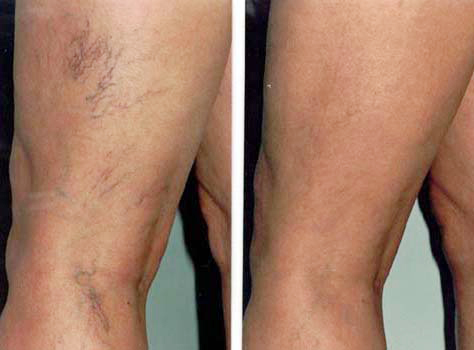
Sclerotherapy remains the leading medical solution for eliminating spider veins on the legs. It delivers high success rates, preserves surrounding healthy tissue, and requires no surgical cuts or stitches.
Visual Sclerotherapy Procedure Steps
During visual sclerotherapy, your specialist relies on specialized high-intensity lighting and magnification to guide an ultra-fine needle directly into the target vein. A precise sclerosant solution is introduced, which gently irritates the internal vessel lining, prompting the vein walls to collapse and seal shut. Circulating blood instantly reroutes into neighboring healthy veins, and your lymphatic system slowly breaks down and absorbs the closed vessel.
Explore our detailed guide on what to expect during sclerotherapy treatment for detailed preparation instructions.
How Many Sclerotherapy Treatments Do You Need?
Most patients achieve desired cosmetic results within 2 to 4 treatment sessions. Each appointment targets a distinct cluster of veins. Spacing treatments 4 to 6 weeks apart gives the body adequate time to clear cellular debris and allows your vein specialist to accurately evaluate remaining vessels during subsequent visits.
Will You See Results Immediately?
Results unfold gradually rather than overnight. Immediately following the injection, treated veins may temporarily appear darker, redder, or mildly bruised. Fine vessels generally fade within 3 to 6 weeks, whereas thicker feeder veins can take 2 to 3 months to clear completely.
Visual Sclerotherapy
Find the Right Spider Vein Treatment for Your Legs
An accurate diagnostic ultrasound ensures you receive targeted treatment that clears visible veins and resolves underlying circulation issues.
Cosmetic Med Spas vs. Medical Spider Vein Treatment at USA Vein Clinics
Choosing where to receive treatment directly influences your long-term results. Cosmetic clinics and medical spas focus strictly on surface-level visual correction, while our vascular specialists assess full venous hemodynamics to address root causes.
| Factor | Cosmetic Clinic or Med Spa | USA Vein Clinics Specialist Care |
|---|---|---|
| Diagnostic Evaluation | Visual check of surface skin only; no internal vascular mapping | Comprehensive duplex ultrasound to locate hidden reflux and diseased saphenous trunks |
| Treating Clinicians | Aesthetic technicians, nurses, or general medical spa staff | Accredited vascular surgeons and interventional vein specialists |
| Treatment Scope | Isolated surface injections or topical cosmetic lasers | Visual sclerotherapy coordinated with underlying endovenous therapies when indicated |
| Recurrence Probability | Higher rate of spider vein recurrence due to persistent underlying reflux pressure | Significantly reduced, as underlying venous hypertension is systematically eliminated |
| Insurance Integration | Strictly out of pocket self-pay; no insurance billing capacity | Accepts Medicare and most major private insurers when medical insufficiency is present |
| Ongoing Follow-Up | Rarely offers objective post-procedure vascular monitoring | Structured clinical follow-up visits with repeat ultrasound scans to verify vein closure |
Alternative Options: Laser Treatment for Spider Veins
Topical laser treatment serves as a secondary solution, best suited for extremely fine capillaries or delicate regions like the face and ankles where needle access can be difficult. The equipment transmits concentrated wavelengths of light through the dermis, heating the hemoglobin to collapse vessel walls without puncturing the surface.
For spider veins located on the legs, sclerotherapy remains the preferred option because liquid sclerosant easily navigates the full branching structure of leg veins, delivering more uniform closure than topical light beams.
Treating Underlying Varicose Veins Alongside Spider Veins
When diagnostic ultrasound confirms that spider veins are fed by larger, diseased saphenous veins, treating the surface webs alone will not resolve the issue. High venous pressure will quickly force open neighboring vessels, resulting in quick recurrence.
In these clinical situations, your care team may recommend treating the deeper malfunctioning vessels first. USA Vein Clinics provides advanced varicose vein treatments that work in tandem with sclerotherapy:
- Endovenous Laser Treatment (EVLT): Uses targeted thermal energy to seal diseased saphenous trunks.
- Radiofrequency Ablation (RFA): Employs uniform thermal heat to close large, failing veins.
- Varithena Foam: A specialized microfoam designed to treat tortuous, complex veins under ultrasound guidance.
- VenaSeal: Uses a medical adhesive to seal refluxing vessels without thermal tumescent anesthesia.
Spider Vein Treatment Recovery Timeline
Recovery after visual sclerotherapy is swift and straightforward. Because the procedure is completely non-surgical, you can walk out of the clinic and return to everyday routines immediately.
- Day 1 to 3: Wear prescribed gradient compression stockings to encourage treated vein closure and reduce minor swelling. Mild localized bruising or slight redness around entry sites is normal.
- Week 1 to 2: Injection points fade. Light daily walking is encouraged, while hot tubs, saunas, and intense heavy lifting should be avoided.
- Week 3 to 6: The body progressively reabsorbs treated veins. Most patients note substantial aesthetic clearance during this window.
- Week 6 Onward: Attend your clinical follow-up to evaluate whether touch-up sclerotherapy is needed for optimal cosmetic results.
As treated veins resolve, some patients notice other skin changes that were previously hidden. Review our clinical overview on spider veins or stretch marks to differentiate vascular conditions from dermatological marks.
When to Schedule a Professional Vein Evaluation
Spider veins may be one of the earliest visible signs of underlying vein disease. If you are experiencing symptoms such as leg aching, heaviness, swelling, cramping, or fatigue, a comprehensive vein evaluation is recommended to determine whether venous insufficiency is contributing to your symptoms.
Even when physcial symptoms are not present, spider veins should not be dismissed as purely cosmetic. Vein disease is a progressive condition that can worsen over time, and visible spider veins may indicate underlying circulation issues that warrant medical assessment.
Watch for key signs of venous disease, including:
- Persistent aching, throbbing, or heavy sensations in your legs after standing or sitting.
- Ankle or lower calf swelling toward the end of the day.
- Restless legs, tingling sensations, or nighttime muscle cramping.
- Itching, redness, or skin darkening around clusters of surface veins.
For a deeper look into clinical options and preparation steps, read our guide on how to get rid of spider veins.
Schedule Your Spider Vein Treatment Today
Spider veins do not have to disrupt your confidence or daily comfort. USA Vein Clinics provides comprehensive vascular evaluations and outpatient, minimally invasive treatments designed for lasting relief.
Our clinics accept Medicare and over 540 private insurance plans. Contact us today to verify your coverage and book an evaluation with a certified vein doctor.
Frequently Asked Questions About Spider Vein Treatment
References
- American Academy of Dermatology. “How Dermatologists Treat Leg Veins.” Accessed 2026.
- Society for Vascular Surgery. “Patient Resources: Spider Veins and Venous Disease.” Accessed 2026.
- American Society of Plastic Surgeons. “Spider Vein Treatment and Sclerotherapy Overview.” Accessed 2026.
Medical disclaimer: This article provides educational information regarding vein disease and related vascular treatments. It is not intended as medical advice or formal diagnosis. Only a qualified vein doctor or vascular specialist can accurately diagnose venous disease and create a personalized treatment plan. If you experience ongoing leg pain, swelling, heaviness, or visible vein changes, consult a physician or schedule an evaluation with USA Vein Clinics.
Schedule Anytime, Anywhere
Skip the wait times! Scheduling at your fingertips, 24/7. Minimally invasive non-surgical treatment for spider & varicose veins.
Schedule Online