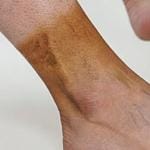


Varicose veins behind the knee develop when the valves inside the leg veins weaken and stop pushing blood upward efficiently. Blood pools, pressure builds, and the vein wall stretches, producing the bulging, blue-purple veins that appear in the popliteal area, the hollow at the back of the knee.
They are one of the most common places varicose veins appear, and for many people they are also one of the most uncomfortable. Aching, heaviness, and swelling that worsen after long periods of standing or sitting are typical complaints. The question is the same: what is actually going on, and does it need to be treated?
What Causes Varicose Veins Behind the Knee?
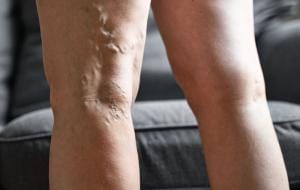
The back of the knee, called the popliteal fossa or popliteal space, is a particularly common location for varicose veins. To understand why, it helps to know how leg veins work under normal conditions.
Veins in the legs rely on a series of one-way valves to move blood upward against gravity, back toward the heart. When those valves weaken or fail, blood flows backward and collects inside the vein instead of continuing upward. The pressure from that pooling blood causes the vein wall to stretch and bulge, which is what makes varicose veins visible and often symptomatic.
When this process becomes ongoing, it is called chronic venous insufficiency, or CVI. CVI is the underlying condition behind most symptomatic varicose veins, and the popliteal area is one of the places where it tends to show up first.
The Small Saphenous Vein and the Popliteal Space
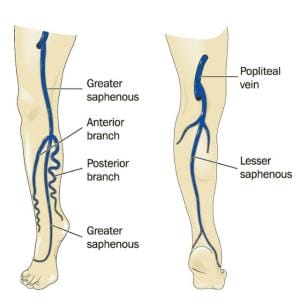
One vein is especially closely linked to varicose veins behind the knee: the small saphenous vein, or SSV. The SSV runs up the back of the calf and drains directly into the popliteal vein, which sits just behind the knee. When reflux (the backward flow of blood) develops in the SSV, it tends to produce visible vein clusters right in that popliteal space.
In some cases, the source of reflux may be the great saphenous vein (GSV) or incompetent perforator veins elsewhere in the leg. Pinpointing which veins are involved requires a duplex ultrasound evaluation. It cannot be determined by looking at the surface alone.
Symptoms of Varicose Veins on Back of the Knees
- Visible bulging veins behind the knee
- Aching or throbbing discomfort
- A feeling of heaviness or fatigue in the leg
- Swelling, especially later in the day
- Itching or skin irritation
- Nighttime cramping or restless legs
Who Is at Higher Risk?
Varicose veins are very common, and they can develop in anyone. But certain factors make them more likely:
- A family history of varicose veins or vein disease
- Age, as vein valves naturally lose elasticity over time
- Jobs or daily habits that involve prolonged standing or sitting
- Pregnancy, since increased blood volume and hormonal changes place added pressure on the leg veins
- Excess body weight, which increases pressure on the venous system
- Previous leg injuries or a history of deep vein thrombosis
If several of these apply to you, it is a reasonable reason to have your legs evaluated sooner rather than later, even if your symptoms feel mild right now.
Managing Symptoms Before Treatment
Before minimally invasive treatment is pursued, most insurance plans require a period of conservative management, typically wearing graduated compression stockings for several weeks. This is a standard insurance requirement, not a reflection of whether your veins actually need treatment.
Conservative measures that may help reduce discomfort during this period include:
- Wearing 2 graduated compression stockings daily to support circulation and reduce swelling (important to confirm with a medical professional)
- Walking regularly, since calf muscle movement helps pump blood back toward the heart
- Elevating your legs when resting, ideally above hip level
- Avoiding prolonged periods of sitting or standing without movement
- Maintaining a healthy weight to reduce venous pressure
These steps can ease symptoms but will not repair damaged vein valves or reverse underlying vein disease. If you have been wearing compression stockings and your symptoms have not improved, that history is relevant information for your vein specialist when determining insurance eligibility for treatment. USA Vein Clinics can help you understand your coverage before your first appointment.
When Should You See a Vein Specialist?
Not every visible vein behind the knee is a sign of something wrong. Some surface veins in this area are simply part of normal anatomy. But certain signs suggest it is worth getting a professional evaluation:
- Veins that are visibly bulging, twisted, or have grown more prominent over time
- Aching, heaviness, or pain that is gradually getting worse
- Swelling that does not go away after rest or overnight
- Skin changes near the veins, including discoloration, thickening, or persistent irritation
- Symptoms that are affecting your sleep or making it harder to stay on your feet
Varicose veins that go untreated can progress. Over time, chronic venous insufficiency may worsen, and in some cases complications like superficial vein clots or skin breakdown can develop. A vein specialist can assess where things stand and whether treatment is appropriate.
Varicose Veins vs. DVT: Know the Difference
Pain and swelling behind the knee are also associated with deep vein thrombosis (DVT), a blood clot that forms in the deeper veins of the leg. Varicose veins and DVT are different conditions, and it is important to know when a symptom warrants urgent attention rather than a scheduled appointment.
Varicose veins develop gradually in the surface veins and typically cause aching, heaviness, and visible bulging that worsens with prolonged standing or sitting. DVT involves a clot in the deep venous system and may cause sudden, severe pain, significant one-sided swelling, warmth, or redness in the leg.
Seek immediate medical care if you experience sudden severe leg pain or swelling, warmth or redness in one leg, or any combination of symptoms that appeared quickly and feel different from your usual vein discomfort. A duplex ultrasound can distinguish between varicose veins and DVT. USA Vein Clinics uses advanced imaging to rule out DVT before any vein treatment begins.
How Varicose Veins Behind the Knee Are Diagnosed
Duplex ultrasound is the standard diagnostic tool for varicose veins, and it is especially important for veins behind the knee. Because the SSV and its connection to the popliteal vein lie beneath the skin’s surface, you cannot reliably determine the source of the problem from the outside. The ultrasound maps blood flow through both the superficial and deep veins, showing which vessels are affected and where reflux is occurring.
This mapping step guides the entire treatment plan. Without it, a procedure might address the visible vein but miss the source of the reflux, which means symptoms can return.
At USA Vein Clinics, a duplex ultrasound evaluation is part of every initial visit.
Treatment Options for Varicose Veins Behind the Knee
Most varicose veins behind the knee can be treated in an outpatient setting, without surgery, without general anesthesia, and without a hospital stay. Appointments are typically less than an hour, and most patients return to normal activity the same day or the next.
Minimally Invasive, Non-Surgical Procedures
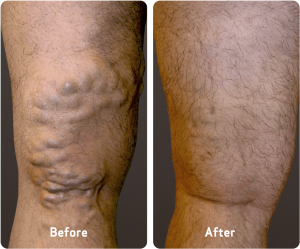
After reviewing your duplex ultrasound, your vein specialist will recommend the approach, or combination of approaches, that fits your anatomy and the pattern of your vein disease. Options available at USA Vein Clinics include:
-
- Endovenous Laser Treatment (EVLT): A small laser fiber is guided into the affected vein. The laser energy closes the vein from the inside, and blood reroutes through healthier vessels. No incision, no stitches.
- Radiofrequency Ablation (RFA): A thin catheter delivers controlled heat to seal the vein shut. Done in-office under local anesthesia, with minimal downtime.
- Ultrasound-Guided Sclerotherapy: Minimally invasive procedure used to treat deeper, hidden varicose veins and chronic venous insufficienc
Other Treatments May Include:
- VenaSeal: A medical-grade adhesive closes the vein. No tumescent anesthesia along the vein, and no compression stockings are required afterward for most patients.
- Varithena: A prescription microfoam is injected directly into the vein, causing it to collapse and be reabsorbed. Often used for veins that are irregular in shape or difficult to access with a catheter.
- ClariVein: A rotating wire tip and chemical solution work together to close the vein. No heat is involved, which some patients prefer.
- Ultrasound-guided sclerotherapy: A solution is injected into the vein under ultrasound guidance to seal it. Particularly useful for clusters of smaller varicose veins connected to a treated trunk vein.
- Visual sclerotherapy: For smaller surface veins and spider veins near the popliteal area, a fine-needle injection treats veins that are visible to the eye without requiring ultrasound.
Treatment is often covered when varicose veins are symptomatic and related to underlying vein disease. USA Vein Clinics accepts most major insurance plans and can help verify your coverage before your first appointment.
What to Expect After Treatment
Most procedures at USA Vein Clinics are completed in 30 to 60 minutes. The majority of patients return to their normal daily activities the same day.
In the days following your procedure, you may notice some mild soreness, tightness, or bruising along the treated vein. This is normal and typically resolves within one to two weeks. Depending on the treatment performed, your specialist may recommend wearing compression stockings for a short period to support healing and circulation.
Follow-up care is an important part of the process. Your vein specialist will schedule an ultrasound check to confirm the treated vein has closed properly and to assess whether any additional veins require attention.
Ready to Find Out What Is Going On?
If the veins behind your knee have been bothering you, or you are simply not sure what you are looking at, an evaluation is how you get answers. A duplex ultrasound shows exactly what is happening and whether treatment is needed.
USA Vein Clinics has vein specialists at locations nationwide. A duplex ultrasound evaluation is included at your initial visit, and most major insurance plans are accepted. No referral is needed to schedule.
Frequently Asked Questions
Are varicose veins behind the knee dangerous?
Not always, but they can indicate underlying chronic venous insufficiency, and they tend to progress if left untreated. Over time, symptoms can worsen, and in some cases complications like superficial blood clots or skin changes may develop. A vein evaluation can clarify whether treatment is warranted.
Can varicose veins behind the knee be treated without surgery?
Yes. Most patients are treated with minimally invasive, non-surgical outpatient procedures such as EVLT, RFA, VenaSeal, Varithena, or sclerotherapy. No general anesthesia or hospital stay is required. Traditional surgical vein stripping is rarely used today.
How do I know if the pain behind my knee is from varicose veins?
Vein-related pain behind the knee is usually accompanied by visible bulging veins, leg heaviness, or swelling that gets worse after standing or sitting for long periods. It often improves when you elevate your legs or walk around, which helps distinguish it from joint-related knee pain. A duplex ultrasound is the most reliable way to confirm vein disease as the cause.
Can You Get Rid of Varicose Vein Behind the Knees?
Yes. Varicose veins behind the knee can be treated effectively, and most patients do not need surgery to do it. For smaller, more superficial veins close to the skin’s surface, visual sclerotherapy is typically the first option. A vein specialist uses a fine needle to inject a solution directly into the visible vein, causing it to seal shut and gradually fade. For larger or deeper varicose veins that extend below the surface, ultrasound-guided sclerotherapy is used instead. The ultrasound allows the specialist to see the vein in real time and guide the injection precisely, even when the vein is not visible to the eye. This is important for veins behind the knee because the small saphenous vein and its branches can run deeper in the popliteal area than they appear from the outside. The right approach depends on the size, depth, and source of the veins involved. A duplex ultrasound evaluation at your initial visit is how your vein specialist determines which treatment fits your specific anatomy.
Can You Get Varicose Veins on Your Knee Cap?
Yes, though what appears on or around the kneecap is often a mix of varicose veins, reticular veins, and spider veins rather than one type alone.
The front of the knee is supplied by a network of small perforator veins that run around and beneath the patella. When those perforators become incompetent, meaning they allow blood to flow in the wrong direction, they can feed visible vein clusters on the front and sides of the kneecap. These veins are sometimes connected to a larger varicose network running along the outer or inner thigh and upper leg, which is why treating the visible veins on the kneecap without addressing the source can lead to them coming back.
What you see on the kneecap tends to fall into two categories. Smaller, web-like red or purple lines are typically spider veins or reticular veins, which are flat or slightly raised and usually more of a cosmetic concern. Larger, raised, twisted veins that bulge noticeably are more consistent with varicose veins and are more likely to cause symptoms such as aching, tightness, or skin irritation in that area.
Treatment depends on what is present and where the reflux is coming from. Spider veins and smaller reticular veins on the kneecap are generally treated with visual sclerotherapy. Larger or deeper veins may require ultrasound-guided sclerotherapy to trace and close the feeding vein properly. Because the kneecap is a high-movement area, your vein specialist may also advise that complete treatment requires more than one session.
A duplex ultrasound evaluation is the right starting point. It confirms whether the visible veins on your kneecap are isolated or connected to deeper vein disease elsewhere in the leg.