Medically reviewed by
USA Vein Clinics Medical Review Team
Vascular Surgeons and Vein Specialists
Reviewed: September 2026
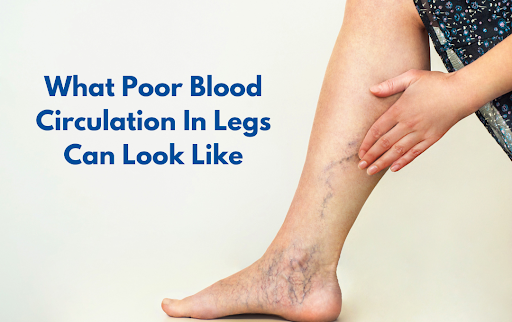
Poor circulation happens when blood cannot move efficiently to and from your legs and feet. Cold feet, numbness, swelling, and slow-healing sores are common signs that blood flow is not reaching tissue the way it should. Vein disease, peripheral artery disease, diabetes, and excess weight are among the most common causes of poor circulation, and each affects circulation differently.
Getting to the root cause is the part most people skip, and it is the part that actually changes what happens next.
What Is Poor Circulation?
Poor circulation means blood is not moving through your body as efficiently as it should. Your legs and feet are usually the first place symptoms show up, since blood has to travel the farthest and work against gravity to return to your heart. When that return flow slows down, tissue does not get the oxygen and nutrients it needs, which can lead to a range of uncomfortable symptoms over time.
What Causes Poor Circulation in the Legs?
Several distinct conditions can disrupt normal blood flow in the legs. Each one affects circulation through a different mechanism, so identifying the right cause matters for finding the right next step.
Vein Disease (Chronic Venous Insufficiency)
Vein disease, also known as chronic venous insufficiency (CVI), is one of the most common causes of poor circulation in the legs. Leg veins rely on tiny one-way valves to push blood upward toward the heart. When those valves weaken or fail, blood flows backward and pools in the lower legs instead of moving forward. This underlying vein disease tends to worsen gradually without evaluation, often leading to visible varicose veins, swelling, and a heavy or achy feeling in the legs.
Peripheral Artery Disease (PAD)
Peripheral artery disease develops when the arteries carrying oxygen-rich blood to the legs become narrowed, usually from plaque buildup. Reduced blood flow can cause cramping or pain in the legs during activity, along with coldness or numbness in the feet. PAD affects the arteries rather than the veins, so it works through a different mechanism than vein disease, even though many of the symptoms overlap.
Diabetes-Related Vascular Damage
Consistently high blood sugar can damage blood vessels over time, making them stiffer and narrower. This can slow circulation throughout the body, but effects are often most noticeable in the legs and feet. People managing diabetes may notice numbness, tingling, or slow-healing sores, which can overlap with symptoms of both vein disease and PAD.
Excess Weight and Inactivity
Extra body weight places added pressure on the veins in the legs, making it harder for blood to flow upward against gravity. Long periods of sitting or standing without movement can compound this effect, since the calf muscles play an important role in helping push blood back toward the heart. Over time, this added strain may contribute to weakened vein valves and worsening circulation.
Early Signs of Poor Circulation
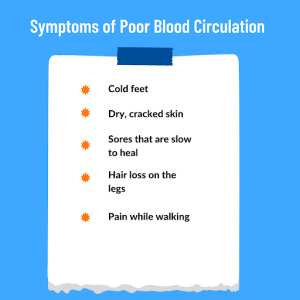
Circulation problems can develop gradually, so early signs are sometimes easy to dismiss. Common early indicators of poor circulation include:
- Cold feet or legs, even in a warm room
- Numbness or a pins-and-needles sensation
- Leg swelling, especially by the end of the day
- A heavy or achy feeling in the legs after standing or sitting
- Skin discoloration or slow-healing cuts on the lower legs
These symptoms can point to several underlying conditions, so it is important to mention them to a healthcare provider rather than managing them on your own.
How Do You Fix Poor Circulation?
Addressing poor circulation starts with identifying the underlying cause, since the right approach depends on what is driving the problem. A few general steps that may help support circulation include:
- Move regularly. Walking activates the calf muscles, which helps push blood back toward the heart.
- Elevate your legs when resting to help reduce pooling and swelling.
- Stay hydrated, since blood needs adequate fluid volume to circulate efficiently.
- Wear compression garments. Compression therapy applies gentle, graduated pressure that can support blood flow in the lower legs.
These steps may offer some relief, but they do not address an underlying vein condition if one is present. A vein specialist can help determine whether poor circulation can be reversed in your specific case, and which treatment approach, if any, may be appropriate.
Do Vitamins Help Poor Circulation?
Certain vitamins, including vitamin C, vitamin D, vitamin E, and several B vitamins, are associated with healthy blood vessel function and may support circulation as part of a balanced diet. Vitamin C supports collagen production, which helps maintain vein wall strength, while B vitamins are involved in processes that can help keep blood flowing smoothly.
Vitamins are not a treatment for an underlying vascular condition, and their effects are generally modest compared to addressing the root cause. Eating a diet rich in circulation-friendly foods may be a helpful complement to other care, but a healthcare provider should be consulted before starting any new supplement, especially for people with existing vein or blood clotting conditions.
Is Medication Used for Poor Circulation?
Depending on the underlying cause for poor circulation, a healthcare provider may prescribe medication to help manage circulation problems. Common categories include medications that help lower cholesterol, manage blood pressure, or reduce the risk of blood clots. These medications are typically prescribed for peripheral artery disease or related cardiovascular risk factors rather than for vein disease specifically.
Medication alone does not close a damaged vein or repair a failing valve. When poor circulation is related to vein disease, a specialist may discuss other treatment approaches designed to address the vein itself, in addition to any medications used for related risk factors.
When to See a Vein Specialist
Persistent leg swelling, aching, heaviness, or visible varicose veins alongside symptoms of poor circulation may be signs of underlying vein disease. A duplex ultrasound can help confirm whether venous reflux is present and can guide next steps.
Taking a symptom quiz can be a simple first step to understand whether your symptoms may be related to vein disease before scheduling a full evaluation.
Understand Your Symptoms
Ready to Understand What’s Behind Your Symptoms?
Poor circulation can stem from several different causes, and vein disease is one of the most common and most treatable.
USA Vein Clinics offers minimally invasive, outpatient evaluations to help identify what may be affecting your circulation.
FAQs About Poor Circulation
- Cleveland Clinic. “Poor Circulation: Symptoms, Causes and Treatment.” Accessed 2026.
- MedlinePlus Medical Encyclopedia. “Peripheral Artery Disease – Legs.” National Institutes of Health. Accessed 2026.
- National Center for Biotechnology Information (NCBI). “Chronic Venous Insufficiency: A Review.” National Institutes of Health.
Medical disclaimer: USA Vein Clinics content provides medical education only. It is not a diagnosis or treatment recommendation. Consult a vein specialist for evaluation. If you have leg swelling, pain, or other vascular symptoms, contact USA Vein Clinics for an evaluation.