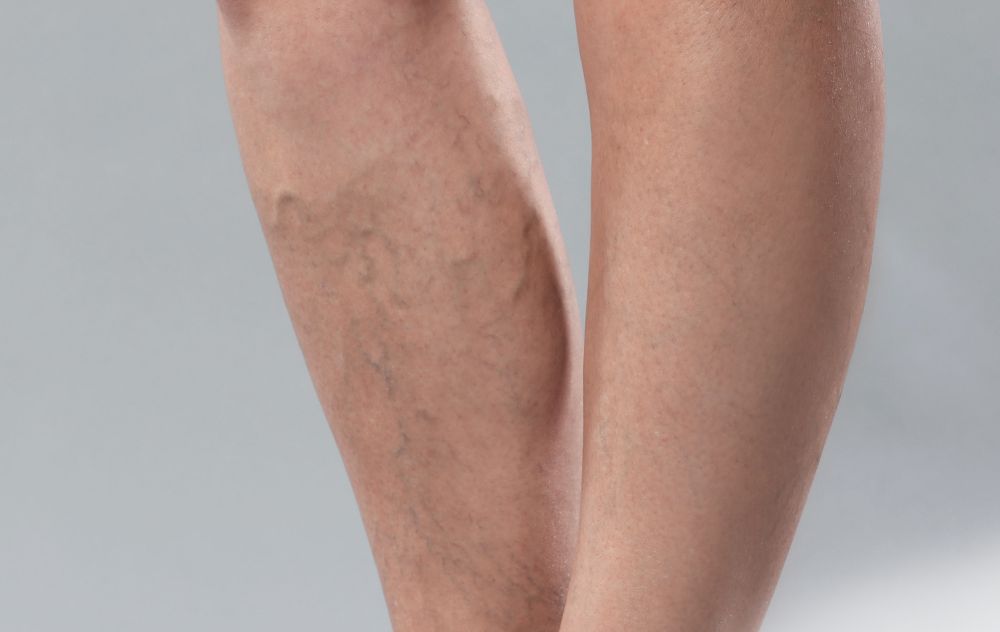

If you’ve noticed varicose veins on one leg but not the other, you’re probably wondering whether that’s normal — or whether something specific is going on with that leg. It’s common. Varicose veins don’t always develop symmetrically, and in many cases only one leg is affected at all.
Varicose veins affect roughly 23% of adults in the United States,1 but their presentation varies widely from person to person. Knowing why one leg develops vein disease before the other can help you decide whether to monitor symptoms or get evaluated sooner.
Common Causes of Varicose Veins in Only One Leg
Each leg has its own network of veins, valves, and circulatory patterns. The conditions that lead to varicose veins — mainly, weakened or damaged one-way valves inside the veins — can affect one side well before the other. When those valves stop working properly, blood flows backward and pools rather than returning efficiently toward the heart. Over time, this added pressure causes veins to stretch and bulge beneath the skin.
This underlying condition is called chronic venous insufficiency (CVI), and unilateral varicose veins — those appearing on just one side — are one of its most common presentations. Several factors determine which leg develops the problem first:
Localized Valve Failure
Valve function can deteriorate earlier on one side due to genetics, age, or years of standing or sitting for long periods. Once blood starts pooling in that leg, the visible signs of CVI — bulging veins, heaviness, and swelling — follow. The other leg may catch up eventually, or may never develop the same degree of damage.
Past Injury or Surgery
A previous ankle fracture, knee surgery, or ligament injury can permanently alter blood flow in that leg, even years after a full physical recovery. Scar tissue and post-surgical inflammation restrict local circulation and place long-term strain on nearby veins and valves. Patients are often surprised to find that a sports injury from a decade ago is connected to the vein symptoms they’re dealing with now.
Prior Deep Vein Thrombosis (DVT)
A past blood clot in one of the deep veins is among the most clinically significant causes of one-sided varicose veins. Even after the clot resolves, it can leave behind scar tissue that permanently damages the vein wall and valves — a condition called post-thrombotic syndrome. This frequently leads to visible varicose veins, persistent swelling, and skin changes limited to the affected leg. If you’ve had a blood clot in the leg in the past, that history is worth mentioning to your vein specialist.
Pelvic or Abdominal Compression
The cause isn’t always in the leg itself. May-Thurner Syndrome — where the left iliac artery compresses the left iliac vein in the pelvis — restricts outflow from one leg, causing blood to back up and varicose veins to develop on that side only. Pregnancy can trigger a similar effect, as the expanding uterus may press unevenly on pelvic veins, sometimes causing vein enlargement in just one leg.
Hormonal Factors
Estrogen and progesterone can relax vein walls, making valves more prone to failure. Hormonal changes during pregnancy, perimenopause, and menopause can accelerate valve deterioration — and because hormonal shifts affect each person differently, the impact on each leg can be uneven. Women are more than twice as likely as men to develop varicose veins, in part for this reason.
Lifestyle and Postural Asymmetry
Habitually shifting your weight onto one leg when standing, crossing the same leg repeatedly, or sitting with one leg in a compressed position increases venous pressure on that side over time. These patterns are often unconscious, but their cumulative effect on valve health can be meaningful across years of the same posture at work or at rest.
Natural Anatomical Variation
Minor differences in vein diameter, valve positioning, or leg muscle composition mean one leg may carry a heavier venous load than the other. These variations aren’t visible or problematic early on, but over time they can translate into one-sided vein disease symptoms.
Symptoms of Unilateral Varicose Veins
Beyond the visible bulging or twisted veins on one leg, patients with one-sided vein disease commonly report:
- Heaviness or fatigue in the affected leg by the end of the day
- Swelling around the ankle or calf, usually worse after prolonged standing
- Aching, throbbing, or cramping concentrated in one leg
- Itching or skin irritation along the vein
- Restlessness or discomfort in one leg at night
These symptoms can indicate active venous reflux — blood flowing backward through damaged valves — even when the other leg looks and feels completely fine. One-sided symptoms deserve evaluation, not just monitoring.
Answer Five Questions To Evaluate Your Vein Health
Could the Other Leg Be Affected Too?
Even when only one leg shows visible varicose veins, a duplex ultrasound sometimes reveals venous reflux in the other leg that hasn’t surfaced yet. What you can see on the skin is often only part of the picture.
This is one reason vein specialists evaluate both legs during an initial scan, regardless of which side is symptomatic. Reflux — backward blood flow through weakened valves — can be present and progressing in a leg that appears visually unaffected. Treating only the visible veins without addressing underlying reflux in either leg can lead to faster recurrence and ongoing symptoms like heaviness, itching, or swelling.
A thorough bilateral evaluation at the time of your first appointment gives your specialist the full picture and ensures the treatment plan accounts for what’s actually happening in both legs, not just the one that brought you in.
How One-Sided Vein Disease Is Diagnosed
Visible varicose veins don’t tell you what’s causing them or how far the underlying disease has progressed. A physical exam alone isn’t enough.
The standard next step is a duplex ultrasound — a non-invasive imaging test that maps blood flow through both the superficial and deep veins in real time. It identifies where valves are failing, whether reflux is present, and whether any blockages or prior clot damage are contributing to the one-sided presentation. It also rules out DVT, which is an important consideration any time one leg is more swollen or symptomatic than the other.
Most vein evaluations are completed in a single outpatient visit, and the results guide treatment decisions directly.
Treatment Options for Varicose Veins in One Leg
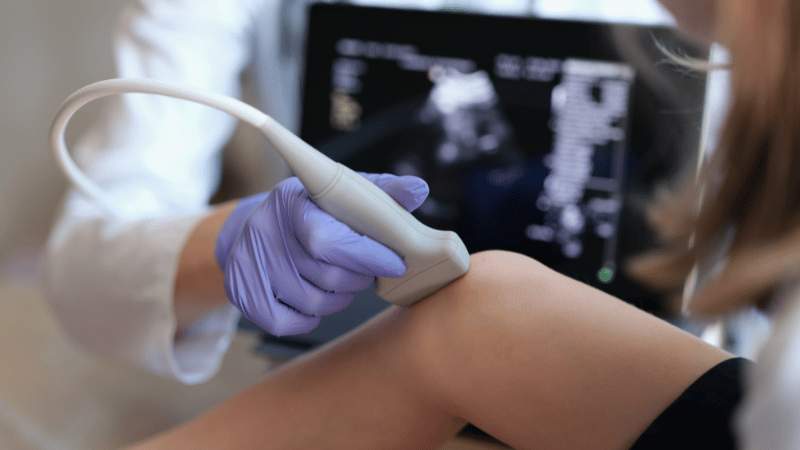
Treatment for one-sided varicose veins follows the same approach as treating vein disease in both legs. The goal is to close off damaged veins so blood reroutes through healthier ones, relieving symptoms and halting progression.
Minimally invasive, non-surgical vein treatment options may include:
- Endovenous laser treatment (EVLT) — laser energy delivered inside the vein seals it shut
- Radiofrequency ablation (RFA) — controlled heat via a thin catheter closes damaged veins
- VenaSeal™ — a medical adhesive that closes the vein without heat or injections
- Varithena® — a prescription microfoam that collapses larger varicose veins
- Sclerotherapy — injectable solution or foam that closes smaller varicose and spider veins
All of these are outpatient procedures with minimal recovery time. A vein specialist will recommend the most appropriate option based on your ultrasound findings, symptoms, and vein anatomy.
Compression stockings and lifestyle adjustments like regular walking and leg elevation help manage symptoms and slow progression, but they do not correct the underlying valve damage. Addressing the structural cause requires treatment.
Schedule Your Vein Consultation Today!
When to Get Evaluated
If you have varicose veins or vein disease symptoms in one leg — even if the other leg looks fine — a vein evaluation is worth scheduling. CVI is a progressive condition that worsens over time rather than resolving on its own. Earlier evaluation means more treatment options and a lower risk of complications like skin changes, venous ulcers, or worsening reflux.
Swelling isolated to one leg is also worth taking seriously — it can occasionally signal something that needs prompt attention. If one leg is noticeably more swollen than the other, see a specialist. You can read more about why only one leg may be swollen and when that symptom warrants urgent care.
You don’t need symptoms in both legs to qualify for a consultation. One-sided vein disease is a medical concern, and most major insurance plans cover evaluation and treatment when underlying venous insufficiency is confirmed.
USA Vein Clinics provides expert, outpatient vein care at nationwide locations. Our vein specialists use duplex ultrasound evaluation to identify exactly what’s happening in your veins and build a treatment plan around your results. We accept most major insurance plans, including Medicare and Medicaid.
Schedule Your Vein Consultation Today!
Frequently Asked Questions
Can varicose veins appear in just one leg?
Yes, and it’s more common than most people expect. Because each leg’s vein valves function independently, one side can develop chronic venous insufficiency while the other remains unaffected. A duplex ultrasound can confirm whether vein disease is present and how far it has progressed.
Why are varicose veins more common in the left leg?
The left leg is anatomically more prone to certain vascular conditions. May-Thurner Syndrome — where the left iliac artery compresses the left iliac vein in the pelvis — affects the left side specifically and restricts blood flow from that leg. Past injuries, prior DVT, or localized valve failure on the left side are also contributing factors. A vein specialist can identify the specific cause through an ultrasound evaluation.
Is it serious if only one leg has varicose veins?
It depends on the underlying cause and how far the vein disease has progressed. One-sided varicose veins can indicate active venous reflux or past circulatory damage. Left untreated, CVI tends to worsen over time and can lead to complications including skin changes and venous ulcers.
Will varicose veins spread to my other leg?
They may, but not necessarily. Some patients develop bilateral vein disease over time; others remain one-sided for years. Periodic evaluation with a vein specialist is the most reliable way to monitor progression, particularly with risk factors like a family history of CVI, prolonged sitting or standing at work, or prior blood clots.
What is the first step if I have varicose veins in one leg?
Schedule a consultation with a vein specialist. They will perform a duplex ultrasound to map blood flow, identify any valve dysfunction or reflux, and rule out DVT. From there, they can determine whether treatment is appropriate and which minimally invasive option fits your situation.
Is treatment the same whether one leg or both legs are affected?
Yes. Minimally invasive vein treatments like EVLT, RFA, VenaSeal, and sclerotherapy are all targeted to the specific damaged veins, regardless of how many legs are involved. A specialist will treat only the veins confirmed to be diseased on your ultrasound.
1 Prevalence estimate based on data from the Society for Vascular Surgery and published epidemiological studies on chronic venous disease in the United States.