

When comparing VenaSeal™ vs radiofrequency ablation as treatment options for varicose veins, it helps to understand why one may be recommended over another. Both are minimally invasive, office-based procedures that close damaged veins and redirect blood flow through healthier veins. As a result, symptoms of chronic venous insufficiency (CVI) such as leg pain, swelling, fatigue, and visible varicose veins subside, and circulation improves.
Vein specialists determine which treatment is best based on multiple factors, including your symptoms, vein anatomy, medical history, and ultrasound findings. Understanding the nuances of each treatment can help patients feel more prepared when they show up to their consultation.
What Is the Difference Between VenaSeal™ and Radiofrequency Ablation?
The main difference between VenaSeal™ and radiofrequency ablation (RFA) is the method used to treat the affected vein.
VenaSeal™ uses a medical adhesive or “vein glue” to seal the vein shut. Once the vein is closed, blood is redirected through healthier veins.
RFA uses controlled radiofrequency heat that’s delivered through a catheter. That heat causes the vein walls to collapse and seal shut.
Both treatments are designed to treat chronic venous insufficiency, the condition causing symptoms such as leg pain, swelling, heaviness, and visible varicose or spider veins.
What Happens During VenaSeal™ Vein Treatment
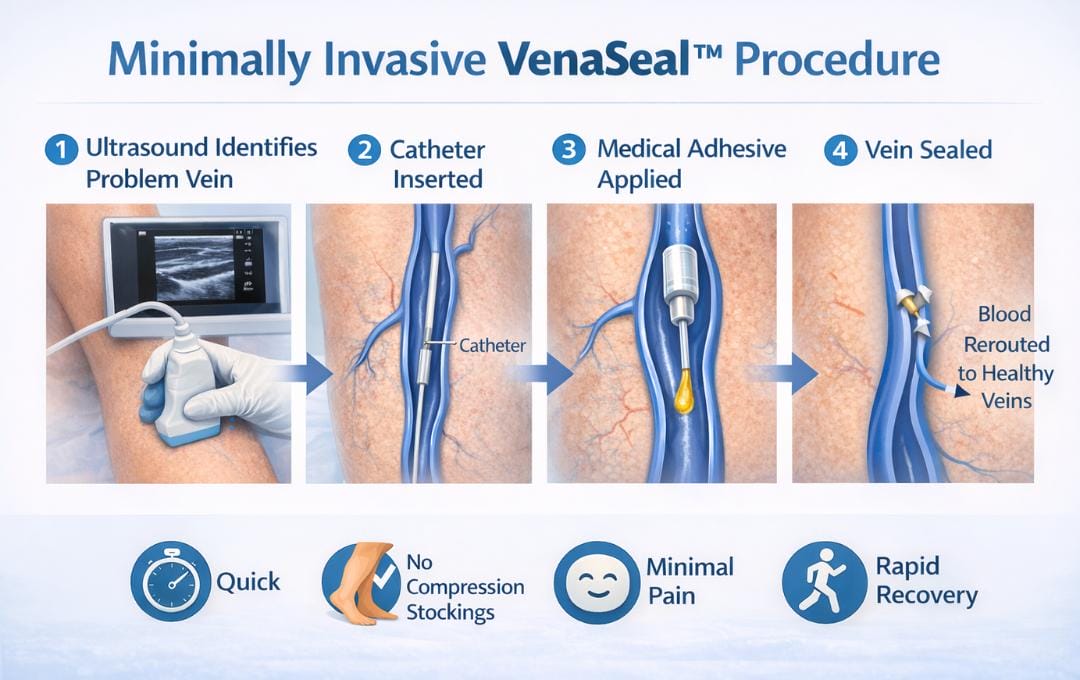
During VenaSeal™, a specialist inserts a small catheter into the affected vein using ultrasound guidance. A precise amount of medical adhesive is injected into the vein to seal it closed. Because VenaSeal™ doesn’t involve heat from lasers or energy, this treatment requires fewer anesthetic injections.
Many patients wonder whether VenaSeal™ is considered a non-thermal ablation treatment and how it differs from other non-thermal vein procedures. Understanding these distinctions can help you compare treatment options more confidently.
VenaSeal™ Pros and Cons
When reviewing VenaSeal™ pros and cons, it helps to look at convenience, comfort, and candidacy.
Potential Advantages of VenaSeal™
- Minimal post-procedural discomfort
- Low risk of nerve damage or other serious complications
- No need for compression stockings afterward
- Quick recovery that allows a fast return to daily activities
Possible VenaSeal™ Side Effects
- Mild tenderness or inflammation after the procedure
- Localized sensitivity near the treated vein
- to the adhesive
What Happens During Radiofrequency Ablation (RFA) Vein Treatment
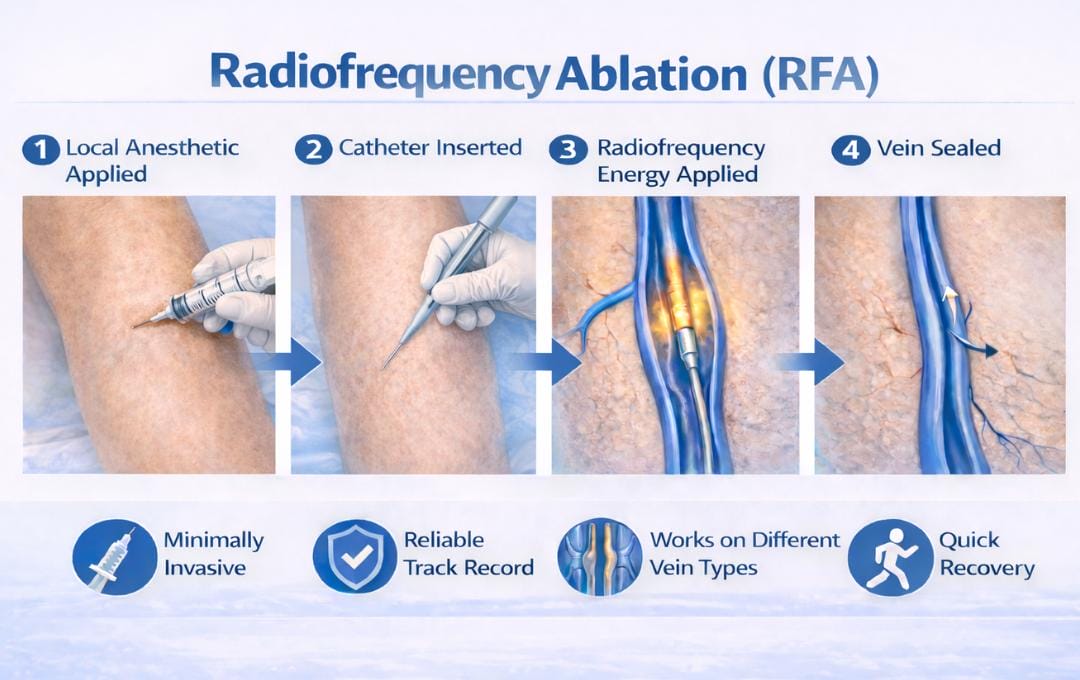
Radiofrequency ablation (RFA) also begins with catheter placement into the diseased vein under ultrasound guidance. Once in place, the catheter delivers controlled radiofrequency energy to heat the vein wall, which causes the vein to collapse and seal shut.
This treatment has been used for many years and remains a common option for patients with venous insufficiency.
Radiofrequency Ablation Pros and Cons
A balanced look at the pros and cons of radiofrequency ablation can help patients understand how it compares with VenaSeal™.
Potential Advantages of RFA
- A long, reliable clinical track record in vein treatment
- Cost-effective treatment
- Works on several types of veins
Possible RFA Side Effects
- Nerve injury risk, although the risk is low
- Temporary bruising, swelling, or soreness
- Tight or pulling sensation along the treated vein as it heals
If you are considering RFA as a potential treatment option, it’s important to note that compression socks may be required after the procedure. RFA is also not recommended for smaller varicose veins.
Recovery After VenaSeal™ vs RFA Treatment for Varicose Veins
When comparing the recovery period for VenaSeal™ and RFA, both treatments are designed for minimal downtime, but there are some practical differences.
After VenaSeal™, many patients return to normal activity the same day, and some may not need to wear compression stockings after treatment. Recovery instructions still depend on the vein treated and your specialist’s recommendations.
After RFA, patients can usually resume light activity quickly, often within a day. Compression stockings are commonly recommended for a period after treatment to support healing.
Patients often ask about differences in comfort after treatment. In general, both procedures are well tolerated. Some people prefer VenaSeal™ because it often involves fewer anesthetic injections, while others do well with RFA and experience only mild soreness or tightness afterward. Side effects are usually temporary and will resolve within a few days or weeks.
Who Is a Good Candidate for VenaSeal™ vs RFA?
Candidacy for VenaSeal™ vs RFA depends on several factors, including:
- The size and location of the affected vein
- The severity of underlying vein disease or insufficiency
- Your medical history and overall health
- Your preferences for recovery and post-treatment care
- Ultrasound findings that visualize how well a vein functions
In some cases, both VenaSeal™ and RFA may be included in the treatment plan to effectively address a patient’s condition. Meet with a vein specialist to review your symptoms and determine which vein treatment makes the most sense for you.
Which Vein Treatment Is Best for You?

The best vein treatment is not the same for every patient. While VenaSeal™ and RFA are effective in alleviating varicose veins and accompanying symptoms, the right option depends on clinical findings that are confirmed during a consultation with a vein specialist.
A vein specialist will consider multiple factors that help personalize the treatment plan. This includes the results gathered during the physical exam and ultrasound, as well as a review of patients’ symptoms, medical history, and overall health.
Patients’ preferences for recovery and lifestyle considerations may also be taken into account when specialists weigh treatment options. If you want to explore other options besides VenaSeal™ or RFA, USA Vein Clinics offers five additional vein treatments that can be tailored to your needs.
Get Treatment at USA Vein Clinics
USA Vein Clinics specializes in diagnosing and treating vein disease with advanced, outpatient procedures such as VenaSeal™ and RFA. With more than 160 locations nationwide, patients can access expert vein care close to home.
Our clinics are accredited by the Intersocietal Accreditation Commission, which reflects nationally recognized standards for quality, safety, and diagnostic accuracy. Treatment is provided by experienced vein specialists who focus on patient safety, comfort, and individualized care.
USA Vein Clinics accepts most insurance plans and helps patients verify their coverage during the scheduling process. We also offer online scheduling 24/7, making it easier to book a consultation and learn which treatment may be right for you.
FAQs
What are the disadvantages of VenaSeal™ treatment?
A disadvantage of VenaSeal™ is that it’s not suitable for patients who are allergic to the medical adhesive. Vein specialists don’t consider bruising, redness, and inflammation as disadvantages because these side effects resolve within a short period of time.
What is the downside of radiofrequency ablation?
The main downside of RFA is that it typically requires local anesthetic injections along the vein, and patients are often asked to wear compression stockings during recovery. Some bruising, tightness, or temporary soreness can also occur after the procedure.
What is the most successful treatment for varicose veins?
The most successful treatment for varicose veins is the one that best matches your specific condition and needs. Many minimally invasive vein treatments are highly successful in closing diseased veins, including VenaSeal™ or radiofrequency ablation (RFA).
What is the safest varicose vein treatment?
Most office-based treatments for varicose veins, such as VenaSeal™ and RFA are safe. Many studies from the National Institutes of Health report that the risk of serious post-procedural complications is rare.


