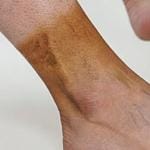

Medically reviewed by
USA Vein Clinics Medical Review Team
Vascular Surgeons and Vein Specialists
Reviewed: September 2026
Spider veins on your legs can seem to appear out of nowhere, but they rarely form without a reason. These red, blue, or purple web-like lines develop when the tiny one-way valves inside your leg veins weaken and blood begins to pool instead of flowing back toward your heart. If you have noticed new or more prominent spider veins recently, one or more contributing factors have likely increased pressure inside your leg veins.
Understanding what drives this change can help you decide whether you are seeing a normal response to a recent shift in your routine, activity level, or health, or whether it may point to an underlying vein condition worth discussing with a specialist.
This article focuses on spider veins that develop on the legs. Spider veins can also appear on the face, nose, chest, and other areas, where they are more often associated with sun exposure, rosacea, genetics, or hormonal changes rather than underlying vein disease.
What Are Spider Veins and Why Do They Appear?
Spider veins, also called telangiectasias (tel-AN-jee-ek-TAY-zhee-uz), are small, dilated blood vessels that form just beneath the surface of the skin. They typically appear as thin red, blue, or purple lines that cluster into web- or branch-like patterns, most often on the thighs, calves, and ankles.
Spider veins on the legs form through the same basic mechanism as varicose veins: the one-way valves inside leg veins weaken over time, allowing blood to flow backward and collect. This pooling creates pressure inside the vessel walls, causing them to expand and become visible through the skin. Spider veins sit closer to the surface than varicose veins, which is why they appear flat rather than bulging.
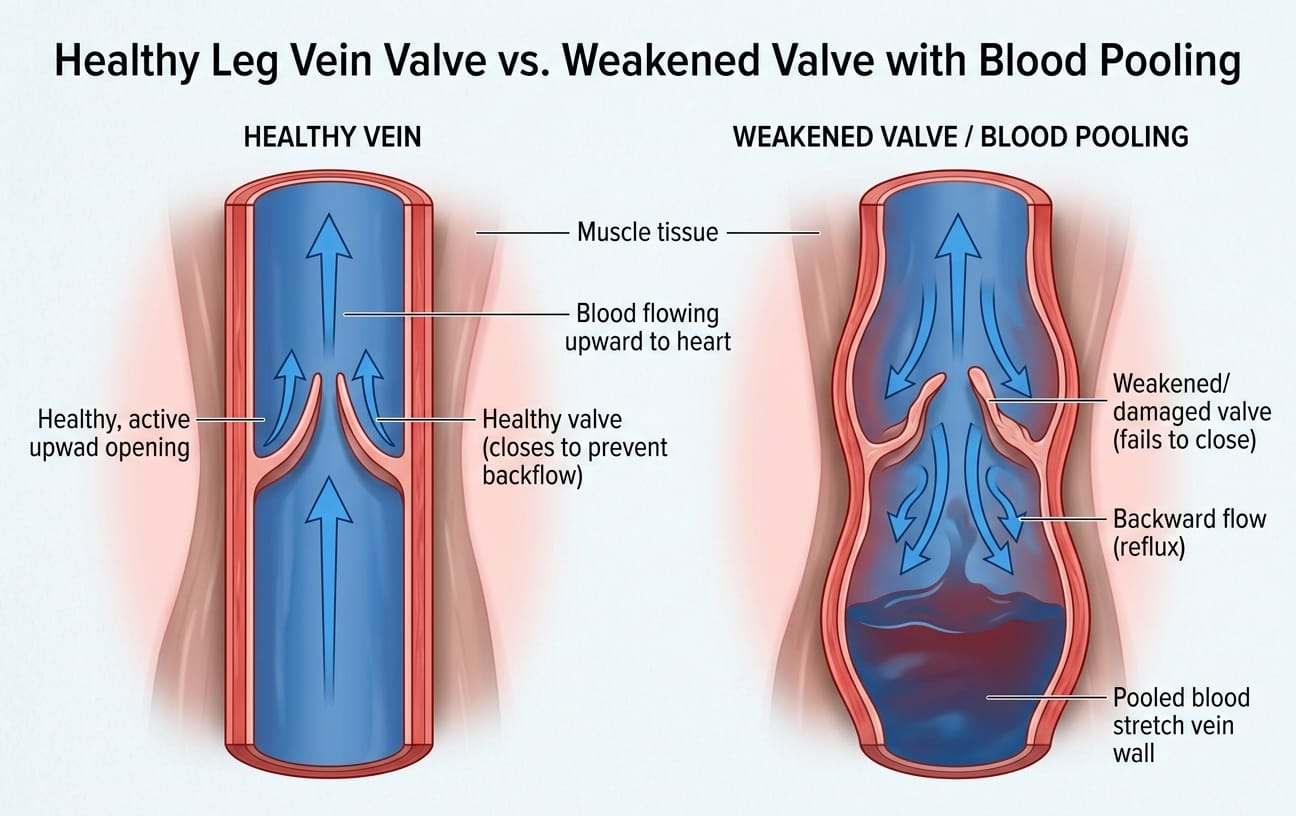
Spider veins on the legs are more likely to be associated with vein circulation problems. Spider veins that appear on the face, nose, or chest are less commonly linked to chronic venous insufficiency (CVI) and may relate instead to sun damage, rosacea, hormonal changes, or natural aging.
Are Spider Veins the Same as Varicose Veins?
No. Spider veins are smaller and sit closer to the skin’s surface. Varicose veins tend to be larger, deeper, and may bulge visibly above the skin. Both are caused by vein valve dysfunction and venous reflux, but spider veins affect smaller vessels. Some people develop both conditions, which can indicate underlying vein disease that warrants a closer evaluation. You can learn more about spider vein symptoms and causes on the USA Vein Clinics website.
Common Reasons Spider Veins Appear Suddenly
If it feels like new spider veins appeared overnight or multiplied quickly, one or more of the following factors is likely playing a role.
Hormonal Changes
Hormonal shifts are one of the most common triggers for sudden spider vein development, particularly in women. Estrogen and progesterone relax vein walls, which reduces their ability to maintain proper valve function. This is why spider veins often appear or worsen during pregnancy, after starting hormonal birth control, or around menopause.
Pregnancy can have an especially significant impact. Blood volume increases substantially, adding pressure to leg veins at a time when hormones are already affecting vein wall strength. Spider veins that develop during pregnancy may fade in the months following delivery, though they do not always disappear on their own. Learn more about varicose veins and spider veins during pregnancy.
Prolonged Sitting or Standing
Spending long hours in the same position – whether at a desk, on your feet during a work shift, or during a long commute – forces your leg veins to work harder against gravity. This sustained pressure can gradually weaken vein valves, which leads to blood pooling and new spider veins over time.
People whose jobs require extended standing or sitting, such as healthcare workers, teachers, or those in desk-based roles, tend to be at higher risk of developing spider veins from this pattern of strain.
Aging
Changes in vein health often develop slowly over the years. As vein walls gradually lose strength and valves become less effective at preventing backflow, blood is more likely to pool in the legs. A noticeable increase in spider veins can reflect changes that have been building beneath the surface for some time, reaching a visible threshold rather than appearing all at once.
Genetics
If a parent or sibling has spider veins or varicose veins, you are more likely to develop them too. Genetics influence the structure and strength of vein walls and valves, and some people inherit vessels that are more prone to valve weakness. A genetic predisposition does not make spider veins inevitable, but it does mean your risk is higher and signs tend to appear earlier in life.
Changes in Body Weight
Weight gain increases the pressure on leg veins, making it harder for blood to travel back to the heart. Over time, this added strain can contribute to weakened vein valves and new spider vein development. Weight loss does not cause spider veins, but it can make existing ones more noticeable as the layer of fat beneath the skin thins and veins sit closer to the surface.
Sun Exposure
Sun exposure is a well-known cause of spider veins on the face and other frequently exposed areas. On the legs, UV damage is less often a primary driver, but prolonged exposure may weaken skin and small blood vessels over time, contributing to increased visibility of existing veins.
Injury or Trauma
An injury that limits movement – such as a fracture, sprain, or post-procedure recovery – can temporarily reduce circulation in the legs and increase pressure within the veins. This may make existing spider veins more noticeable or contribute to new ones. Trauma to the skin and surrounding tissue can also cause small blood vessels near the surface to become persistently visible.
When Spider Veins May Signal Underlying Vein Disease
In many cases, spider veins occur on their own without any deeper vascular problem. However, when they appear alongside symptoms such as leg pain, swelling, heaviness, cramping, or fatigue, they may be associated with a condition called chronic venous insufficiency (CVI). With CVI, vein valves in the deeper leg veins have weakened enough that blood is no longer returning efficiently to the heart. The resulting pressure buildup can drive spider vein formation at the surface.
If your spider veins are accompanied by any of the following, a vein evaluation may be worth scheduling:
- Leg aching, heaviness, or fatigue, especially after prolonged standing
- Leg swelling that worsens as the day goes on
- Skin discoloration or texture changes around the ankle
- Restless legs at night
- Cramping or throbbing in the legs
A vein specialist can perform a duplex ultrasound – a painless, non-invasive imaging test that maps blood flow through your leg veins – to assess whether venous reflux or chronic venous insufficiency is present. This takes the guesswork out of whether what you are seeing is a surface-level concern or something that warrants treatment.
What to Do If You Are Noticing New Spider Veins
If new spider veins have appeared on your legs recently, the following steps may help reduce the rate of further development while you decide whether an evaluation makes sense.
Support circulation:
- Take regular movement breaks if your work involves extended sitting or standing
- Elevate your legs above heart level for 20 to 30 minutes each day
- Wear compression stockings if a vein specialist recommends them
- Maintain a body weight that supports healthy circulation
Protect your skin:
- Apply sunscreen to exposed areas of the legs to limit UV-related vessel damage
- Avoid prolonged heat exposure, such as hot tubs or saunas, which can cause veins to dilate
These steps may help slow the development of new spider veins, but they will not close or remove veins that are already visible. Minimally invasive treatment is the only way to address existing spider veins.
Treatment Options for Spider Veins

If existing spider veins are a concern, several minimally invasive, outpatient spider vein treatment options are available at USA Vein Clinics. All procedures are performed without general anesthesia and involve minimal downtime.
Sclerotherapy
Sclerotherapy is the most widely used treatment for spider veins. A vein specialist injects a solution directly into the affected vessels, causing them to collapse and gradually fade. Most patients see improvement within three to six weeks. The procedure is performed in-office and requires no anesthesia.[3]
Other Minimally Invasive Approaches
For patients whose spider veins are connected to an underlying vein problem, additional treatment options may be appropriate. These can include ultrasound-guided sclerotherapy or other image-guided procedures. A vein specialist can recommend the best approach after reviewing your symptoms and performing a diagnostic ultrasound.
How USA Vein Clinics Can Help
Seeing new spider veins can raise questions – whether they are a cosmetic concern, a sign of something deeper, or both. At USA Vein Clinics, a vein specialist can start with a consultation to review your symptoms and history, then use duplex ultrasound to assess what is actually happening in your leg veins. From there, they can walk you through which treatment options may fit your situation. Taking that first step is the most direct way to move from uncertainty to a plan.
Next Step
Understand What Is Behind Your Spider Veins
If new spider veins have been appearing on your legs, a vein evaluation can help determine whether they reflect normal life changes or a pattern worth addressing.
USA Vein Clinics offers minimally invasive, outpatient vein treatments performed without general anesthesia and with minimal downtime. A vein specialist can evaluate your symptoms and discuss which treatment may be right for you.
Frequently Asked Questions About Sudden Spider Veins
- Cleveland Clinic. “Spider Veins (Telangiectasias): Causes, Symptoms, and Treatment.” my.clevelandclinic.org/health/diseases/24567-spider-veins. April 2026.
- U.S. Department of Health and Human Services, Office on Women’s Health. “Varicose Veins and Spider Veins.” womenshealth.gov/a-z-topics/varicose-veins-and-spider-veins.
- American Academy of Dermatology Association. “Leg Veins: Why They Appear and How Dermatologists Treat Them.” aad.org/public/cosmetic/younger-looking/how-dermatologists-treat-leg-veins.
- UPMC Health System. “Varicose and Spider Veins: Causes, Symptoms, and Treatments.” upmc.com/services/heart-vascular/conditions/varicose-spider-veins.
- American College of Phlebology. Patient resources on venous insufficiency and spider vein disease. phlebology.org.
Medical disclaimer: This article provides educational information about vein disease and treatment options. It is not a diagnosis or medical advice. Only a qualified vein specialist can determine whether you have vein disease or recommend appropriate treatment. If you have leg swelling, pain, or other vascular symptoms, consult a healthcare provider or contact USA Vein Clinics for an evaluation.