

Medically reviewed by
USA Vein Clinics Medical Review Team
Last reviewed July 2026
Blood pooling happens when blood collects in the veins of your legs instead of flowing back to your heart. This occurs when tiny valves inside your veins stop working the way they should. Over time, pooling blood can cause pain, swelling, and visible vein changes. This article explains what blood pooling means, what causes it, what it feels like, and when to talk to a vein specialist.
Blood pooling in the legs is often linked to an underlying vein condition called chronic venous insufficiency (CVI). When blood pools regularly, it raises pressure inside the veins, which can lead to worsening symptoms over time.
What Is Blood Pooling?
Blood pooling, also called venous stasis, means blood is not moving the way it should. In healthy veins, tiny one-way valves open and close to keep blood flowing upward toward your heart. When those valves weaken or get damaged, blood can leak backward and settle in the lower legs, ankles, and feet. Essentially, blood pooling in the legs occurs when the veins struggle to efficiently pump blood back up to the heart, causing it to collect in the lower extremities.
This is most common in the legs because they are farthest from the heart. Your legs have to work against gravity to push blood back up. When vein valves fail, blood stays in the lower body instead.
Common signs of blood pooling in the legs include:
- Swelling in the ankles or calves
- A heavy or tired feeling in the legs
- Leg cramping or aching
- Skin discoloration (reddish, brown, or bluish tones)
- Itchy or dry skin near the ankles
- Varicose veins or visibly bulging veins
If you notice any of these symptoms regularly, it is worth talking to a vein specialist. Recognizing varicose veins early can help you get the care you need before symptoms get worse.
What Causes Blood to Pool in Your Legs?
The most common cause is chronic venous insufficiency (CVI). This is when vein valves become weak or damaged and can no longer keep blood moving toward the heart.
Several factors can raise your risk of developing CVI and blood pooling:
- Age: Vein walls and valves naturally weaken over time
- Family history: Vein disease often runs in families
- Pregnancy: Increased blood volume and pressure on pelvic veins can affect circulation
- Obesity: Extra weight puts pressure on leg veins
- Sitting or standing for long periods: Reduces the movement that helps push blood upward
- Previous blood clots: Clots can damage vein valves
Blood pooling can also lead to a skin condition called venous stasis dermatitis. This happens when fluid leaks out of the swollen veins and into the skin tissue, causing redness, itching, and scaling around the ankles and lower legs. It is a sign that blood has been pooling for a longer period.
Learning about common vein disease symptoms can help you recognize when your legs need attention.
Vein health check
Not sure if your leg symptoms are related to vein disease?
What Does Blood Pooling Feel Like?
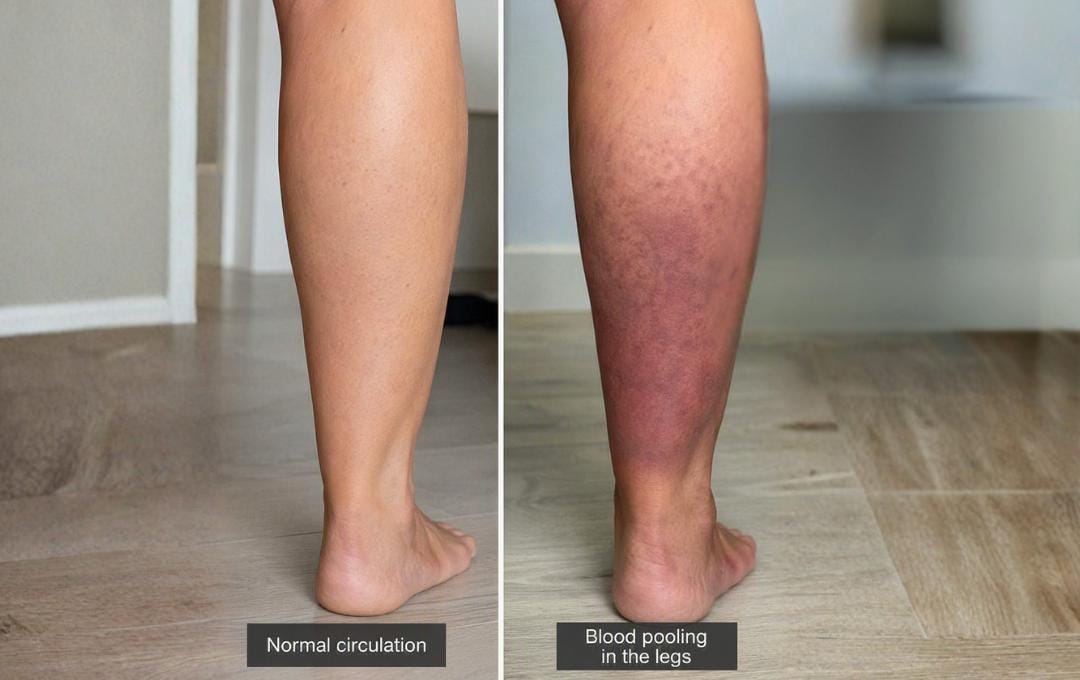
Blood pooling can feel different from person to person, but most people describe a set of sensations that build throughout the day such as:
- Heavy legs: Your legs may feel like they weigh much more than usual, especially in the afternoon or evening
- Deep, dull aching: A steady, pulsing ache rather than sharp pain
- Tight or stretched skin: Swelling can make the skin around your shins or ankles feel full or puffy
- Itching beneath the skin: An uncomfortable itch that feels deeper than the surface
- Restlessness or burning: Legs may feel warm or hard to keep still at night
A key sign of blood pooling related to CVI is that symptoms often ease when you raise your legs above heart level, but come back once you are up and moving again.
Does Blood Pooling Go Away on Its Own?
Whether blood pooling can go away on its own depends on what causes it.
Temporary pooling can happen after a long day of standing or sitting. This type of mild swelling often eases with rest and leg elevation. It does not usually point to a medical problem.
Chronic blood pooling is different. If your legs regularly swell, ache, or feel heavy – especially if you also notice skin changes or varicose veins – this is unlikely to improve without treatment. Chronic venous insufficiency is a progressive condition. Symptoms tend to get worse over time if the underlying vein problem is not addressed.
Left untreated, blood pooling can lead to:
- Worsening swelling and discomfort
- Venous leg ulcers (open sores that are slow to heal)
- Skin changes and staining around the ankles
- In some cases, increased risk of complications such as deep vein thrombosis (DVT)
If your symptoms are recurring and affecting your daily life, it is a good time to see a vein specialist for an evaluation. Early assessment can help prevent complications and provide clarity on your options.
How Is Blood Pooling Treated?
The first step in treating blood pooling is getting evaluated. A vein specialist will review your symptoms and may use a duplex ultrasound to look at how blood flows through your veins. This imaging test checks whether vein valves are working properly and helps identify any damaged veins.
If CVI or other vein disease is found, minimally invasive outpatient treatments are available. These procedures close off damaged veins and redirect blood flow to healthier ones. They are performed in a clinic setting with minimal downtime.
Leg swelling and other vein disease symptoms can often be addressed through one or more of these treatment options at USA Vein Clinics:
- Endovenous laser treatment (EVLT) – A thin laser fiber seals the damaged vein using heat energy
- Radiofrequency ablation (RFA) – A catheter uses radiofrequency energy to close the vein
- VenaSeal – A medical adhesive is used to close the vein without heat
- ClariVein – Combines mechanical movement and a chemical agent to close the vein
- Varithena – A foam solution is injected into the damaged vein to seal it
- Ultrasound-guided sclerotherapy – A sclerosant is injected under ultrasound guidance to close the vein
Most patients return to light daily activity shortly after treatment. A vein specialist can help you understand which varicose vein treatment options may be right for your situation.
Explore all varicose vein treatment options at USA Vein Clinics to learn about each approach and what to expect.
Frequently Asked Questions About Blood Pooling
Next step
Take the Next Step Toward Healthier Legs
If your legs feel heavy, swollen, or achy on a regular basis, blood pooling may be a contributing factor. USA Vein Clinics has locations nationwide where experienced vein specialists can assess your symptoms, perform a duplex ultrasound if needed, and walk you through your options. Most major insurance plans are accepted. Start by taking our quick symptom quiz – it only takes a few minutes.
References
- Eberhardt RT, Raffetto JD. Chronic Venous Insufficiency. Circulation. 2014;130(4):333-346. https://pmc.ncbi.nlm.nih.gov/articles/PMC6406103/
- StatPearls. Venous Insufficiency. NCBI Bookshelf. https://www.ncbi.nlm.nih.gov/books/NBK430975/
- National Heart, Lung, and Blood Institute. Varicose Veins. NIH. https://www.nhlbi.nih.gov/health-topics/varicose-veins
Medical disclaimer: This article provides educational information about vein disease and treatment options. It is not a diagnosis or medical advice. Only a qualified vein specialist can determine whether you have vein disease or recommend appropriate treatment. If you have leg swelling, pain, or other vascular symptoms, consult a healthcare provider or contact USA Vein Clinics for an evaluation.