Medically reviewed by
USA Vein Clinics Medical Review Team
Vascular Surgeons and Vein Specialists
Reviewed: August 2026
Doctors usually diagnose varicose veins with a physical exam and a duplex ultrasound. The ultrasound checks blood flow in your leg veins. Together, these two steps help a vein specialist confirm whether you have chronic venous insufficiency and how severe it is.
If you have visible veins, leg swelling, or aching that will not go away, knowing what to expect can make that first appointment feel a lot less stressful.
What Happens During a Varicose Vein Physical Exam
Diagnosis usually starts with a simple conversation. Your provider will ask about your symptoms and take a look at your legs. You will likely stand up and sit down during the exam, since gravity changes how veins look and behave. Your provider will check for bulging veins, skin color changes, and swelling. They will also ask about aching, heaviness, cramping, or itching in your legs.
We tell our patients that family history matters too. Vein disease often runs in families, so a parent or sibling with varicose veins can raise your own risk.
Even if your veins are not visibly bulging yet, you can still have vein disease underneath the surface. This is one reason the exam alone is not enough. Our doctors rely on imaging to see what is really happening inside the vein, not just what shows on the surface.
Why a Duplex Ultrasound Is the Gold Standard
A duplex ultrasound is the gold standard test for diagnosing varicose veins and chronic venous insufficiency (CVI). This test does not require needles or incisions. It uses sound waves to build a real-time picture of blood flow in your leg veins.
Duplex Ultrasound
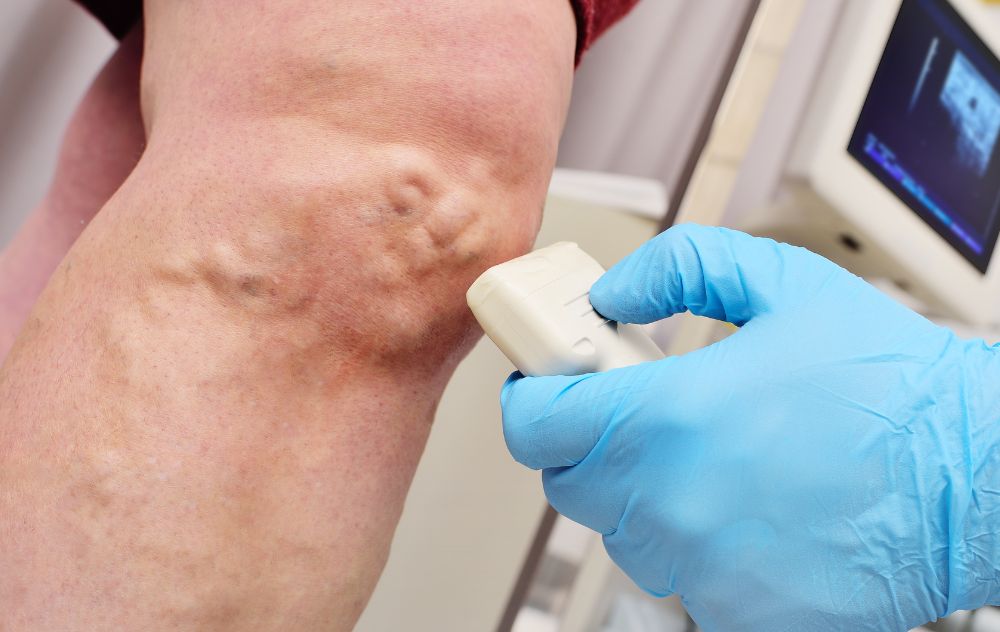
During the test, a technician spreads a small amount of gel on your skin. They then move a handheld device called a transducer along your leg. The device sends images to a screen so your vein specialist can see inside the vein. This lets them check whether your one-way valves are working the way they should.
The exam usually takes 30 to 60 minutes. You may stand or lie down, depending on which veins need a closer look. There are no needles and no downtime afterward. You can typically drive yourself home and return to normal activities right away.
Venous Reflux Testing
Part of this test often includes venous reflux testing. This checks how long it takes blood to flow backward in a vein after you tense and release your calf muscle. Blood should flow forward toward your heart. If it flows backward for too long, that points to a failing valve. This backward flow is called venous reflux, and it is a key sign of venous insufficiency.
The same ultrasound can also rule out blood clots. Our team treats this as an important safety check before any treatment planning begins.
Because ultrasound shows more than the eye can see, results sometimes surprise patients. Some people learn that veins deeper in the leg are affected, even when only small surface veins were visible before the test. This can change the entire treatment plan.
Understanding Your Diagnosis in Plain Language
Once your exam and ultrasound are done, your provider will not leave you with confusing medical terms. This is when your doctor will break down the in a way you can understand your varicose vein diagnosis.
They will tell you how mild or advanced your vein disease looks. Doctors sometimes use a scale that runs from small spider veins on one end to more serious skin changes or an open sore on the other. You do not need to memorize the scale. Your provider will simply explain where your case falls and what that means for you.
Knowing where you stand helps your provider choose the right next step, and it can also support your insurance claim if treatment is recommended.
What Your Diagnosis Means for Treatment
Once your provider has the full picture, they will explain a few things. They will tell you what type of vein disease you may have. They will explain how advanced it looks. Then they will walk you through which treatment options may fit your case. Preparing questions to ask your vein doctor before treatment can help you understand your options, recovery, and expected results before deciding on the next step.
Getting the diagnosis right matters for another reason too. Chronic venous insufficiency tends to get worse over time if it is left untreated. We tell our patients that catching it early can help avoid more serious complications down the road.
An accurate diagnosis also supports insurance coverage decisions. Many insurance plans require documented reflux or symptom severity before they approve treatment. Without clear ultrasound evidence, some insurers may treat your case as cosmetic, even if your symptoms are very real.
Our doctors offer several minimally invasive treatment options. These include endovenous laser treatment (EVLT), which closes off a damaged vein using heat delivered through a thin catheter. Your vein specialist selects a treatment based on your specific ultrasound findings, not a one-size-fits-all approach. In milder cases, our doctors may start with conservative options like compression therapy before considering a procedure.
When It Is Time to See a Vein Specialist
If you notice symptoms of vein disease, it may be time to schedule an evaluation. Watch for visible veins, leg swelling, aching, or changes in your skin color. Vein disease rarely goes away on its own. Waiting can allow your symptoms to get worse and raise your risk of complications like leg ulcers.
A vein specialist has specific training and imaging tools that a general checkup does not include. Understanding what type of doctor treats vein disease can help you choose a provider with the right expertise to diagnose and manage your condition.
How USA Vein Clinics Can Help
Getting evaluated for varicose veins is about more than confirming what you can already see in the mirror. It is about understanding what is happening beneath the surface. That knowledge helps you and your provider build a treatment plan around your specific case.
When you schedule a consultation with USA Vein Clinics, your visit starts with a conversation about your symptoms and health history. From there, you will have a duplex ultrasound so our doctors can see exactly how your veins are functioning. Once we have those results, we walk you through which minimally invasive options may work for you.
Taking that first step toward diagnosis is often the hardest part. After that, most patients say the process moves faster than they expected, and having an actual plan feels a lot better than wondering what is going on.
Get Answers
Ready to See If You Need a Varicose Veins Diagnosis?
A duplex ultrasound can reveal what a physical exam alone cannot, including whether your vein valves are working the way they should.
USA Vein Clinics offers minimally invasive, outpatient evaluations and treatment options performed without general anesthesia.
Frequently Asked Questions
References
- StatPearls. “CEAP Classification of Venous Disorders.” NCBI Bookshelf. Updated 2023.
- American Academy of Family Physicians. “Varicose Veins: Diagnosis and Treatment.” American Family Physician, 2019.
- Journal of Vascular Surgery: Venous and Lymphatic Disorders. “The 2020 Update of the CEAP Classification System and Reporting Standards.” 2020.
USA Vein Clinics Medical Review Team
Our medical review team includes vascular surgeons and vein specialists who evaluate and treat vein disease using minimally invasive, outpatient procedures.
Medical disclaimer: USA Vein Clinics content provides medical education only. It is not a diagnosis or treatment recommendation. Consult a vein specialist for evaluation.