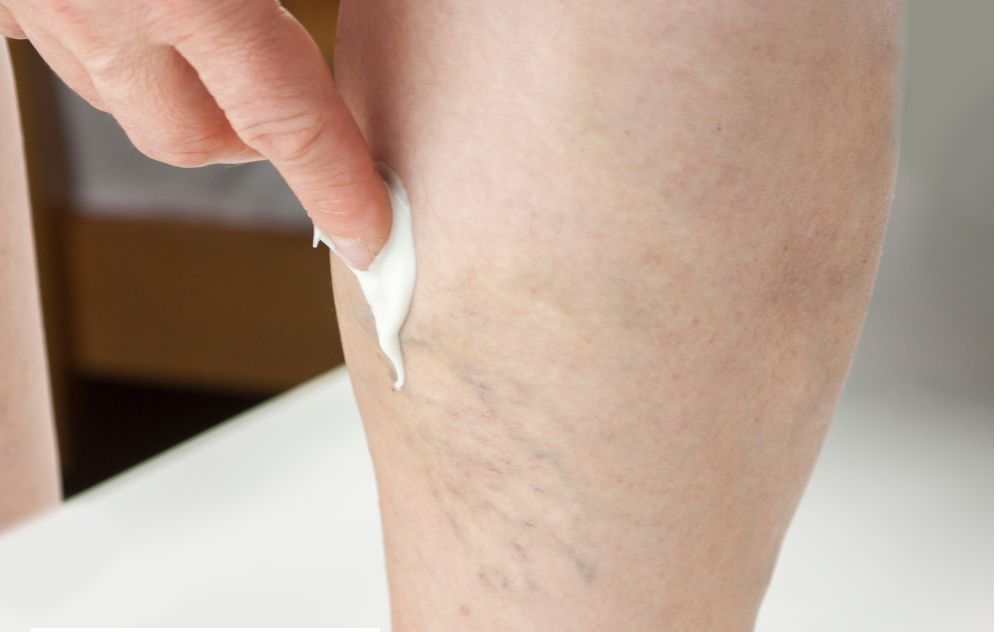

Varicose vein creams cannot treat the underlying cause of varicose veins. These products are applied to the surface of the skin, but varicose veins result from damaged valves deep inside the vein wall — a structural vascular problem that no topical product can reach or repair. Some creams may reduce the appearance of mild surface discoloration or temporarily ease skin-level symptoms such as itching or dryness, but they do not close, eliminate, or reverse varicose veins. Minimally invasive vein treatments performed in an outpatient setting by a board-certified vein specialist address the root cause. If you have visible varicose veins or leg symptoms, a consultation with a vein specialist is the appropriate next step to determine whether treatment is right for you.
What Are Varicose Veins and What Causes Them?
Varicose veins are enlarged, twisted veins that typically appear on the legs and thighs. They form when the one-way valves inside a vein stop functioning correctly. Healthy vein valves open to allow blood to flow upward toward the heart, then close to prevent it from flowing backward. When a valve weakens or fails, blood pools in the vein and pressure builds. Over time, the vein wall stretches and the vein becomes visibly enlarged.
This condition is often a sign of chronic venous insufficiency, also called venous reflux — a medical condition in which blood is not circulating properly through the veins of the leg. Venous reflux is the underlying mechanism behind most varicose veins. It is not a cosmetic problem. Without evaluation and appropriate treatment, venous reflux can progress and cause symptoms such as leg heaviness, aching, swelling, skin changes near the ankle, and in some cases, venous ulcers.
Common risk factors include family history, prolonged standing or sitting, pregnancy, age, and excess body weight. However, varicose veins can develop in people without any of these risk factors, which is why an evaluation with a board-certified vein specialist — including a duplex ultrasound to map venous reflux — is the only reliable way to understand the severity of vein disease in an individual patient.
What Do Varicose Vein Creams Claim to Do?
Products sold as varicose vein creams are widely available over the counter at pharmacies and online retailers. Their packaging and marketing typically claim the cream will reduce the appearance of varicose veins, relieve symptoms such as aching and swelling, or improve circulation in the legs. Some products are marketed specifically for use during pregnancy or for people with active jobs that require prolonged standing.
These claims are not supported by clinical evidence from controlled trials. No topical cream has been approved by the U.S. Food and Drug Administration to treat varicose veins. The claims on product packaging fall under cosmetic or supplement marketing categories, which are subject to different regulatory standards than pharmaceutical treatments or medical devices. Understanding what is in these products — and what the evidence actually shows — helps patients make informed decisions about their care.
What Ingredients Are Commonly Found in Varicose Vein Creams?
Most varicose vein creams contain one or more of the following active or featured ingredients. Here is what each ingredient is, what proponents claim, and what the available evidence shows.
Horse Chestnut Extract: What the Research Actually Shows
Horse chestnut seed extract contains a compound called aescin, which has been studied for its potential effect on vein tone and capillary permeability. The Cochrane Library has reviewed the research on horse chestnut seed extract and found limited evidence suggesting that oral horse chestnut extract supplements may provide some symptomatic relief from leg swelling and aching associated with chronic venous insufficiency. However, those studies evaluated oral supplementation — not topical cream application. There is no established clinical evidence that aescin penetrates the skin in sufficient concentrations to produce the same effects when applied as a cream. Patients considering horse chestnut in any form should consult a physician, as it can interact with blood-thinning medications.
Vitamin K in Vein Creams: What It Does and What It Does Not Do
Vitamin K is sometimes included in vein creams based on its role in blood clotting and its use in topical formulations for reducing bruising. Some product manufacturers suggest it reduces the appearance of surface spider veins. There is no peer-reviewed clinical evidence supporting the use of topical vitamin K to treat varicose veins or venous reflux. It may assist in fading surface discoloration related to bruising or broken capillaries, but this is unrelated to the valve dysfunction that causes true varicose veins.
Arnica, Witch Hazel, and Other Common Topical Ingredients
Arnica is a botanical extract with a history of topical use for bruising and mild inflammation. Witch hazel is an astringent derived from the bark of the witch hazel shrub. Both are commonly found in varicose vein cream formulations. Neither has been studied in randomized controlled trials as a treatment for varicose veins. Their inclusion in these products is more consistent with traditional herbal use than with clinical evidence. They may contribute to temporary skin-level comfort such as a cooling sensation, without addressing the underlying vascular condition.
Does Varicose Vein Cream Actually Work? What the Evidence Shows
No published evidence from controlled clinical trials demonstrates that any varicose vein cream treats, reduces, or reverses varicose veins.
What NICE and the Cochrane Library Say About Topical Vein Products
The National Institute for Health and Care Excellence (NICE), the United Kingdom’s leading clinical guidance body, does not recommend topical creams as a treatment for varicose veins. NICE guidelines on varicose veins identify endothermal ablation, foam sclerotherapy, and surgery as the evidence-based treatment pathways, with no mention of topical products as a meaningful therapeutic option.
The Cochrane Library has reviewed the evidence on horse chestnut seed extract for chronic venous insufficiency and found that while some oral preparations showed symptomatic benefit versus placebo in earlier trials, the quality of evidence was rated as low to moderate, and no topical cream application studies were included. The Cochrane reviewers noted that larger, higher-quality trials were needed before definitive conclusions could be drawn even for oral formulations.
A small open-label pilot study published in the National Institutes of Health’s PubMed database on one branded topical cream was single-arm, had no control group, and the authors themselves characterized the results as inconclusive and preliminary. This study does not constitute evidence that topical vein creams are effective.
What Vein Cream Can Do — and What It Cannot Do
Understanding the realistic scope of what a topical cream can and cannot accomplish helps patients avoid wasting time on products that delay effective care.
If you’re thinking about getting a tattoo on your legs, it’s important to know that vein creams won’t eliminate varicose veins or address the underlying vein disease. Learn whether it’s safe to tattoo over varicose veins and why treating them first is often recommended.
What a vein cream may do:
- Temporarily moisturize and soften the skin over affected areas
- Provide a mild cooling or soothing sensation
- Reduce the appearance of surface skin discoloration related to minor bruising
What a vein cream cannot do:
- Repair or close a damaged vein valve
- Eliminate varicose veins
- Treat venous reflux or chronic venous insufficiency
- Prevent varicose veins from progressing
- Substitute for a duplex ultrasound evaluation
- Replace minimally invasive vein treatment
If you are considering treatment, learn what life after varicose vein treatment is really like, including what to expect during recovery, when symptoms typically improve, and how patients describe their results after minimally invasive vein procedures.
Untreated varicose veins can also increase the risk of certain vein complications. While varicose veins are not the same as deep vein thrombosis (DVT), it’s important to understand how the two conditions are connected and when symptoms may require prompt medical attention. Learn whether varicose veins can turn into DVT and the warning signs you shouldn’t ignore.
Compression stockings, used consistently as directed by a physician, represent a more clinically supported conservative option for managing varicose vein symptoms than topical creams. However, compression also does not repair valve damage — it provides symptom management while a patient pursues evaluation and treatment.
Many people also wonder whether exercise can cause visible veins. Learn whether you can get varicose veins from working out and how physical activity affects vein health.
Lifestyle habits can also influence how varicose vein symptoms feel from day to day. Learn how alcohol affects varicose veins and whether drinking may temporarily worsen swelling, heaviness, or discomfort.
When Should You Stop Using Vein Cream and See a Specialist?
Symptoms That Mean Cream Is No Longer Appropriate
Topical creams are not an appropriate response to the following symptoms. If you are using a vein cream and experiencing any of these, schedule a consultation with a board-certified vein specialist:
- Leg pain, aching, or heaviness that worsens by the end of the day or after prolonged standing
- Visible varicose veins that are growing larger, more prominent, or more numerous
- Swelling in the lower leg, ankle, or foot that does not resolve overnight
- Skin changes near the ankle, including redness, darkening, or a leathery texture
- Open sores or wounds near the ankle that are slow to heal
- A varicose vein that is hard, warm, or tender to the touch
- Bleeding from a varicose vein
What Happens If Varicose Veins Are Left Untreated
Varicose veins are not only a cosmetic concern. Untreated venous reflux can progress to chronic venous insufficiency, a condition associated with persistent leg swelling, skin breakdown, and venous stasis ulcers — wounds near the ankle that can be slow to heal and are associated with significant pain and reduced quality of life. Early evaluation and appropriate treatment reduce the risk of these complications. A physician-performed duplex ultrasound is the diagnostic standard for identifying the extent of venous reflux before any treatment decision is made.
How Are Varicose Veins Actually Treated? Minimally Invasive Options Explained
Varicose vein treatment has changed significantly in recent decades. The standard of care is no longer surgical stripping. Board-certified vein specialists now use image-guided, minimally invasive techniques performed in an outpatient clinic setting, typically without general anesthesia, that allow most patients to return to normal activity within one to two days.
Endovenous Laser Treatment (EVLT)
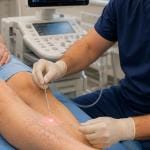
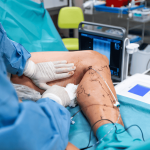
Endovenous Laser Treatment uses ultrasound guidance to position a thin laser fiber inside the affected vein. The laser delivers targeted heat energy that closes the vein from the inside. Blood is then naturally rerouted through healthy veins. EVLT is one of the most studied minimally invasive vein procedures, with published data showing high procedural success rates in peer-reviewed vascular literature. The procedure typically takes less than an hour and patients walk out of the clinic after treatment.
Radiofrequency Ablation (RFA)
Radiofrequency Ablation uses a catheter-delivered radiofrequency current to heat and close the damaged vein. Like EVLT, it is ultrasound-guided and performed under local anesthesia in an outpatient setting. Studies published in peer-reviewed vascular surgery literature report high anatomical closure rates and patient satisfaction.
Ultrasound-Guided Sclerotherapy
Sclerotherapy involves injecting a chemical solution directly into the affected vein under ultrasound guidance. The solution irritates the vein wall and causes it to collapse. Sclerotherapy is commonly used for smaller varicose veins and spider veins and may be used in combination with EVLT or RFA for more comprehensive treatment of vein disease.
Is Minimally Invasive Vein Treatment Covered by Insurance?
Minimally invasive vein treatments — including EVLT, RFA, and ultrasound-guided sclerotherapy — are often covered by insurance when the treating physician documents that varicose veins are causing medical symptoms such as pain, swelling, or skin changes. USA Vein Clinics accepts most major insurance plans and works with patients to verify coverage before treatment begins. Coverage determinations are made on an individual basis. A consultation and duplex ultrasound are typically required before an insurance review can be initiated.
What to Expect at a USA Vein Clinics Consultation
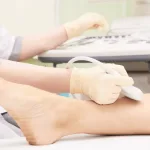
A consultation at USA Vein Clinics begins with a conversation about your symptoms, medical history, and any prior treatments or conservative measures you have tried. If varicose veins or venous reflux are suspected, your physician will typically order a duplex ultrasound — a non-invasive imaging study that maps venous reflux and identifies which veins are affected and to what degree.
If you are a candidate for minimally invasive treatment, your physician will review your options, explain what the procedure involves, and answer your questions before any plan is confirmed. USA Vein Clinics has more than 160 locations nationwide and accepts most major insurance plans. Learn more about what minimally invasive vein treatment involves and what to expect at your appointment.
Frequently Asked Questions About Varicose Vein Cream
Q: Does varicose vein cream actually work?
A: No. Varicose vein creams cannot treat the underlying cause of varicose veins. Varicose veins form because the valves inside the vein wall fail, allowing blood to pool and the vein to enlarge. This is a structural vascular problem that topical products applied to the skin cannot reach or repair. Some creams may temporarily moisturize the skin or provide a mild cooling sensation, but they do not close veins, repair valves, or reverse venous reflux. No topical varicose vein cream has been approved by the FDA as a treatment for varicose veins. If you have visible varicose veins or leg symptoms, a consultation with a board-certified vein specialist — including a duplex ultrasound evaluation — is the appropriate path to understanding your condition and your options.
Q: What is the root cause of varicose veins, and can cream fix it?
A: The root cause of most varicose veins is a condition called venous reflux, also known as chronic venous insufficiency. In a healthy vein, one-way valves open to allow blood to travel upward toward the heart and close to prevent it from flowing backward. When these valves weaken or fail, blood flows backward and pools in the vein. Pressure builds over time and the vein stretches and enlarges. This process happens inside the vein wall, well below the surface layer of the skin. Topical creams stay on or just beneath the surface and cannot reach the damaged valves that cause the problem. Cream cannot fix venous reflux. Minimally invasive treatments such as EVLT or radiofrequency ablation work by closing the affected vein from the inside, which addresses the underlying cause rather than the visible surface appearance.
Q: When should I stop using vein cream and see a specialist instead?
A: You should stop relying on vein cream and schedule a consultation with a board-certified vein specialist if you experience any of the following: leg pain, aching, or heaviness that worsens by the end of the day; varicose veins that are growing larger or more numerous; swelling in the lower leg or ankle; skin changes near the ankle such as redness, darkening, or thickening; slow-healing wounds near the ankle; or a vein that is warm, firm, or tender to the touch. These symptoms suggest that venous reflux may be progressing and that a cream is not an appropriate response. Delayed evaluation and treatment can allow the condition to worsen. A physician-performed duplex ultrasound is the standard first step for understanding the extent of vein disease and determining whether treatment is indicated.
Q: Is varicose vein cream safe to use during pregnancy?
A: This question requires a physician’s guidance and cannot be answered with a general recommendation. Pregnancy itself is associated with an increased risk of varicose veins due to increased blood volume and hormonal changes that affect vein wall tone. Many topical products contain botanical ingredients such as horse chestnut extract that have not been evaluated for safety in pregnancy in rigorous clinical trials. Some ingredients carry theoretical risks in pregnancy due to their effect on circulation or the potential for skin absorption. If you are pregnant and experiencing varicose vein symptoms, speak with your obstetrician before applying any topical vein product. Minimally invasive vein treatments are typically deferred until after delivery when venous changes associated with pregnancy can be fully reassessed.
Q: Are varicose veins only a cosmetic problem?
A: No. While visible varicose veins are often noticed for cosmetic reasons, they can be a sign of an underlying medical condition called chronic venous insufficiency, which involves impaired circulation through the veins of the leg. When venous reflux is left untreated, symptoms can progress from mild discomfort to significant leg heaviness, swelling, and in more advanced cases, skin changes and venous stasis ulcers near the ankle. For this reason, varicose veins should be evaluated by a board-certified vein specialist, not managed with surface-level products or dismissed as a cosmetic concern. A duplex ultrasound evaluation is the clinical standard for determining whether venous reflux is present and how extensive it is. Insurance coverage for minimally invasive treatment is often available when medical symptoms are documented by a treating physician.
Q: What minimally invasive alternatives to surgery are available for varicose veins?
A: Several image-guided, non-surgical treatment options are available. Endovenous Laser Treatment (EVLT) uses a laser fiber positioned inside the vein under ultrasound guidance to close the affected vein with targeted heat. Radiofrequency Ablation (RFA) uses a catheter to deliver radiofrequency energy that closes the vein from the inside. Ultrasound-guided sclerotherapy involves injecting a solution that causes the vein to close. All three procedures are performed in an outpatient clinic setting, typically under local anesthesia, with no surgical incision required. Most patients return to normal daily activity within one to two days. Want to see what these minimally invasive treatments can achieve? Browse our before-and-after gallery to see real treatment results from patients treated for varicose veins and other vein conditions.
These procedures are performed by board-certified vein specialists and are often covered by insurance when medical symptoms are present. A consultation at USA Vein Clinics includes a diagnostic ultrasound to determine which treatment approach is most appropriate for an individual patient.
Ready to Learn About Your Options? Schedule a Consultation
If varicose vein creams have not addressed your symptoms, or if your varicose veins are causing leg pain, swelling, or skin changes, the appropriate next step is a consultation with a board-certified vein specialist. At USA Vein Clinics, every patient evaluation begins with a physician assessment and includes a duplex ultrasound when clinically indicated. This allows your physician to understand the source of your symptoms before recommending a treatment plan. There is no pressure to proceed with treatment at your consultation — the goal is to give you accurate information about your condition and your options.
Schedule a Consultation at USA Vein Clinics — with more than 160 locations nationwide and most major insurance plans accepted, getting evaluated is a straightforward next step.
This content is intended for educational purposes only and does not constitute medical advice. Individual treatment decisions should be made in consultation with a qualified physician.