
Medically reviewed by
USA Clinics Medical Review Team
Experienced physicians specializing in venous disease
Reviewed: August 2026
Delaying vein treatment allows vein disease to advance — and because chronic venous insufficiency (CVI) is a progressive condition, symptoms that start mild almost always worsen without medical attention. Many people put off getting evaluated for months or even years, assuming leg heaviness, swelling, or visible varicose veins are a normal part of getting older. The problem is that vein valves do not repair themselves. Blood pooling, venous pressure, and the physical changes that follow keep building the entire time treatment is postponed. Whether you are noticing early signs of venous disease or have been living with varicose veins for years, understanding what happens during that wait, and what becomes harder to reverse, can help you make a clear-eyed decision about your vein health.
Why Vein Disease Gets Worse Over Time
Chronic venous insufficiency develops when vein valves weaken and stop closing properly. Instead of moving blood upward to the heart, blood flows backward and pools in the lower legs — a process called venous reflux. That pooling raises pressure inside the veins continuously, and the damage it causes is cumulative. Each month of delay is another month of elevated venous pressure working against the walls of your veins and the tissue surrounding them.
Unlike a strained muscle or a skin wound, damaged vein valves do not recover on their own. There is no point at which venous reflux corrects itself or varicose veins naturally shrink. The stages of chronic venous insufficiency move in one direction: forward. The window to treat the condition before skin changes, venous ulcers, or blood clot risk develop narrows with time.
Vein disease is also far more common than most people realize. Around 23 percent of U.S. adults have varicose veins,[1] and a much larger share have underlying venous insufficiency that has not yet caused visible veins. Most people in the early stages manage their discomfort without realizing the condition is progressing beneath the surface.
Early Vein Disease Symptoms That Are Easy to Ignore
Most people delay treatment because their early vein disease symptoms feel manageable. Leg heaviness that eases up on the weekend. Mild ankle swelling that is mostly gone by morning. A few visible varicose veins that are easy to cover. These symptoms are real signs of venous reflux already at work, but because they come and go, it’s easy to assume they’re harmless.
Common early-stage signs of venous insufficiency include:
- Aching, tired, or heavy legs – particularly after prolonged sitting or standing
- Leg swelling or ankle edema, especially toward the end of the day
- Visible spider veins or bulging varicose veins
- Burning, itching, or throbbing sensations near visible veins
- Leg cramping or restless legs at night
Even when these symptoms feel tolerable, the underlying blood pooling and venous pressure are not pausing. Vein disease does not stabilize on its own while you wait.
What Happens to Your Legs the Longer Vein Treatment Is Delayed
Untreated venous insufficiency follows a predictable course. Symptoms that were intermittent become constant. Changes that were invisible begin to show. Here is what that progression tends to look like:
Symptoms Become Harder to Manage
In early-stage venous insufficiency, elevating your legs or wearing compression stockings can bring meaningful relief. As the disease progresses, those strategies stop working as well. Leg swelling becomes persistent rather than episodic. The heavy, aching feeling lasts through the morning instead of clearing up overnight. Compression therapy, which can slow progression, cannot reverse valve damage that has already occurred. The longer venous pressure builds unchecked, the less lifestyle adjustments can compensate for it.
Skin Discoloration and Damage Develop
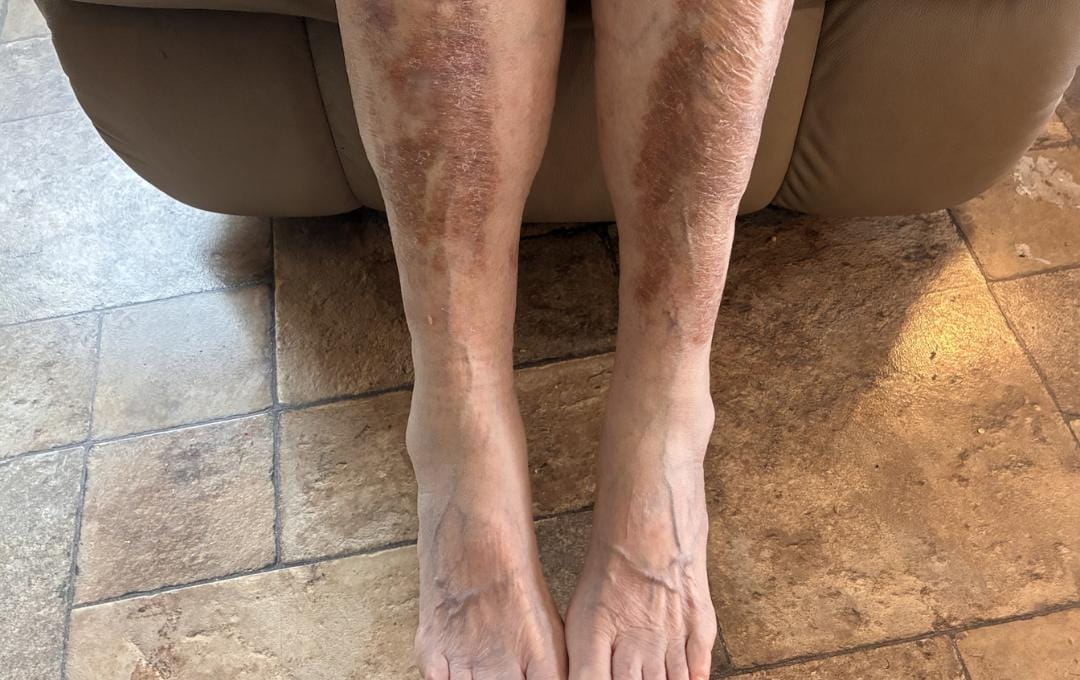
One of the more significant consequences of delayed vein treatment is what it does to the skin around the ankle and lower leg. As venous pressure rises, fluid and blood cells leak into surrounding tissue. The visible results include:
- Hemosiderin staining: reddish-brown skin discoloration on the lower legs caused by iron deposits from leaking blood
- Stasis dermatitis: inflamed, itchy, scaly skin that resembles eczema but originates from poor venous circulation
- Lipodermatosclerosis: thickening and hardening of the skin in the lower leg, leaving it leathery and increasingly fragile
These changes are signs the underlying vein disease is progressing into its mid-to-late stages. Some signs, including skin discoloration, can become permanent if the vein disease driving them is not treated.
Venous Leg Ulcers Can Form
Venous leg ulcers are the most serious visible complication of untreated CVI. These open, shallow wounds appear near the ankle where venous pressure is greatest. They are slow to heal, prone to infection, and highly likely to return unless the underlying vein disease is treated directly, not just the wound itself. Venous ulcers carry an annual U.S. payer burden estimated at $14.9 billion and are associated with significant loss of mobility and quality of life.[2]
Blood Clot Risk Rises
Prolonged blood pooling in the leg veins creates conditions that increase the risk of clot formation. Varicose veins are associated with an increased risk of deep vein thrombosis (DVT), although the overall risk remains relatively low.[3] DVT is a blood clot that forms in a deep leg vein — and if part of that clot breaks loose and travels to the lungs, it becomes a pulmonary embolism, which is a medical emergency. Untreated venous insufficiency is not simply a comfort issue; it is a circulatory disease with real systemic risk when left to progress.
Vein specialists at 160+ locations nationwide can evaluate your symptoms and walk you through your options.
Does Delaying Vein Treatment Limit Your Options?
Not necessarily, but it can make treatment more complex. Minimally invasive vein treatments can address venous insufficiency at a wide range of stages, including after skin changes have developed. What changes when treatment is delayed is how much the surrounding tissue has been affected, how long recovery takes, and whether additional wound care is needed before or alongside vein treatment.
Every treatment plan begins with a duplex ultrasound to confirm venous reflux, identify the affected veins, and determine which minimally invasive treatment option is the best fit.
The varicose vein treatment options available at USA Vein Clinics include:
- Endovenous Laser Therapy (EVLT) – a thin laser fiber is guided into the diseased vein under ultrasound imaging, sealing it from the inside. Performed in-office with local anesthesia.
- Radiofrequency Ablation (RFA) – uses controlled heat delivered through a catheter to close damaged veins. An outpatient procedure with minimal recovery time.
- VenaSeal – a medical adhesive that closes the diseased vein without heat or tumescent anesthesia, rerouting blood through healthy veins immediately.
- Varithena – a microfoam sclerotherapy option that treats varicose veins below and above the knee, including those that are difficult to reach by catheter.
- Ultrasound-Guided Sclerotherapy – an image-guided injectable treatment for moderate to severe varicose veins that are not visible at the surface.
Every one of these procedures is outpatient, image-guided, and performed without general anesthesia. Most patients walk out of the clinic the same day and return to light activity within 24 hours. Earlier-stage treatment makes each of these options more straightforward, which is another reason prompt evaluation matters.
When to See a Vein Specialist
There is no universal threshold that marks the right time to seek care, but most vein specialists recommend evaluation when symptoms start to affect daily life or when physical changes appear. The following are clear indicators that a vein evaluation makes sense now rather than later:
- Leg swelling that does not fully resolve overnight or with elevation
- Skin discoloration, itching, or thickening around the ankles or lower legs
- Varicose veins that are tender, warm to the touch, or aching
- Leg pain or heaviness that worsens with prolonged standing or sitting
- Any wound or sore near the ankle that is slow to heal
Evaluation starts with a duplex ultrasound, which is a painless, non-invasive imaging test that maps blood flow through the leg veins and pinpoints exactly where valve dysfunction is occurring. Most insurance plans, including Medicare, cover this diagnostic step when there are symptoms of venous disease. From there, a vein specialist builds a treatment plan specific to your anatomy and stage of disease.
Vein Treatment Recovery Is Faster Than Most People Expect
One of the most common reasons patients delay vein treatment is concern about recovery time. Most minimally invasive procedures take 30 to 60 minutes and are completed in a clinic setting. Patients are encouraged to walk immediately after treatment. The majority return to desk work the same day and to full activity within a week or two, depending on the specific procedure performed.
Most major insurance plans, including Medicare and Medicaid, cover vein treatment when venous reflux is confirmed by a diagnostic ultrasound. Questions about vein treatment insurance coverage that patients put off asking are often answered in a single call. Coverage is based on active, symptomatic disease at the time of evaluation, not on how long symptoms have been present.
Taking the Next Step
Vein disease is one of the more treatable progressive conditions, but only if it is addressed before the damage it causes becomes difficult to reverse. Whether your symptoms are mild and you are simply trying to understand what they mean, or you have been managing progressive leg discomfort for years, a consultation with a vein specialist gives you an accurate picture of where things stand.
The vein specialists at USA Vein Clinics treat venous insufficiency, varicose veins, spider veins, venous leg ulcers, and related conditions at more than 160 locations nationwide. Most evaluations are covered by insurance, including Medicare. Online scheduling is available seven days a week.
Next step
Find a Vein Clinic Near You
Vein disease does not stay the same – but the path to relief is accessible and minimally invasive. USA Vein Clinics specialists are available at 160+ locations nationwide to evaluate your symptoms, confirm your diagnosis, and walk you through your options.
Questions? Call (888) 768-3467
FAQs About Delaying Vein Treatment
References
- Beebe-Dimmer, J.L., et al. “The Epidemiology of Chronic Venous Insufficiency and Varicose Veins.” Annals of Epidemiology. 2005;15(3):175-84. https://pubmed.ncbi.nlm.nih.gov/15723761/
- Rice, J.B., et al. “Burden of Venous Leg Ulcers in the United States.” Journal of Medical Economics. 2014;17(5):347-56. https://pubmed.ncbi.nlm.nih.gov/24625244/
- Chang SL et al. Association of Varicose Veins With Incident Venous Thromboembolism and Peripheral Artery Disease. JAMA. 2018.
Medical Disclaimer: USA Vein Clinics content provides medical education only. It is not a diagnosis or treatment recommendation. Consult a vein specialist for a personalized evaluation of your condition.