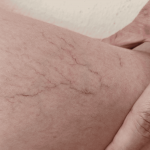
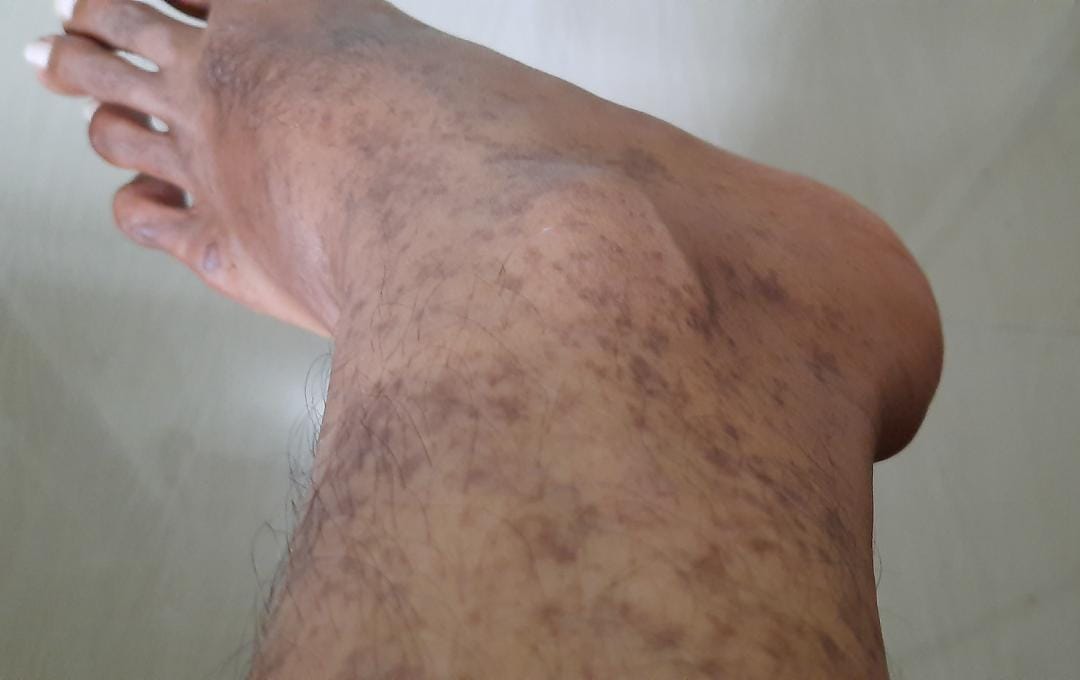
You notice a patch of brown or darkened spots near your ankle one day that wasn’t there before. It doesn’t hurt, it doesn’t itch, and it’s easy to dismiss as a bruise or an age spot. But when it doesn’t fade, it raises a natural question: what’s actually going on?
Brown skin discoloration on the lower legs has several possible causes, including a recent injury, certain medications that increase bruising (such as blood thinners), and impeded blood flow from . Paying attention to how the discoloration appears can offer clues about what’s contributing to the skin change and how it can be treated.
What Does Brown Skin Discoloration on the Lower Legs Look Like?
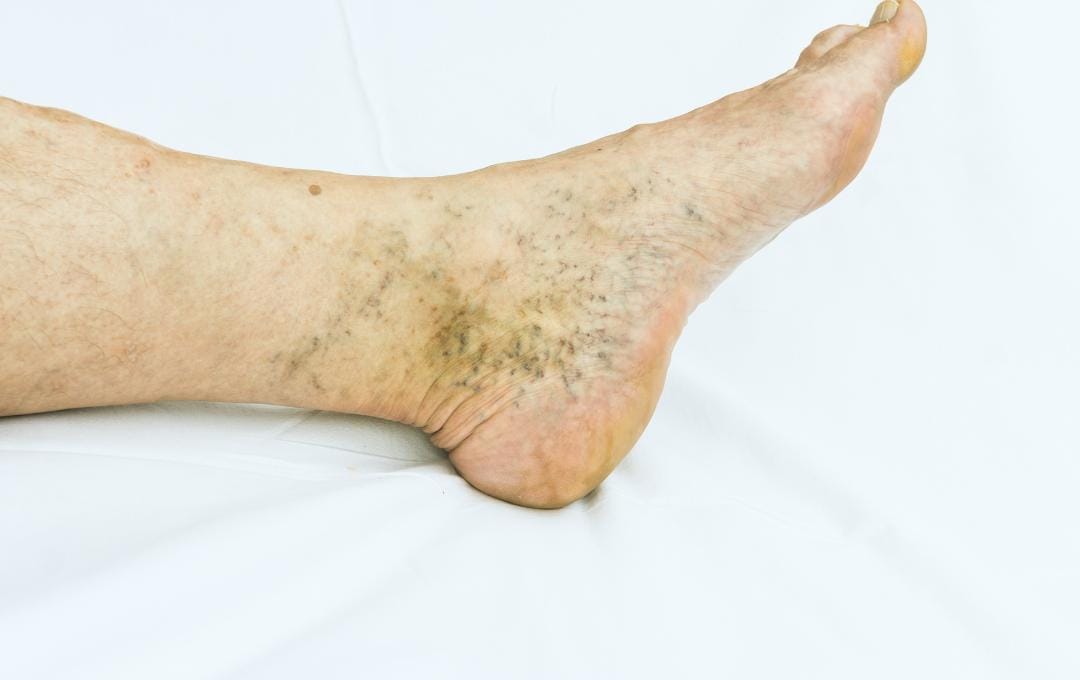
The appearance of brown discoloration can vary from patient to patient. When dark blotches on lower legs are related to vein disease, the affected skin may look:
- Tan, rust-colored, or reddish-brown
- Patchy rather than one solid, clearly defined area
- Slightly thickened or leathery in texture
- Dry and flaky
Causes of Dark Spots on Lower Legs
There are various causes of dark spots on the lower legs including:
- Poor Circulation: Vein disease known as chronic venous insufficiency, occurs when the veins become weak or damaged, causing blood to pool in the legs. Blood pooling can add pressure on the veins, causing blood to leak into the skin and leave discolored patches.
- Sun exposure: Prolonged sun exposure can increase the production of melanin and leave “age spots” on the skin. This is more common in individuals who burn more easily or spend a lot of time outside.
- Injuries: Sprains or bug bites can cause inflammation or bruising that discolors the skin.
- Diabetes: While the exact reason is unknown, some diabetic patients develop dark “shin spots” over time.
- Melanoma: Skin cancer can appear differently in patients, but can commonly appear on the face, arms, back, and legs.
- Medications: Certain medications, such as blood thinners or anticoagulants, can increase the risk of bruising, which may lead to brown spots on the legs over time.
- Other Skin Conditions: Skin conditions such as stasis dermatitis, which is caused by vein disease, can make the skin appear dry, flaky, and discolored.
What is Hemosiderin Staining?
Hemosiderin staining is the medical term for brown or darkened spots on the legs. When the staining is caused by vein disease, the blood that’s pooling in the legs can seep into the surrounding tissues. As this happens, blood cells can break down and release iron particles called hemoglobin into the skin. Hemoglobin contains a pigment that can leave brown, yellow, or rust-colored patches on the skin.
Symptoms That May Appear Alongside Lower Leg Discoloration
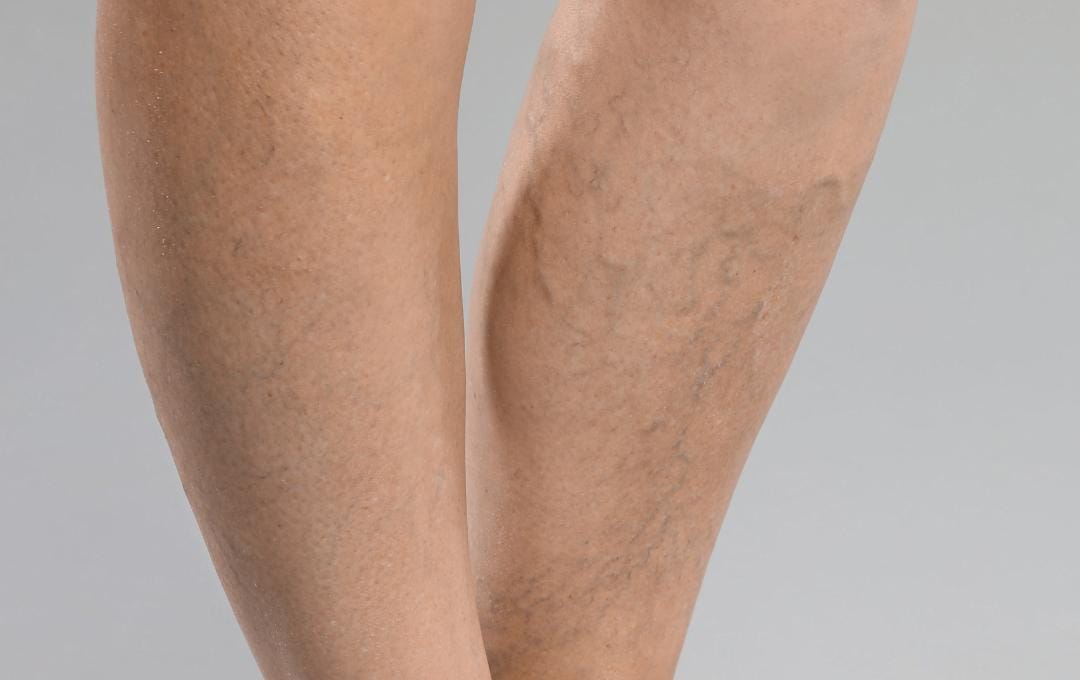
When vein disease is the cause, brown discoloration of the lower legs rarely appears on its own. Other symptoms tend to develop in the legs, including:
- Swelling
- Persistent feelings of heaviness or fatigue
- Varicose veins
- Itching near the dark blotches on the lower legs
- Restlessness, especially at night
If any of these symptoms occur with skin discoloration, it’s important to seek a medical evaluation for vein disease.
Treatments for Lower Leg Discoloration
While topical creams may help improve the skin’s appearance, they do not treat the underlying vein disease that caused the brown discoloration.
To treat lower leg discoloration effectively, treatment should be focused on improving blood flow. This may involve minimally invasive procedures that close or seal diseased veins shut. As a result, blood reroutes through healthier veins, preventing the discoloration from worsening and alleviating accompanying leg pain and swelling.
Vein treatments at USA Vein Clinics are FDA-approved and performed on an outpatient basis. While procedure times vary based on the treatment, patients can get the care they need and return to their daily routine the same day.
Why Early Evaluation Matters
Early evaluation of skin discoloration matters because darkened patches can indicate that the underlying vein disease has advanced. Left untreated, this condition may cause the skin to break down into open, shallow sores that may be slow to heal or not at all—a complication known as venous ulcers. The sooner vein disease is treated, the lower the risk is of developing these sores.
Contact USA Vein Clinics
If you’re concerned that the skin discoloration on your legs is signaling vein disease, a vein screening is a helpful first step.
At USA Vein Clinics, one of our experienced specialists will review your symptoms and use advanced ultrasound imaging to evaluate your blood flow. If vein disease is detected, the vein specialist will develop a personalized treatment plan based on your results, medical history, and symptoms.
Because vein disease can gradually worsen and lead to complications, vein screenings and medically necessary treatments are covered by insurance. We offer instant insurance verification during scheduling to help you understand your coverage.
If you’re ready to take the next step, find a vein specialist near you and schedule your consultation today.
FAQs
What do legs with poor circulation look like?
If vein disease is causing poor circulation, the legs may look swollen and have visible varicose or spider veins at first. As vein disease progresses, it can cause the skin to look discolored, dry, or hardened.
How do you remove dark patches on the legs?
If dark patches are caused by venous insufficiency, removing the patches may need more than just topical creams. Minimally invasive procedures can help address the underlying vein disease and prevent the discoloration from worsening.
Can you reverse poor circulation in the legs?
While poor circulation cannot be reversed, minimally invasive treatments can significantly improve symptoms by closing off damaged veins. As a result, blood flow is redirected through healthier veins, alleviating leg pain, swelling, and skin discoloration.