Medically reviewed by
Dr. Yan Katsnelson, MD
Cardiac Surgeon; Founder and CEO, USA Vein Clinics
Reviewed: September 2026
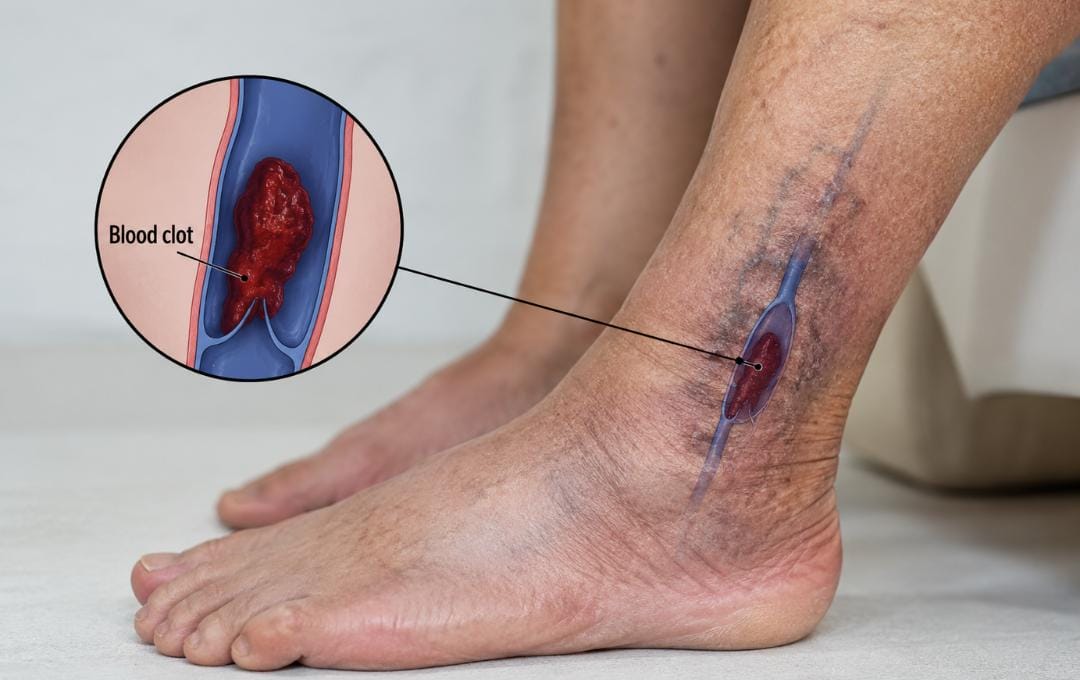
A blood clot in the ankle often shows up as one-sided swelling, deep throbbing pain, and warmth that does not fade with rest. These signs are easy to mistake for a sprain or ordinary soreness, but a clot that forms in the deep veins, known as deep vein thrombosis (DVT), can become a medical emergency if it travels to the lungs.
Recognizing the pattern early, and understanding how vein disease can raise your risk, gives you a real chance to act before complications set in.
What Does a Blood Clot in the Ankle Feel Like?
A blood clot in the ankle can feel different from a routine ache or a sprain. Many patients describe it as a deep, throbbing pressure that does not ease with rest, ice, or elevation. Others notice a heaviness or tightness in the ankle that gets worse throughout the day rather than better.
Common early sensations include:
- Dull pressure or heaviness in the ankle
- Deep, throbbing pain, similar to a pulled muscle
- Warmth or heat around the affected area
- Discomfort that worsens when standing, walking, or flexing the ankle
Some people do not notice symptoms at all in the early stages, which is one reason identifying risk factors for an ankle blood clot, including underlying vein disease, is worth paying attention to. Chronic venous insufficiency (CVI) occurs when the valves in the leg and ankle veins weaken, allowing blood to pool instead of flowing efficiently back to the heart.
How a Blood Clot Differs From Muscle or Joint Pain
Ordinary ankle pain, such as a strain or sprain, tends to follow a predictable healing pattern. It usually eases with rest, ice, and time. Pain associated with a blood clot behaves differently. It often lingers, intensifies rather than improves, and is not tied to a specific injury or overuse. General swelling from causes like heart or kidney issues tends to affect both ankles, while a clot typically causes symptoms on just one side.
What Are the Signs of a Blood Clot in the Ankle?
Alongside pain and tenderness, common signs of a blood clot in the ankle include:
- Swelling that does not improve overnight
- Skin discoloration, such as redness or a bluish tint
- Cramping or persistent soreness that does not resolve with rest
- Skin that feels warm to the touch over the affected area
If any of these symptoms appear suddenly or without a clear cause, scheduling a consultation with a vein specialist can help determine whether an underlying circulation issue, such as CVI, is contributing to your risk.
Early and Subtle Blood Clot Symptoms
In its earliest stages, an ankle blood clot may cause more subtle symptoms, such as:
- Mild swelling limited to one ankle
- Warmth or redness that does not fade
- Tightness or a sense of heaviness in the ankle
- Discomfort while flexing the ankle or walking
Because some blood clots do not cause noticeable symptoms right away, they can progress before they are identified. This is part of why understanding your personal risk factors, and getting evaluated early if you notice any of these signs, matters.
One Swollen Ankle Without Pain: Could It Still Be a Clot?
Yes. A single swollen ankle, even without pain, can still be a sign of a blood clot. Swelling can also stem from CVI or a minor injury, but ruling out a clot is an important first step, since DVT carries a risk of pulmonary embolism (PE) and long-term vein damage if it goes untreated.
Why Your Ankle Swells When a Clot Forms
A blood clot in the ankle disrupts normal circulation. As the clot blocks blood flow, pressure builds in the vein, and fluid leaks into the surrounding tissue, causing the visible swelling many patients notice first. Compared to swelling from fluid retention or a minor injury, clot-related swelling often feels firmer, and nearby veins may appear more visible due to the added pressure.
How Vein Disease and Blood Clots Are Connected
Vein disease can increase the risk of a blood clot forming in the ankle. When the valves inside leg veins weaken, blood does not flow efficiently back toward the heart. Instead, it pools and can thicken over time, which may contribute to clot formation. Two related conditions are worth understanding:
- Deep vein thrombosis (DVT): A clot in the deep veins of the leg or ankle that can cause pain, swelling, and discoloration
- Chronic venous insufficiency (CVI): A condition where weakened vein valves cause blood to pool, which may increase the risk of clotting and long-term swelling
These two conditions can coexist. Patients with a history of DVT are more likely to develop CVI over time, and long-standing CVI may increase the likelihood of future clot formation. This is why patients being evaluated for one of these conditions are often screened for the other as well.
When Ankle Symptoms May Signal a Medical Emergency
Most blood clot symptoms in the ankle develop gradually, but a clot can occasionally break free and travel toward the lungs, causing a pulmonary embolism (PE). This is a life-threatening emergency that requires immediate medical attention. Seek emergency care right away if you experience:
- Sudden shortness of breath
- Chest pain or discomfort that worsens with a deep breath or cough
- Feeling lightheaded, dizzy, or fainting
- A rapid pulse or rapid breathing
- Coughing up blood
An early diagnosis of a suspected blood clot is important. If you are experiencing any of the emergency symptoms above, call 911 or go to the nearest emergency room rather than waiting for a scheduled appointment.
Managing the Underlying Vein Disease Connection
Once an urgent blood clot has been ruled out or medically addressed, evaluating and managing the underlying vein disease that may have contributed to it becomes the next step. USA Vein Clinics specializes in diagnosing and treating chronic venous insufficiency using minimally invasive vein procedures, which are performed on an outpatient basis with little to no downtime. Timely evaluation of vein disease may help manage ongoing swelling, discomfort, and future clot risk associated with CVI.
Next Step
Concerned About Your Vein Health?
If you suspect a blood clot or notice ongoing symptoms of vein disease, such as swelling, aching, or heaviness in your legs or ankles, USA Vein Clinics can help evaluate your vein health using advanced duplex ultrasound imaging. Our nationwide clinics offer minimally invasive, outpatient vein treatments for underlying chronic venous insufficiency.
Frequently Asked Questions
- National Center for Biotechnology Information (NCBI). “Chronic Venous Insufficiency: A Review.” National Institutes of Health.
- MedlinePlus, National Library of Medicine. “Deep Vein Thrombosis.”
- Centers for Disease Control and Prevention (CDC). “Venous Thromboembolism (Blood Clots).”
Medical disclaimer: This article provides educational information about vein disease and related blood clot risk. It is not a diagnosis or medical advice. Only a qualified vein specialist can determine whether you have vein disease, and suspected blood clots should be evaluated promptly by a medical professional. If you have leg swelling, pain, or other vascular symptoms, consult a healthcare provider or contact USA Vein Clinics for an evaluation.