
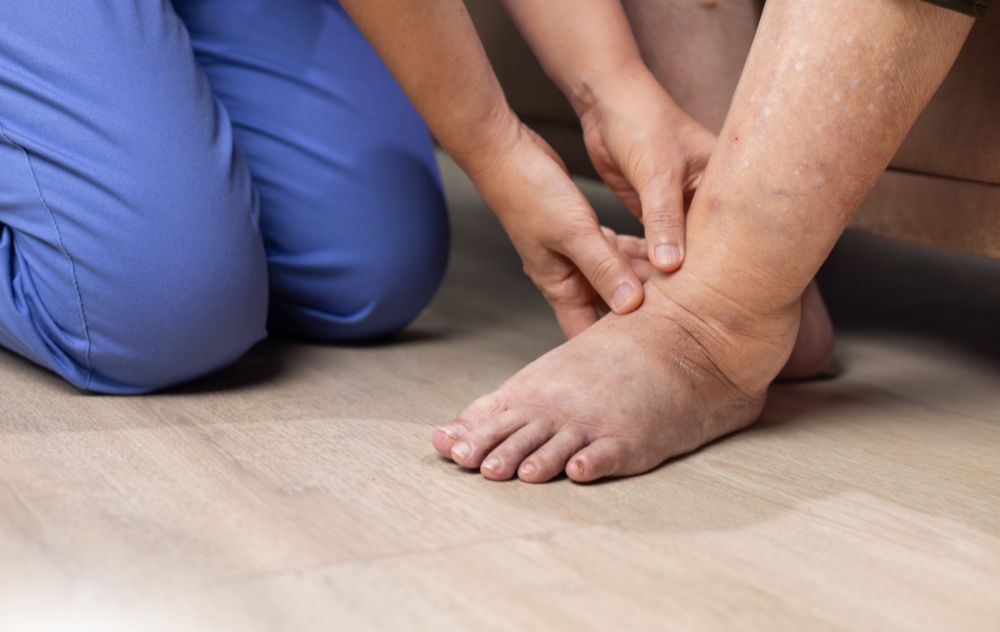
Edema in the legs is a common condition characterized by swelling, usually caused by fluid retention in the tissues of the lower extremities. While mild cases may be harmless and temporary, persistent or severe swelling can be a sign of a more serious underlying issue. Edema is also a common side effect of vein disease, particularly conditions like chronic venous insufficiency (CVI) and varicose veins. When the veins in the legs struggle to pump blood back to the heart efficiently, blood can pool in the veins, causing fluid retention and swelling. If left untreated, edema associated with vein disease can lead to serious health complications.
Common Causes of Edema in Legs
Several conditions can contribute to edema in the legs. Below are some common causes, many of which are related to vein disease:
-
Prolonged Standing or Sitting
-
Sitting or standing for long periods, especially in hot weather, can cause fluid to pool in the legs, leading to temporary swelling.
-
-
Pregnancy
-
Pregnancy, particularly during the third trimester, often causes swelling in the legs due to increased pressure on the veins and changes in blood circulation.
-
-
Venous Insufficiency
-
Chronic venous insufficiency (CVI) occurs when the veins in the legs can’t effectively return blood to the heart, leading to blood pooling and swelling in the legs.
-
-
Heart Failure
-
If the heart isn’t pumping blood efficiently, it can cause fluid to accumulate in the legs, ankles, and feet. This is a common sign of congestive heart failure.
-
-
Kidney Disease
-
The kidneys play a crucial role in fluid balance. When they fail to function properly, excess fluid builds up in the body, often leading to swelling in the legs and other parts of the body.
-
-
Liver Disease
-
Liver conditions, such as cirrhosis, can interfere with the liver’s ability to regulate fluid, causing edema, particularly in the legs and abdomen.
-
-
Blood Clots (Deep Vein Thrombosis – DVT)
-
A blood clot in a deep vein can block blood flow, causing swelling and pain in the affected leg. This is a serious condition that requires urgent medical treatment.
-
-
Lymphatic Obstruction (Lymphedema)
-
Lymphedema occurs when the lymphatic system is compromised or blocked, causing fluid to accumulate, often in the legs.
-
-
Medications
-
Certain medications, including calcium channel blockers, steroids, and NSAIDs, can cause fluid retention, leading to leg swelling.
-
-
Infections
-
Infections like cellulitis or abscesses can cause localized swelling, redness, and warmth in the affected area.
-
-
Obesity
-
Excess body weight places pressure on the veins in the legs, contributing to poor circulation and fluid retention.
-
-
Hormonal Changes
-
Fluctuations in hormones, such as during pregnancy, menstruation, or menopause, can lead to fluid retention and leg swelling.
-
-
Hypothyroidism
-
Low thyroid hormone levels can slow metabolism, leading to fluid retention in the legs and other parts of the body.
-
-
High Sodium Intake
-
Consuming too much salt can lead to fluid retention, causing swelling in the legs and other parts of the body.
-
-
Malnutrition
-
A lack of proper nutrition, especially protein, can affect fluid balance in the body, leading to edema.
-
Risks of Untreated Edema in Legs
While mild edema in the legs may not be dangerous, untreated and persistent edema can increase the risk of serious health problems over time. Here are some specific risks associated with untreated leg edema:
-
Skin Breakdown and Ulcers
Chronic swelling in the legs can cause the skin to stretch and become thinner, increasing the likelihood of skin breakdown and the development of ulcers. These open sores are painful and can become infected, potentially leading to further complications. -
Chronic Pain and Discomfort
Over time, the pressure and fluid buildup in the legs can cause chronic pain and discomfort. This can limit your ability to walk or perform daily activities, affecting your overall quality of life. -
Blood Clots (Deep Vein Thrombosis – DVT)
If the edema is due to poor circulation, such as in chronic venous insufficiency (CVI), the stagnant blood in the veins can increase the risk of blood clots. A blood clot in the veins can cause further complications like a deep vein thrombosis (DVT), which may travel to the lungs and cause a pulmonary embolism—a life-threatening emergency. -
Venous Stasis Dermatitis
Over time, untreated edema in the legs can lead to a condition called venous stasis dermatitis, which involves inflammation and thickening of the skin. This can cause the skin to become darker, itchy, and scaly, making it prone to infection and further complications. -
Pulmonary Edema (Fluid in the Lungs)
In severe cases of heart failure, fluid may accumulate not only in the legs but also in the lungs, leading to pulmonary edema. Symptoms include shortness of breath, difficulty breathing, and chest pain, all of which require immediate medical intervention. -
Cerebral Edema (Fluid in the Brain)
Cerebral edema occurs when excess fluid accumulates in the brain, potentially causing changes in behavior, confusion, or a loss of consciousness. This is a serious medical emergency and requires urgent care.
In the most severe cases, untreated edema due to vein disease can lead to complications such as pulmonary edema, where fluid accumulates in the lungs, causing shortness of breath and chest pain. If left untreated, this can be life-threatening. Additionally, cerebral edema (fluid in the brain) can result in changes in behavior or consciousness.
When to Seek Emergency Care
While most cases of leg edema can be managed with proper treatment, there are certain situations where edema may signal a medical emergency, such as if one side is experiencing pain and swelling as these can be symptoms of a blood clot deep in the vein, also known as deep vein thrombosis, or DVT.
If you experience any of the following symptoms, seek immediate medical care:
-
Severe Pain or Redness
If your swollen leg is suddenly very painful, red, or warm to the touch, it may indicate a blood clot (deep vein thrombosis or DVT) or infection. These conditions can be life-threatening if not treated promptly. -
Shortness of Breath or Chest Pain
Swelling in the legs, especially when accompanied by shortness of breath, chest pain, or tightness, could indicate pulmonary edema, which occurs when fluid accumulates in the lungs. This is a medical emergency that requires immediate attention. -
Sudden, Severe Swelling
If you notice one leg swelling rapidly and significantly, especially if it’s associated with redness or warmth, this could be a sign of a blood clot or infection. Immediate medical attention is necessary to prevent serious complications. -
Changes in Consciousness or Behavior
Swelling accompanied by confusion, difficulty speaking, or other sudden changes in mental state could signal cerebral edema (swelling in the brain). This condition requires emergency care to prevent severe complications, including brain damage. -
Open Sores or Ulcers
If you develop open sores or ulcers on your swollen legs that do not heal, it may indicate poor circulation or an infection that requires urgent care to avoid further complications.
At USA Vein Clinics, we specialize in diagnosing and treating conditions like chronic venous insufficiency (CVI), varicose veins, and other vascular issues that often lead to leg edema and offer services that can help with early detection.
Connect with USA Vein Clinics
If you’re experiencing edema in your legs, especially if it’s related to vein disease, early treatment is key to preventing serious complications. At USA Vein Clinics, our specialists are here to help diagnose the root cause of your swelling and create a personalized treatment plan to relieve symptoms and improve your vascular health.
Call us today or schedule your consultation online to start your journey toward healthier, pain-free legs.
Related Posts
 What is the Function of the Great Saphenous Vein?
 Is the Sun Good For Varicose and Spider Veins?
 The Causes of Blood Pooling and How to Prevent It
 ‘Your Health in Full Bloom’ Health Expo Brings Health Education to Families and Their Communities
 Prevention Tips for Jobs That Raise Your Risk of Varicose Veins