

Medically reviewed by
USA Vein Clinics Medical Review Team
Vascular Specialists Focused on CVI
Reviewed: October 2026
Elevating your legs above heart level can help reduce swelling, decrease pressure in your veins, and promote better circulation. The idea is simple, but the technique matters more than most people realize. Done correctly, leg elevation is one of the most practical self-care habits for anyone dealing with leg heaviness, end-of-day swelling, or the early signs of vein disease. For a closer look at the benefits, see our overview of the health benefits of elevating your legs.
Key Takeaway: Leg elevation can be an effective way to relieve swelling and discomfort caused by poor circulation. While it can help manage symptoms, recurrent leg swelling, aching, heaviness, or varicose veins may indicate an underlying vein condition, such as chronic venous insufficiency (CVI), that may require medical evaluation.
Why Leg Elevation Supports Vein Health
Your veins have a tough job. Every time you stand or sit, they push blood upward from your feet toward your heart, working against gravity all day long. Inside each vein are small one-way valves that keep blood moving in the right direction. When those valves work well, circulation flows smoothly. When they weaken or become damaged, blood can pool in the lower legs, creating the pressure, swelling, and discomfort that many patients recognize as signs of underlying vein disease.
How Your Vein Valves Work
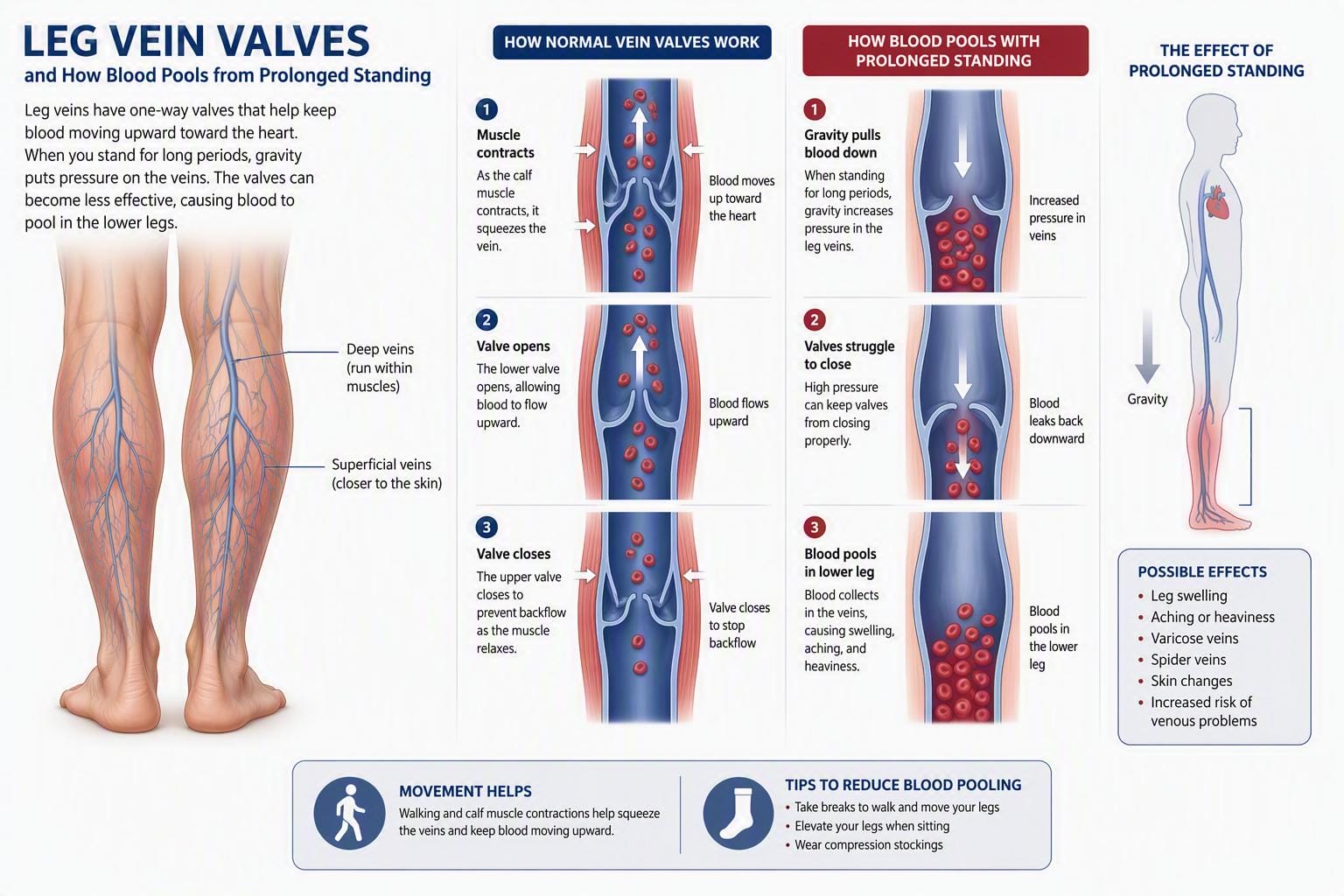
The calf muscles help push blood upward when you walk or move, acting as a natural pump. But prolonged sitting or standing reduces that pumping action and puts extra strain on the valves. Over time, this increased pressure can cause valves to fail, contributing to conditions like chronic venous insufficiency (CVI) and varicose veins.
What Happens When You Raise Your Legs
When you elevate your legs above heart level, gravity shifts from working against your circulation to working with it. Blood that has pooled in your lower legs drains more easily back toward the heart. Venous pressure drops. Fluid that has leaked into surrounding tissue begins to reabsorb. The result is usually a noticeable reduction in swelling and heaviness, often within minutes.
The Right Way to Elevate Your Legs: Position, Angle, and Support
Most people have tried propping their feet on an ottoman or couch armrest after a long day. This provides some comfort, but it rarely raises the legs high enough or positions them correctly for meaningful vein benefit.
Getting the Angle Right
To elevate your legs correctly, raise them above your heart level while keeping them fully supported and comfortable. Lying on your back with pillows under your legs is often the easiest way to get into the right position. A fully reclined chair may also work. Simply resting your feet on a stool while sitting upright is usually not enough to improve circulation or reduce swelling.
What to Use for Support
When elevating your legs, support the entire leg from the thigh to the ankle to keep the position comfortable and avoid placing pressure on any one area. Good options include:
- Two or three firm pillows placed under your legs while lying down
- A wedge pillow designed for leg elevation
- Resting your legs against a wall for short periods, if comfortable
The goal is to keep your legs elevated above heart level while maintaining a relaxed, well-supported position.
Common Mistakes to Avoid
To get the most benefit from leg elevation, avoid these common mistakes:
- Keeping your legs at the same level as your heart rather than above it
- Sitting upright with your feet resting on a stool or ottoman
- Using inadequate support that leaves your legs uncomfortable or unsupported
- Positioning your knees in an overly bent or strained position
- Elevating your legs for only a few minutes at a time
For best results, make sure your legs are comfortably supported and elevated above heart level for the recommended amount of time.
How Long to Elevate and How Often
How Long Should You Elevate Your Legs
Most vein specialists recommend elevating your legs for 15 to 20 minutes at a time, two to four times a day. Stanford Health Care guidelines suggest that those with swelling or vein-related symptoms often benefit from repeating this two to four times daily, while people seeking general comfort may find that one period of elevation in the evening provides relief. Fluid re-accumulates once you return to standing or sitting, so spacing sessions throughout the day helps control this cycle.[1]
For general circulation support and end-of-day relief, a single session before bed may be sufficient for otherwise healthy adults. For those managing active swelling or CVI symptoms, multiple daily sessions tend to produce noticeably better results.
The Best Times of Day
If you sit or stand for extended periods at work, a midday session can prevent swelling from building up by late afternoon. An evening session after work is the most common habit for those with mild to moderate symptoms. Pairing elevation with a brief rest also helps offset the effects of prolonged immobility.
When Elevation Helps and When It Has Limits
Symptoms That Elevation May Ease
Regular, properly performed leg elevation may help reduce:
- End-of-day swelling in the ankles and lower legs
- The heavy, tired sensation in legs after prolonged standing or sitting
- Mild aching associated with varicose veins
- Discomfort during pregnancy-related leg swelling
- Post-exercise leg fatigue
Compression therapy used alongside elevation may improve results further. Wearing properly fitted compression stockings during the day and following with elevation in the evening can complement each other in managing venous symptoms. Learn more about treatment options available for leg vein concerns.
When Elevation Is Not Enough
Elevation is a management tool. It temporarily reduces venous pressure but does not repair damaged vein valves or eliminate existing varicose veins. If you are finding that swelling returns quickly after sessions, symptoms are worsening over time, or you are noticing additional signs such as skin discoloration, itching, or visible veins that were not there before, these may indicate an underlying vein condition that warrants evaluation.
Persistent symptoms despite regular elevation are worth discussing with a vein specialist. A duplex ultrasound can identify venous reflux and help determine whether minimally invasive vein treatment may be appropriate. Explore what may be affecting your vein disease symptoms and whether you could benefit from improving circulation in your legs.
Next step
Check Your Vein Symptoms
Leg elevation can provide meaningful relief, and it is a valuable part of caring for your legs at home. But if swelling, heaviness, or aching persist despite consistent elevation, your symptoms may be pointing to something happening at the valve level inside your veins.
USA Vein Clinics offers outpatient evaluations using duplex ultrasound to check for venous reflux and identify whether an underlying condition may be contributing to your symptoms. Treatments are minimally invasive and performed in an office setting, with most patients returning to normal activity the same day.
Frequently Asked Questions About Leg Elevation and Vein Health
- Stanford Health Care. “Elevation of the Legs.” stanfordhealthcare.org. Accessed October 2026.
- Cleveland Clinic. “Chronic Venous Insufficiency (CVI).” my.clevelandclinic.org. Accessed October 2026.
- Labropoulos, N., et al. “Primary venous insufficiency increases risk of deep vein thrombosis.” Journal of Vascular Surgery: Venous and Lymphatic Disorders. 2016. PubMed PMID 26993861.
- National Heart, Lung, and Blood Institute (NHLBI). “Varicose Veins.” nhlbi.nih.gov. Accessed October 2026.
Medical disclaimer: This article provides educational information about vein disease and treatment options. It is not a diagnosis or medical advice. Only a qualified vein specialist can determine whether you have vein disease or recommend appropriate treatment. If you have leg swelling, pain, or other vascular symptoms, consult a healthcare provider or contact USA Vein Clinics for an evaluation.


