
Medically reviewed by
USA Vein Clinics Medical Review Team
Vascular Surgeons and Vein Specialists
Reviewed: August 2026
Varicose veins develop in stages, and knowing where your symptoms fall can help you decide when to seek care. Vein disease is progressive, meaning it tends to worsen over time rather than resolve on its own. Vein specialists use a globally accepted system called the CEAP classification to describe varicose vein symptoms and chronic venous disease severity by stage, from no visible signs through active venous ulcers. Varicose veins are classified as C2 within this system. Knowing which stage applies to you can help clarify whether your symptoms are early or advanced, and what treatment options may be appropriate.
Why Vein Disease Can Progress Over Time
Varicose veins form when the one-way valves inside leg veins weaken or fail. Healthy vein valves open to let blood flow toward the heart and close to prevent backflow. When those valves stop working properly, blood pools in the lower leg veins. This pooling raises pressure inside the vein walls, stretching and distorting them over time. The result is the bulging, twisted appearance associated with varicose veins, but the underlying problem can continue to develop if left unaddressed.[1]
What Causes Vein Disease to Develop
The factors most commonly associated with vein disease include a family history of varicose veins, prolonged periods of standing or sitting, pregnancy, age, and excess body weight. These factors do not cause vein disease directly but contribute to valve strain over time. Vein disease can also develop in people with none of these factors, which is why a duplex ultrasound evaluation is the most reliable way to understand the extent of vein damage. You can also read about the early signs of varicose veins and how to recognize them before they progress.
The 7 Stages of Varicose Veins (CEAP Classification)
Vein specialists use a standardized staging system called CEAP – which stands for Clinical, Etiological, Anatomical, and Pathophysiological – to describe the severity of chronic venous disease. In everyday clinical practice, the “C” or Clinical component is what most patients hear about. It includes 7 stages: C0 through C6.[2]
C0 – No Visible Signs, Possible Symptoms
At C0, there are no veins visible or detectable on examination. Some people at this stage still experience vein-related symptoms such as leg heaviness, fatigue, or aching – particularly after standing for long periods. These sensations may reflect early venous reflux that has not yet produced visible changes.
C1 – Spider Veins and Reticular Veins
C1 describes the presence of small surface veins, including spider veins (telangiectasias) or reticular veins. These are typically red, purple, or blue and appear close to the skin surface. They do not bulge the way varicose veins do. Some people at C1 have no symptoms, while others notice mild aching, burning, or itching. The underlying vein disease may be contributing to these surface changes even if the cause is not yet visible on examination.
C2 – Varicose Veins
C2 is the stage most people associate with varicose veins. At this stage, the vein walls have stretched enough to bulge visibly under the skin. They often appear as rope-like, bluish or greenish cords, most commonly on the thighs, behind the knees, and along the calves. Symptoms may include aching, throbbing, a feeling of heaviness in the legs, cramping, and restlessness – particularly at the end of the day. Understanding the full range of vein disease symptoms can help you recognize when the condition may be affecting your daily life.
C3 – Leg Swelling (Edema)
At C3, chronic venous pressure causes fluid to move from inside the veins into surrounding leg tissue, producing visible swelling, particularly around the ankles and lower legs. This swelling may ease overnight but returns with activity or prolonged standing. C3 indicates that the venous pressure has become high enough to affect the surrounding tissue, not just the vein itself. Treating underlying venous reflux may help relieve symptoms such as swelling and address the abnormal blood flow contributing to them.[3]
C4 – Skin Changes
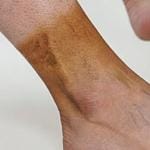
C4 reflects skin damage caused by ongoing venous hypertension. The skin may darken (hyperpigmentation), develop itchy, inflamed patches resembling eczema (stasis dermatitis), or thicken and harden in a process called lipodermatosclerosis. The 2020 update to the CEAP classification also includes a C4c subcategory for corona phlebectatica, a fan-shaped pattern of small veins near the ankle that may signal advanced disease. Skin changes at C4 can be permanent, which is one reason earlier evaluation matters. Chronic venous insufficiency (CVI) is the underlying condition that drives these changes.[2]
C5 – Healed Venous Ulcer
C5 indicates that a venous ulcer – an open wound caused by long-standing venous pressure on skin tissue – has developed and healed. The scar left behind is vulnerable to re-opening. At this stage, ongoing management focuses on preventing recurrence through compression therapy, activity modification, and treating the underlying vein disease. The healing of a venous ulcer does not mean the venous disease has resolved.
C6 – Active Venous Ulcer
C6 is the most advanced CEAP stage and involves an open, non-healing wound on the lower leg or around the ankle. These venous leg ulcers are painful and require specialist wound care. They develop when venous pressure has damaged the surrounding skin and tissue to the point where it breaks down. C6 affects a small minority of people with vein disease – most patients present at earlier stages where intervention is less complex.[1]
At What Stage Should Varicose Veins Be Treated?
Treatment may be considered at C2, C3, or other stages when symptoms are affecting daily life or when clinical findings warrant intervention. The appropriate timing depends on symptoms, ultrasound findings, medical history, and the extent of venous disease.[3]
Several minimally invasive treatment options are available for varicose veins across multiple CEAP stages. Endovenous laser treatment (EVLT), radiofrequency ablation (RFA), VenaSeal, Varithena, and sclerotherapy are all outpatient procedures that can address the underlying vein reflux. A vein specialist can recommend the most appropriate approach based on your ultrasound findings and symptom history.
At earlier stages, when symptoms are mild, a vein specialist may recommend monitoring alongside conservative measures such as compression therapy. These approaches can help manage symptoms but do not correct the underlying valve dysfunction that drives disease progression.
How a Vein Specialist Determines Your Stage
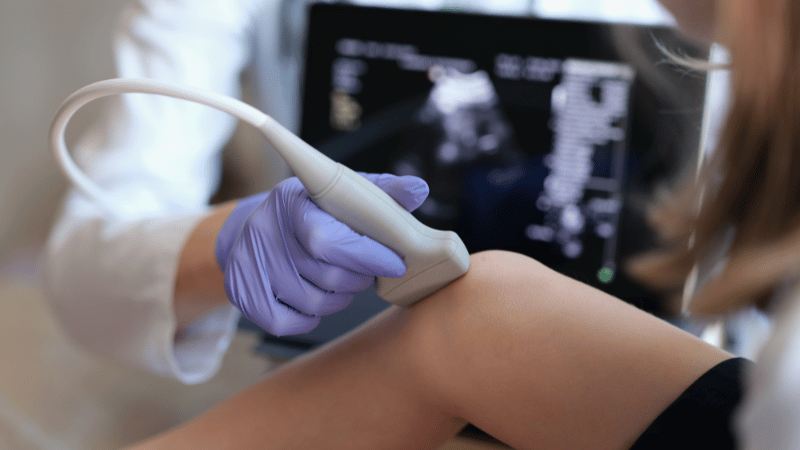
A clinical examination alone does not tell the full picture of vein disease. A duplex ultrasound – a painless, non-invasive imaging study – maps blood flow and identifies where reflux is occurring and which veins are affected. This information guides the CEAP classification and helps determine which treatment approach, if any, may be appropriate for your specific anatomy and symptom pattern.
Most evaluations at USA Vein Clinics begin with this assessment as part of an initial consultation. If you are noticing vein disease symptoms for the first time, an evaluation is a straightforward first step toward understanding what is happening and what options may be available to you.
Vein Treatment
Know Your Stage. Understand Your Options.
Varicose vein disease progresses through defined stages, and the earlier it is evaluated, the more treatment options may be available. USA Vein Clinics offers minimally invasive, outpatient vein treatments performed without general anesthesia.
A vein specialist can review your symptoms, perform a duplex ultrasound, and walk you through which options may fit your situation – at any stage of vein disease.
Frequently Asked Questions
- Zegarra TI, Tadi P. CEAP Classification of Venous Disorders. StatPearls [Internet]. Treasure Island (FL): StatPearls Publishing; 2026. Updated 2023 Mar 27. https://www.ncbi.nlm.nih.gov/books/NBK557410/
- Lurie F, Passman M, Meisner M, et al. The 2020 update of the CEAP classification system and reporting standards. J Vasc Surg Venous Lymphat Disord. 2020 May;8(3):342-352. https://doi.org/10.1016/j.jvsv.2019.12.075
- Eklof B, Rutherford RB, Bergan JJ, et al. Revision of the CEAP classification for chronic venous disorders: consensus statement. J Vasc Surg. 2004 Dec;40(6):1248-52. PMID: 15622385.
- Society for Vascular Surgery. Varicose veins and venous disease. Accessed August 2026. https://vascular.org/
Medical disclaimer: This article provides educational information about vein disease and treatment options. It is not a diagnosis or medical advice. Only a qualified vein specialist can determine whether you have vein disease or recommend appropriate treatment. If you have leg swelling, pain, or other vascular symptoms, consult a healthcare provider or contact USA Vein Clinics for an evaluation.