

Medically reviewed by
Dr. Yan Katsnelson, CEO
Reviewed: August 2026
Chronic venous insufficiency (CVI) is the most common vein disease in adults, affecting an estimated 1 in 20 people in the United States. It develops when the valves inside the leg veins weaken or become damaged, making it harder for blood to travel back up to the heart. Blood refluxes backward and pools in the lower legs, gradually raising pressure inside the veins. That pressure is what drives the swelling, heaviness, aching, and visible changes that many people live with for years before connecting them to an underlying vein condition.
CVI is often progressive. Without evaluation and treatment, symptoms may worsen over time and become more difficult to manage. The sections below explain what CVI is, how to recognize its symptoms, what causes it, how it is diagnosed, and the minimally invasive treatment options that can relieve symptoms and slow disease progression.
Understanding Chronic Venous Insufficiency
Chronic venous insufficiency is the underlying condition behind varicose veins, spider veins, and a range of leg symptoms. It centers on a breakdown of the valve system inside leg veins. Normally, small one-way valves open to let blood move upward toward the heart and close to prevent backflow. When those valves are damaged, blood escapes backward with each heartbeat and pools in the lower legs, raising pressure inside the vein walls.[1]
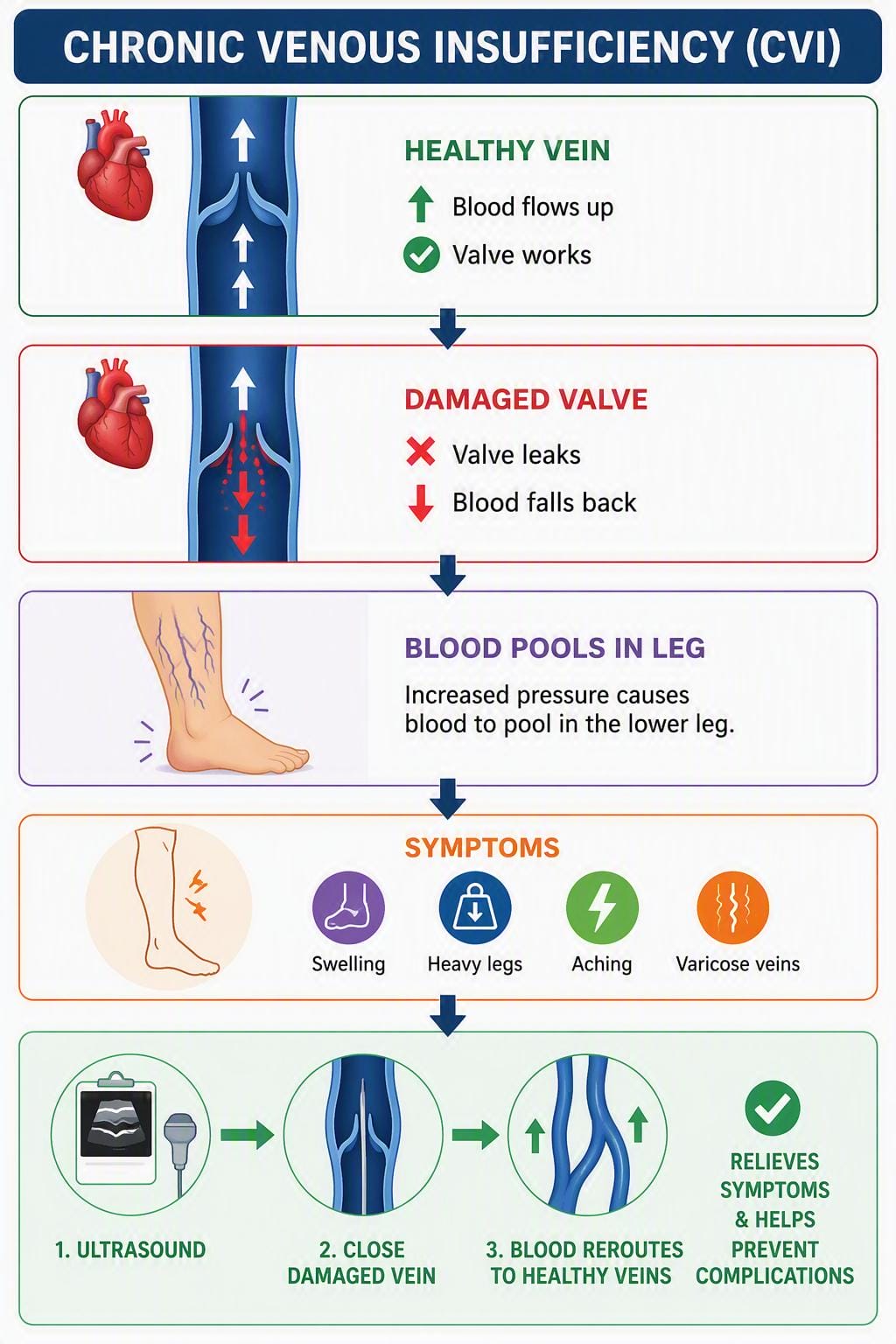
The medical term for this backward flow is venous reflux. Over time, the sustained pressure stretches and weakens vein walls further, producing visible changes like varicose veins and symptoms like swelling, leg fatigue, skin discoloration, and in advanced cases, venous ulcers.[2]
The valve damage that causes venous reflux does not repair itself. Vein specialists use the CEAP classification system to describe CVI progression across six stages, from no visible signs (C0) through active non-healing venous ulcers (C6). Many patients move through the earlier stages over years before reaching more serious skin-change or ulcer stages.[3] This is one reason early evaluation matters.
Physicians may use the terms vein disease, venous reflux disease, and chronic venous insufficiency interchangeably. They all describe the same root problem: veins that can no longer return blood to the heart efficiently.
How Common Is Vein Disease?
According to the National Institutes of Health, approximately 150,000 new patients are diagnosed with CVI each year in the United States, and more than 30 million Americans are estimated to live with some degree of chronic venous disease.[2] Many cases go undiagnosed because early symptoms, including mild leg aching or end-of-day swelling, are easy to dismiss as fatigue or aging.
The condition is more common in women than men and becomes increasingly prevalent with age, particularly after 50. That said, CVI can develop in younger adults when multiple risk factors are present.[1]
The strongest risk factors include a family history of vein disease, pregnancy, occupations requiring extended standing or sitting, excess body weight, and a prior history of deep vein thrombosis (DVT), which can damage vein valves directly.
Recognizing the Symptoms of Vein Disease
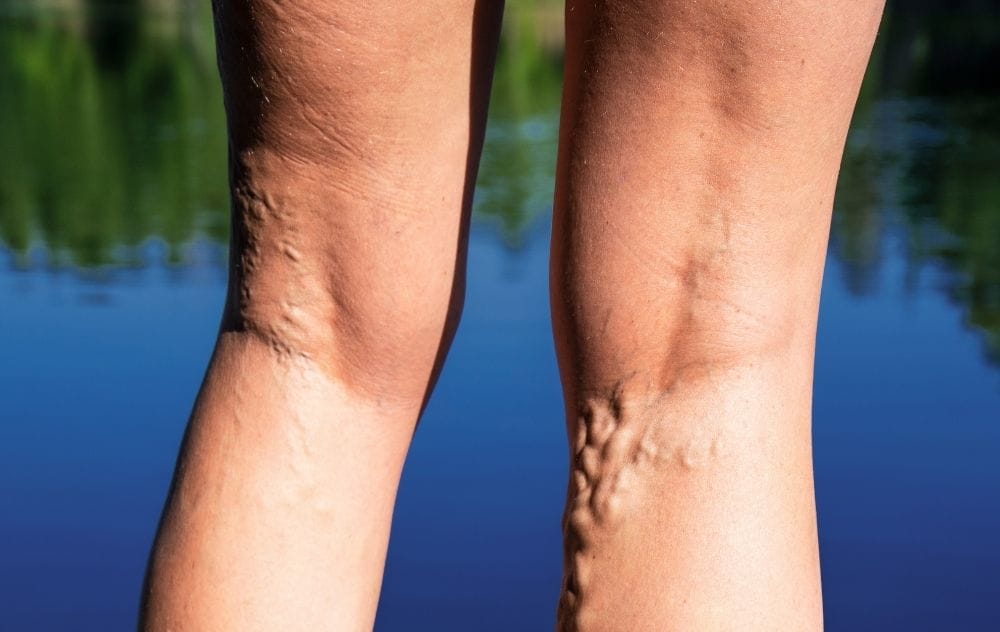
The earliest signs of CVI often appear at the end of a long day. Leg heaviness, a dull ache in the calves or thighs, and mild ankle swelling that improves with elevation are among the first signals that venous return is beginning to falter. Restless leg sensations at night and small clusters of spider veins near the inner ankle are also associated with early CVI.[3] For a closer look at what to watch for, see early signs of chronic venous insufficiency.
As CVI advances, symptoms become more pronounced and consistent. Varicose veins, persistent swelling that does not fully resolve overnight, skin discoloration near the ankles, and a sensation of tightening or thickening in the lower leg skin all indicate the disease is progressing through its intermediate stages.[2]
At the most advanced stages, poor circulation can produce venous ulcers, open sores typically located near the inner ankle that are slow to heal and may recur without treatment of the underlying vein disease. If any of these vein disease symptoms sound familiar, evaluation by a vein specialist is a meaningful next step.
Looking for a vein specialist near you?
What Causes Vein Disease?
The fundamental cause of CVI is vein valve failure. When valves can no longer close completely, venous reflux occurs and pressure inside the vein builds over time. Deep vein thrombosis is one of the most direct causes: a blood clot traveling through a deep vein can injure valve leaflets, leaving scar tissue that prevents proper closure. This is referred to as post-thrombotic syndrome.[1] In many other cases, CVI develops gradually through the cumulative effect of risk factors over years.
Some risk factors can be influenced: maintaining a healthy weight, staying active, and avoiding prolonged static postures all reduce pressure on the venous system. Compression stockings, when used consistently, can help slow progression in people at elevated risk.[3] Others cannot be changed, including genetics, age, sex, and height.
These lifestyle measures help manage symptoms but do not close diseased veins or reverse valve damage that has already occurred. Medical evaluation remains the most reliable way to understand the full extent of the condition.
How Is Vein Disease Diagnosed?
Diagnosis begins with a clinical evaluation by a vein specialist who reviews your medical history, discusses your symptoms, and examines your legs for visible signs including varicose veins, swelling patterns, and skin changes.
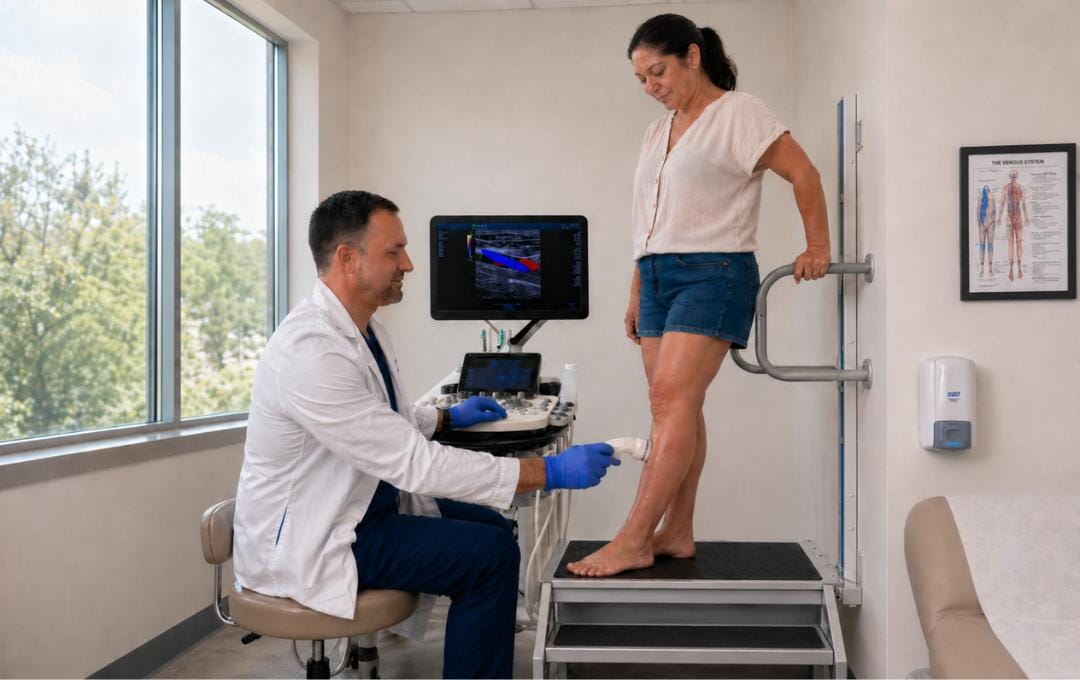
The definitive diagnostic tool is a duplex ultrasound, a noninvasive imaging test that uses sound waves to produce real-time images of blood flow inside the veins. It identifies which valves are failing, where venous reflux is occurring, and how extensive the disease is, including veins not visible from the surface.[2] A CVI diagnosis is typically confirmed when the ultrasound shows venous reflux lasting more than 0.5 seconds during a standardized compression test, combined with clinical symptoms. This gives the specialist everything needed to build a personalized treatment plan.
Can Vein Disease Be Treated Without Surgery?
For most patients, minimally invasive outpatient procedures are now the standard of care for CVI. These procedures close diseased veins from the inside using heat, chemical solutions, or medical adhesive, redirecting blood flow to healthy veins nearby without incisions or general anesthesia.[4]
Compression stockings and leg elevation provide meaningful symptom relief for mild CVI. However, they work alongside existing diseased veins rather than addressing them. They do not close damaged veins or halt the venous reflux driving the disease forward.[3] For patients with moderate to advanced CVI, or symptoms affecting daily activities, a minimally invasive procedure addresses the root cause directly.
Minimally Invasive Treatment Options at USA Vein Clinics
Minimally invasive vein treatments at USA Vein Clinics target the diseased veins identified during the duplex ultrasound evaluation. All procedures are performed in an outpatient setting, require no general anesthesia, and are typically completed in under an hour.
Endovenous Laser Therapy (EVLT): A thin laser fiber is guided into the diseased vein under ultrasound, delivering energy that causes the vein wall to collapse and seal. Blood reroutes through healthy veins nearby.
Radiofrequency Ablation (RFA): Similar in principle to EVLT, RFA uses radiofrequency energy rather than laser to heat and close the affected vein, guided by real-time ultrasound.
VenaSeal: A medical-grade adhesive seals the diseased vein shut. Because no heat is involved, patients typically do not require compression stockings afterward.
Varithena (Foam Sclerotherapy): A specialized microfoam sclerosant is injected under ultrasound guidance, particularly effective for larger veins with irregular anatomy.
Sclerotherapy: A solution injected directly into spider veins or small varicose veins causes them to close and gradually fade.
Treatment is tailored to your individual condition and ultrasound findings. Many patients require more than one session to address all affected veins. Most return to normal light activity the same day. If you’re weighing non-thermal options, comparing Varithena vs. VenaSeal™ can help you understand how these treatments differ and why a specialist may recommend one over the other.
Vein Disease Treatment
Chronic Venous Insufficiency Does Not Improve on Its Own
Living with leg heaviness, swelling, or visible varicose veins can feel like something to manage around. Many people do so for years without realizing the underlying condition is advancing. Compression stockings and lifestyle changes have value for symptom management, but they do not address the damaged vein valves driving venous reflux.
Minimally invasive vein procedures close the diseased veins that cause CVI symptoms. They are outpatient procedures performed with local anesthesia, completed in under an hour, with no surgical downtime. Most patients notice improvement in the days and weeks following treatment.
Frequently Asked Questions About Vein Disease
- National Center for Biotechnology Information. “Venous Insufficiency.” StatPearls, National Library of Medicine. ncbi.nlm.nih.gov/books/NBK430975/
- Patel SK, Surowiec SM. “Venous Insufficiency.” StatPearls, National Library of Medicine, 2024. ncbi.nlm.nih.gov/books/NBK430975/
- Lurie F, Passman M, Meisner M, et al. “The 2020 Update of the CEAP Classification System and Reporting Standards.” Journal of Vascular Surgery: Venous and Lymphatic Disorders, 2020.
- Yale Medicine. “Chronic Venous Insufficiency Fact Sheet.” Yale School of Medicine. yalemedicine.org/conditions/chronic-venous-insufficiency
Medical disclaimer: This article provides educational information about vein disease and treatment options. It is not a diagnosis or medical advice. Only a qualified vein specialist can determine whether you have vein disease or recommend appropriate treatment. If you have leg swelling, pain, or other vascular symptoms, consult a healthcare provider or contact USA Vein Clinics for an evaluation.


