

Medically reviewed by
Dr. Yan Katsnelson, M.D.
Cardiac Surgeon; Founder and CEO, USA Vein Clinics
Reviewed: August 2026
Both Varithena and VenaSeal™ are minimally invasive, non-thermal treatment options for varicose veins caused by underlying venous insufficiency. Neither uses heat to close the damaged vein. Instead, each works through a different mechanism to seal the vein, redirect blood flow to healthier vessels, and help relieve symptoms such as leg pain, heaviness, and swelling. Patients researching these two options often wonder which one is more effective, which recovery is easier, or which fits their specific situation. Those are the right questions to bring to a vein specialist — the answer depends on your vein anatomy, your health history, and other clinical factors that a duplex ultrasound can help clarify.
What Varithena and VenaSeal™ Have in Common
Varithena and VenaSeal™ arrive at the same clinical destination through different routes. Both aim to close the diseased vein, stop blood from flowing through that dysfunctional pathway, and redirect it through healthier veins nearby. Once a vein is closed, the body gradually reabsorbs the treated vessel over time. Symptoms of varicose veins — including aching, cramping, heaviness, and visible bulging — may improve as circulation moves through healthier vessels.
Both Treat Varicose Veins Caused by Venous Reflux
Varicose veins are not simply a surface-level condition. They typically develop when the small one-way valves inside the leg veins weaken or become damaged, allowing blood to flow backward and pool in the lower legs. This is called venous reflux, and the underlying condition is known as chronic venous insufficiency (CVI).[1] Both Varithena and VenaSeal™ are designed to treat varicose veins associated with this kind of valve dysfunction, particularly those affecting the great saphenous vein (GSV) and related veins in the leg.
A duplex ultrasound is used to confirm venous reflux before either treatment is recommended. This imaging scan maps blood flow through the veins and identifies which vessels are failing. Without confirming reflux, treatment cannot be accurately targeted.
Both Are Minimally Invasive Outpatient Procedures
Neither Varithena nor VenaSeal™ requires general anesthesia, a hospital stay, or surgical incisions. Both are performed in an outpatient clinic using ultrasound guidance. Most procedures take under an hour. Patients typically walk out of the clinic the same day and can return to light daily activities shortly afterward.[2] Neither treatment involves the recovery time associated with traditional vein procedures, and both are considered office-based options within the broader category of minimally invasive vein treatment.
How Each Treatment Works
How Varithena Works (Polidocanol Microfoam)
Varithena treatment is an FDA-approved prescription microfoam containing polidocanol, a sclerosant agent.[3] During the procedure, a vein specialist uses ultrasound guidance to locate the affected vein and injects the microfoam through a small catheter or needle. The foam fills the inside of the vein and acts on the vein wall lining, causing the vein to collapse and seal. Because the foam fills and conforms to the shape of the vessel, it can navigate complex or tortuous vein networks that may be difficult to treat with a catheter-based approach alone. Once the vein closes, blood is naturally rerouted through healthier veins. The foam deactivates after use and no foreign material remains in the vein.
Varithena can treat varicose veins above and below the knee, including those that are twisting, branching, or previously treated. Patients may be asked to wear compression stockings for several days following the procedure to support healing and reduce swelling. Most people resume normal activities quickly, though high-intensity exercise and hot baths are typically avoided for several days.[3]
How VenaSeal™ Works (Medical Adhesive)
VenaSeal™ treatment uses a medical-grade cyanoacrylate adhesive — sometimes described as a specialized surgical glue — to seal the diseased vein from the inside.[4] A vein specialist inserts a small catheter into the affected vein under ultrasound guidance and delivers a small, precise amount of adhesive to close the vessel. Once the adhesive is applied, gentle external pressure helps secure the closure. The catheter is then removed and a small bandage covers the entry point.
VenaSeal™ received FDA approval in 2015 and has been used to treat more than 100,000 patients worldwide.[4] The adhesive remains inside the sealed vein, and the body gradually incorporates the closed vessel over time. One practical difference from other vein treatments — including Varithena — is that compression stockings are typically not required after VenaSeal™, though a vein specialist may recommend them based on your individual treatment plan. Procedures are generally completed in 15 to 30 minutes. Patients may feel mild pressure or a pulling sensation during treatment, but significant discomfort is not common.
Key Differences Between Varithena and VenaSeal™
While both treatments close diseased veins without heat, several practical differences can influence which one a vein specialist recommends.
Compression Stockings After Treatment
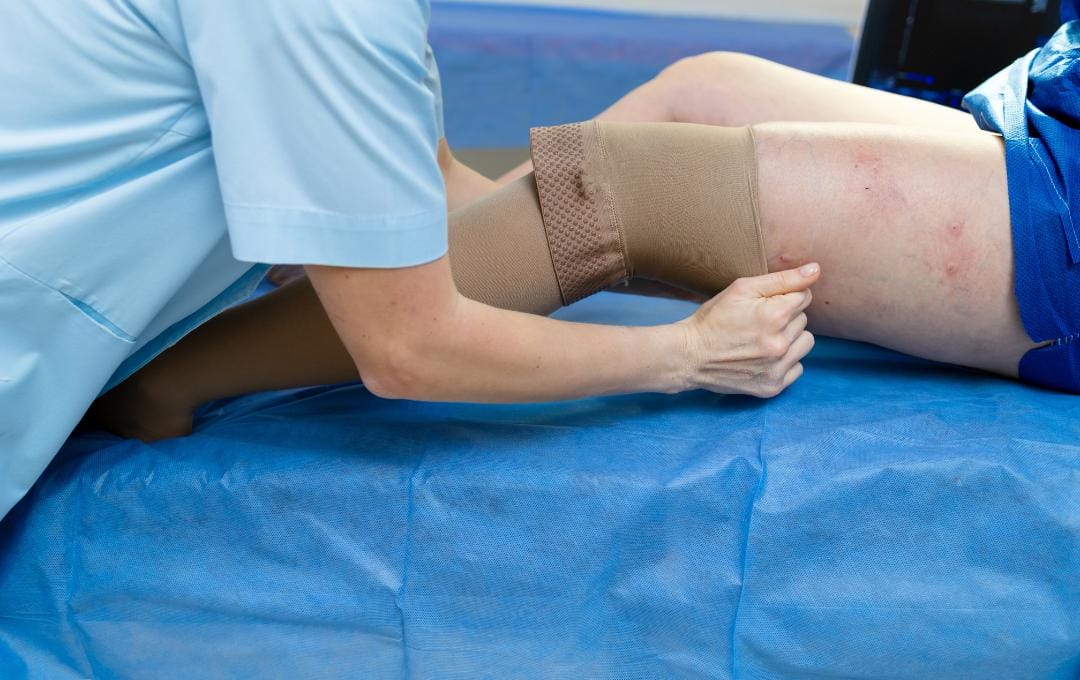
One of the more noticeable differences in the post-procedure experience is the role of compression stockings. After Varithena, wearing compression stockings for several days is typically recommended to support the treated vein and encourage healing.[3] After VenaSeal™, current patient information from the manufacturer indicates that compression stockings are generally not required, though your vein specialist may still suggest them based on your individual plan.[4]
This distinction matters practically. Some patients find compression stockings uncomfortable, particularly in warmer months. Others manage them without difficulty. If avoiding compression stockings is important to your recovery preferences, this is worth discussing during your evaluation.
Vein Anatomy and Candidacy Fit
Vein anatomy plays a significant role in treatment selection. Varithena’s expanding foam can fill and treat veins that are highly tortuous, twisted, or branching, including those that may not be accessible via catheter placement. It can also address veins that have been partially treated by prior procedures and those above or below the knee.[3] This versatility makes Varithena a consideration for more complex vein anatomy.
VenaSeal™ tends to work well for straighter, truncal veins such as the great saphenous vein where a catheter can be positioned precisely. Patients who have a known sensitivity to medical adhesives may not be candidates for VenaSeal™, and those with certain autoimmune conditions should discuss this with their provider before treatment.[4] Similarly, Varithena is not recommended for patients with certain blood clotting conditions or known allergies to polidocanol.
Neither treatment is automatically the right choice. A vein specialist reviews your symptoms, medical history, and duplex ultrasound findings before making a recommendation. In some cases, a personalized treatment plan may include both Varithena and VenaSeal™ at different points, or in combination with other minimally invasive options.
Can Both Varithena and VenaSeal™ Treat Chronic Venous Insufficiency (CVI)?
Both Varithena and VenaSeal™ are used to treat varicose veins associated with chronic venous insufficiency. CVI develops when the one-way valves in the leg veins stop functioning properly, allowing blood to pool and pressure to build.[1] This pressure causes veins to enlarge and twist, eventually appearing as varicose veins on the surface of the skin.
By closing the diseased vein, both Varithena and VenaSeal™ remove that faulty vessel from the circulatory pathway. Blood then reroutes through healthier veins, which can help reduce the venous pressure that drives CVI symptoms. Relief from leg heaviness, aching, swelling, and visible vein changes may follow, though individual results vary and a specialist evaluation is needed to determine candidacy and expected outcomes for your specific case.
How a Vein Specialist Determines Which Is Right for You
The decision between Varithena and VenaSeal™ is not made based on general preference. It is based on clinical evaluation. A vein specialist starts with a physical exam and reviews your symptoms and health history. A duplex ultrasound is then performed to map blood flow through your leg veins, identify where reflux is occurring, and assess the size, shape, and location of the affected vessels.[2]
From that evaluation, the specialist considers factors including the anatomy of your veins, whether they are straight or tortuous, your medical history, any allergies or prior vein treatments, and your preferences for recovery. Some patients may be candidates for either treatment, while others are better suited to one based on specific anatomical or medical reasons.
Our vein specialists offer both Varithena and VenaSeal™ as part of a broader range of minimally invasive varicose vein treatment options. An evaluation is the step that transforms general questions about treatments into a specific, personalized plan for your veins.
Treatment Options: Varithena and VenaSeal™
Find Out Which Treatment Fits Your Veins
Both Varithena and VenaSeal™ are available at USA Vein Clinics. A vein specialist can evaluate your anatomy and symptoms and help you understand which option may be appropriate for your situation.
An online appointment starts the process. From there, a consultation and duplex ultrasound give your specialist the information needed to make a personalized recommendation.
FAQs About Varithena and VenaSeal™
- Society of Interventional Radiology. “Chronic Venous Insufficiency.” sirweb.org/patients/chronic-venous-insufficiency/
- American Venous Forum. “Venous Disease.” americanvenousforum.org
- U.S. Food and Drug Administration. “Varithena (polidocanol injectable foam) Prescribing Information.” fda.gov
- Medtronic. “VenaSeal™ Closure System — Patient Information.” medtronic.com
Medical disclaimer: This article provides educational information about vein disease and treatment options. It is not a diagnosis or medical advice. Only a qualified vein specialist can determine whether you have vein disease or recommend appropriate treatment. If you have leg swelling, pain, or other vascular symptoms, consult a healthcare provider or contact USA Vein Clinics for an evaluation.


