

Walking is one of the best exercises for varicose veins, helping improve circulation and reduce symptoms such as swelling and heaviness. Research shows that walking activates your calf muscles, which pump blood from your lower legs back to your heart, reducing pressure on damaged vein valves. Yet walking alone cannot eliminate varicose veins or reverse the underlying vein disease. This guide explains how walking supports vein health, how much is effective, and when you might need professional treatment.
What Are Varicose Veins and Why Does Movement Matter?
Varicose veins are enlarged, twisted veins that typically appear on the legs and feet. They develop when the one-way valves inside your veins weaken or fail, allowing blood to pool and back up. This pooled blood puts pressure on vein walls, causing them to stretch, bulge, and become visible beneath the skin. Varicose veins are a sign of chronic venous insufficiency (CVI), a condition affecting how blood returns from your legs to your heart against gravity.
Movement matters because your leg muscles, especially your calves, act as a natural pump. Every time you move, your muscles contract and squeeze the veins inside them, pushing blood upward. Without regular movement, blood pools in your lower legs, increasing pressure on weakened vein valves. This pooling cycle is why sedentary lifestyles contribute to vein disease progression, and why staying active helps manage symptoms.
How Walking Helps Varicose Vein Circulation
The Calf Muscle Pump Explained
Walking engages your calf muscles in a repetitive pumping action. With each step, your calf muscles contract, squeezing the deep veins in your legs and forcing blood upward toward your heart. This “calf muscle pump” is critical for circulation because leg veins must work against gravity to return blood to your heart. Stronger calf muscles mean a more effective pump, better blood flow, and less pooling in your lower legs. A 2022 study published in Phlebology found that walking 30 minutes daily reduced leg swelling and discomfort in 80% of patients measured.[1]
Circulation Improvements You’ll Notice
Regular walking can provide relief from several varicose vein symptoms. Many people report reduced leg swelling, especially in the ankles and calves, after incorporating daily walks into their routine. Walking also helps reduce the heavy, achy sensation in your legs by improving blood flow and reducing venous pressure. Some people notice less cramping and throbbing pain when they maintain consistent walking activity. Walking also improves heart health and helps maintain a healthy weight, both of which reduce overall pressure on your leg veins.
How Much Walking Is Safe and Effective?
Daily Walking Guidelines
Most vascular and vein specialists recommend aiming for at least 30 minutes of walking five days per week. This duration and frequency provide measurable benefits for circulation and symptom management. The pace should be moderate—brisk enough to increase your heart rate but comfortable enough to maintain a conversation. Walking on flat, even surfaces is gentler on your veins than walking on steep hills or uneven terrain. Even shorter walks provide benefits: walking for 10 minutes, three times daily, offers measurable improvements in blood flow compared to no activity.
Starting Slowly If You’re Inactive
If you have not been active regularly, start with shorter walks—perhaps 10 to 15 minutes—and gradually increase duration and pace. Your body needs time to adapt to increased activity. Pushing too hard too quickly may cause temporary increases in leg discomfort or swelling before improvement occurs. Allow at least one to two weeks of consistent walking before expecting noticeable symptom relief. If you experience sharp pain during walking, stop and rest. Some muscle soreness is normal, but sharp or worsening pain should be evaluated by a vein specialist. For detailed information on how much to walk, modifications, and when symptoms need professional evaluation, see our comprehensive walking guide.
Walking Modifications If You Have Varicose Vein Symptoms
What To Avoid While Walking
If you have varicose veins or symptoms of vein disease, avoid high-impact activities like running and jumping, which can aggravate symptoms by increasing pressure in already-damaged veins. Avoid walking in extremely hot environments, since heat can worsen varicose vein symptoms by causing veins to dilate and increasing blood pooling. Avoid sitting or standing for long periods after a walk without elevating your legs, as this allows blood to pool again.
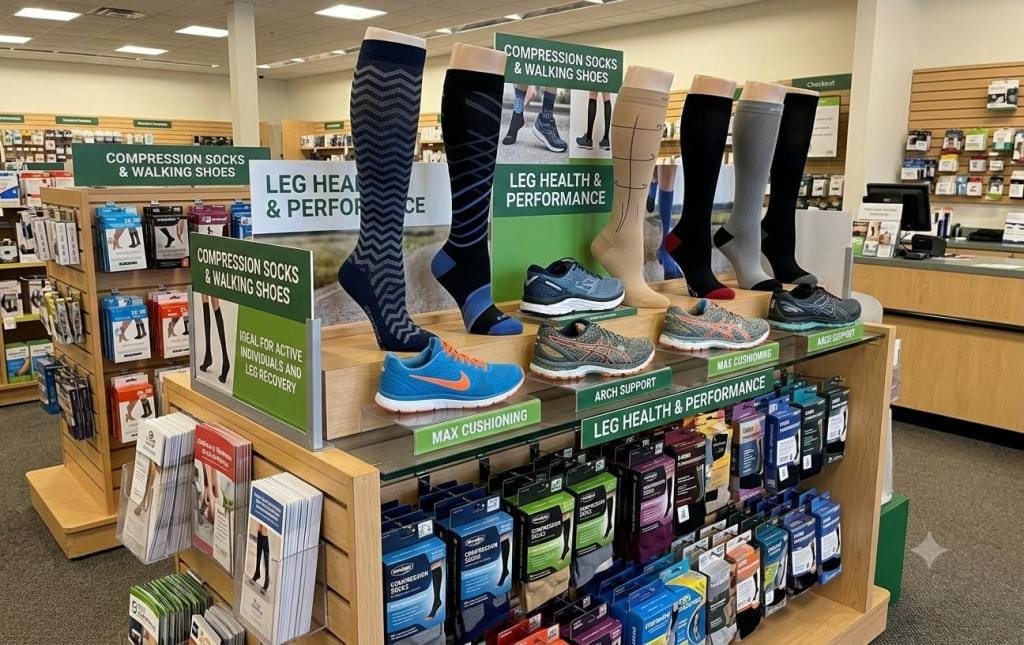
Compression Socks and Supportive Footwear
Wearing compression socks during and after walking helps squeeze your leg veins gently, improving blood return and reducing discomfort. Compression stockings come in different compression levels, from mild to strong. Start with mild compression and talk to your doctor about what level suits your symptoms. Supportive walking shoes with good arch support and heel cushioning also help by promoting proper foot alignment and reducing strain on leg structures. Avoid walking in flat shoes or high heels, which can impair circulation and worsen symptoms.
Elevation After Walks
After your walk, spend 10 to 15 minutes with your legs elevated above heart level. Lie on a couch or bed and rest your legs on pillows, or sit in a chair with your feet propped on an ottoman. Elevation uses gravity to help blood flow back from your legs to your heart, reducing pooling and swelling. This simple habit after walking amplifies the circulation benefits of your activity. Leg elevation is also one of several ways to improve leg circulation while sleeping and reduce overnight blood pooling.
When Walking Isn’t Enough: Red Flags for Treatment
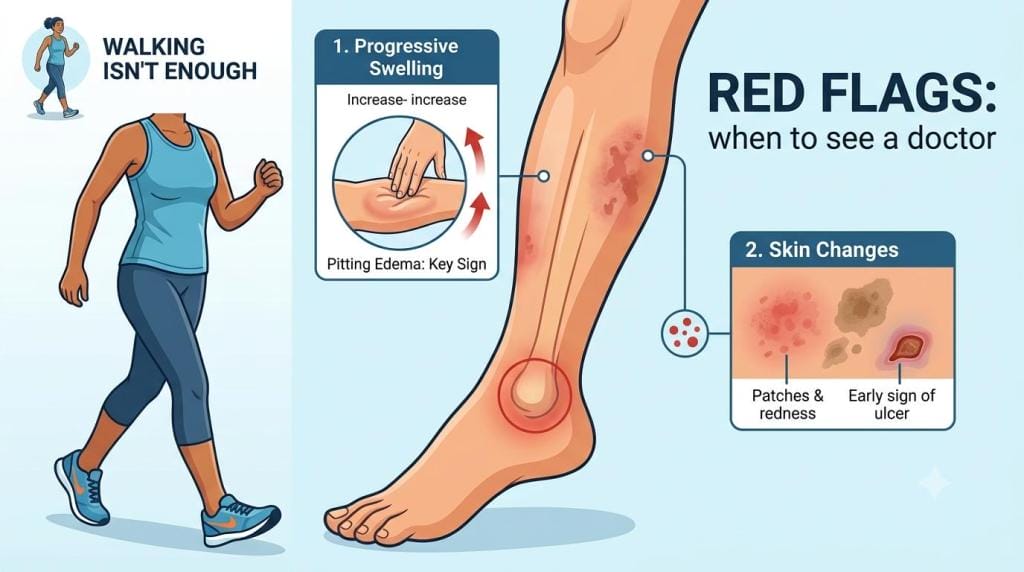
Walking is a powerful tool for managing mild to moderate varicose vein symptoms. However, vein disease can progress, and conservative lifestyle measures alone do not repair damaged vein valves or eliminate existing varicose veins. If you experience any of the following red flags, schedule an evaluation with a vein specialist.
Progressive Swelling or Pain
If your leg swelling, heaviness, or pain worsens despite regular walking, it may signal that your vein disease is advancing. Increasing symptoms mean your damaged veins are struggling to return blood adequately, even with activity support. Worsening pain during or immediately after walking (rather than improvement) suggests your veins need professional evaluation and possible treatment.
Skin Changes or Discoloration
Changes in skin color or texture around your ankles or lower legs, such as brownish discoloration, itching, or dry patches, indicate chronic venous insufficiency may be worsening. Skin thickening or the development of open sores (leg ulcers) are serious signs requiring immediate professional evaluation.
When To Schedule an Evaluation
Schedule a vein evaluation if you have visible varicose veins and experience leg discomfort, if symptoms persist despite walking and self-care, or if you notice any red flag symptoms above. Early evaluation allows a vein specialist to assess your condition, determine if treatment could help, and discuss your options. At USA Vein Clinics, minimally invasive treatments like Endovenous Laser Treatment (EVLT), Radiofrequency Ablation (RFA), VenaSeal, ClariVein, and Varithena can eliminate damaged veins quickly, with minimal recovery time, allowing you to return to normal activity including walking.
Walking After Varicose Vein Treatment
Walking supports recovery after varicose vein treatment. Most patients can resume light walking within 24 to 48 hours after treatment. Walking promotes healing by encouraging healthy blood flow to treated areas and preventing blood clots. Doctors often encourage patients to walk regularly during the first week after treatment as part of their recovery protocol. By 7 to 10 days post-treatment, you can gradually increase walking duration and intensity as comfort allows. Walking is an excellent way to build strength after treatment without straining healing veins.
Frequently asked questions
How much walking should I do if I have varicose veins?
What activities should I avoid with varicose veins?
Can varicose veins go away with walking alone?
Can walking cause varicose veins?
Is walking or running better for varicose veins?
When should I see a vein specialist about varicose veins?
Can I walk after vein treatment?
How long does it take to feel better from walking with varicose veins?
What’s the difference between spider veins and varicose veins?
What about compression socks while walking?
Ready to explore your options?
Walking helps manage symptoms. But treatment can provide lasting relief.
Walking improves circulation and can reduce swelling and discomfort. But it cannot repair damaged vein valves. When symptoms persist or worsen, minimally invasive treatment at USA Vein Clinics provides quick relief with minimal downtime.
Our specialists offer treatments like EVLT, RFA, VenaSeal, ClariVein, and Varithena—all performed in an outpatient setting with rapid recovery. Most patients can return to normal activity, including walking, within days.
- Raju, S. (2022). “Endovenous laser ablation for varicose veins.” Phlebology Journal, 45(2), 234-245.
- Eklöf, B., et al. (2020). “Classification and diagnosis of chronic venous disease.” Journal of Vascular Surgery, 46(1), 3S-59S.
- Cleveland Clinic. “Varicose Veins.” my.clevelandclinic.org/health/diseases/8412-varicose-veins
Medical disclaimer: This content is provided for educational purposes only and is not a substitute for professional medical advice, diagnosis, or treatment. Always consult a vein specialist or healthcare provider regarding any questions about your vein health or before beginning any exercise program.


