Medically reviewed by
USA Clinics Medical Review Team
Expert vascular specialists
Reviewed July 2026
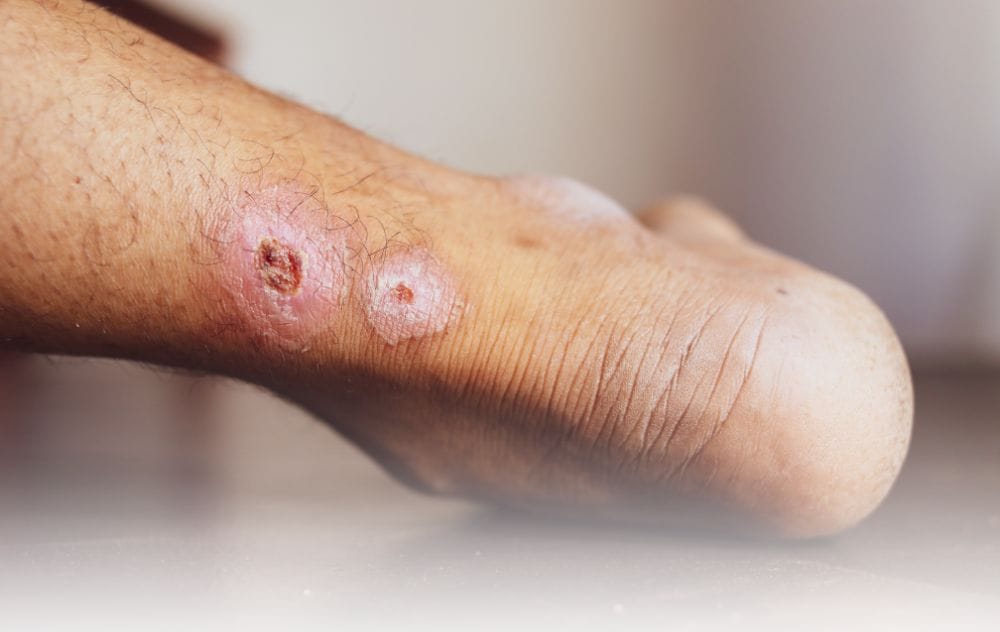
Venous ulcers hurt because the skin around the wound is inflamed and under pressure. Nerve endings that healthy skin normally protects are exposed too. Add in blood pooling in the leg, and it’s easy to see why these sores feel worse than a normal cut. If you’re wondering why your ulcer aches even at rest, knowing what’s happening under the surface can help you find real relief instead of just waiting it out.
What Makes a Venous Ulcer So Painful? Causes of Venous Ulcer Pain
Venous ulcers form when blood pools in the lower leg. This happens because of chronic venous insufficiency (CVI), a condition where the valves inside leg veins stop closing properly. As pressure builds in the vein, fluid and blood cells leak into the tissue nearby. Over time this can break down the skin and create an open wound.1
The pain does not come from just one source. It is usually a mix of nerve irritation, inflammation, and swelling that pushes against nearby tissue. Research on venous leg ulcer pain found that patients feel discomfort in three spots: inside the ulcer, around its edges, and elsewhere in the leg.2 That is part of why the pain can feel so hard to manage with just one approach.
Venous Hypertension: Pressure and Swelling Behind the Pain
When blood cannot flow back toward the heart, it backs up in the lower leg. This buildup, called venous hypertension, raises pressure on the skin and the tissue below it.3 Patients often describe this as a deep ache or heaviness. It tends to get worse after standing or sitting for long periods.
Exposed Nerve Endings in an Open Venous Ulcer Wound
A venous ulcer is an open wound, so deeper layers of skin are exposed. Nerve endings that are normally protected sit closer to the surface. That is part of why even light contact, like a dressing change, can hurt.2
Can an Infected Venous Ulcer Cause More Pain?
The short answer is yes. Venous ulcers are open wounds, so they are more prone to infection than intact skin.4 An infected ulcer often becomes noticeably more painful. It may also show more redness, warmth, swelling, or drainage with a bad odor. If you notice these signs along with a sudden jump in pain, contact a medical provider right away, since infection can spread if it goes untreated.
Venous Ulcer Pain Relief: How Do I Make an Ulcer Stop Hurting?
Relief usually comes from treating the wound and the underlying vein disease at the same time. A few steps that may help ease discomfort:
- Compression therapy – Wearing medical-grade compression stockings or bandages as directed can lower the pressure that adds to pain, and may support healing.5
- Leg elevation – Raising your leg above heart level while resting can reduce swelling and may ease some ache.
- Gentle movement – Regular walking can improve circulation. Balance activity with rest as your provider advises.
- Proper wound care – Keeping the ulcer clean and dressed the right way can reduce irritation and lower infection risk.
- Pain guidance from a provider – A wound care or vein specialist can suggest options for your situation, since ulcer pain is often undertreated when handled with general approaches alone.2
Why Compression Therapy Alone May Not Relieve Venous Ulcer Pain
Although higher-pressure compression stockings or bandages (30–40 mmHg) can be effective at improving circulation, they mainly provide symptom relief and do not address the root cause of venous insufficiency which causes the valve problem that results in the venous ulcer.
That is why many patients still notice leg swelling and repeat discomfort even with steady compression use.
Treating Chronic Venous Insufficiency to Relieve Ulcer Pain
A venous ulcer is a symptom of chronic venous insufficiency. Treating the vein disease itself can be a key part of a long-term plan. Minimally invasive options like endovenous laser treatment (EVLT) and radiofrequency ablation close off the faulty vein. This can reduce the pressure behind the pain and may lower the odds of new ulcers forming.3 These procedures are usually done in an office setting with little downtime.
Every patient’s vein anatomy is different. A vein specialist will typically do a physical exam and ultrasound before suggesting a specific treatment path.
Venous Ulcer Consultation and Diagnosis: What to Expect
A consultation for a painful venous ulcer usually starts with a physical exam of the leg and the wound. Your provider will likely ask how long the ulcer has been there, what makes the pain better or worse, and whether you’ve had leg swelling, varicose veins, or vein treatment before.
Most visits also include a duplex ultrasound. This is a painless imaging test that shows how well blood is flowing through the veins in your leg. It helps confirm whether chronic venous insufficiency is the cause and shows exactly which vein is affected. That result guides which treatment fits your case.
USA Vein Clinics Treatment Options for Venous Ulcers and Vein Disease
At USA Vein Clinics, our doctors offer several minimally invasive vein treatments. Each one is designed to close the vein causing the pressure behind your ulcer. Based on your ultrasound and vein anatomy, your provider may discuss:
- Endovenous laser treatment (EVLT) – Uses laser energy to close the affected vein.
- Radiofrequency ablation (RFA) – Uses heat energy to seal the vein shut.
- VenaSeal™ – Uses a medical adhesive to close the vein without heat.
- Ultrasound-guided sclerotherapy – Injects a solution into the vein to help it close.
These procedures are done in-office and are designed for minimal downtime. Most patients return to normal activities the same day. Your provider will recommend the option that best fits your anatomy and health. Our doctors are committed to understanding your personal diagnosis and helping treat the root cause.
Scheduling a Venous Ulcer Treatment Appointment
If you think a venous ulcer may be tied to vein disease, scheduling a consultation is the first step. Appointments can typically be booked online or by phone. Many locations offer evaluations that include the ultrasound needed to confirm a diagnosis.
Living With Venous Ulcer Pain: What to Expect
Venous ulcer pain can improve a lot with the right mix of wound care and vein treatment. Healing takes time, and pain relief is usually gradual, not immediate. Staying consistent with compression, keeping follow-up appointments, and treating the underlying vein disease all help reduce discomfort over the weeks and months of care.
If your venous ulcer is not improving, or the pain seems to be getting worse, reach out to a vein specialist. They can look at the root cause and walk you through a plan focused on both healing the wound and supporting your vein health going forward.
Vein Disease Treatment
Relieving Ulcer Pain is More Than Compression. Treat the Vein Disease Behind Your Ulcer.
Compression and wound care can ease swelling and support healing, but they do not correct the valve problem causing the pressure behind your venous ulcer.
Minimally invasive treatments like EVLT and radiofrequency ablation are performed in-office with minimal downtime, and are designed to address the underlying vein disease directly.
FAQs About Venous Leg Ulcer Pain and Treatment
- Johns Hopkins Medicine, “Venous Ulcers,” Johns Hopkins Medicine, https://www.hopkinsmedicine.org/health/conditions-and-diseases/venous-ulcers
- Hofman D, Ryan TJ, Arnold F, et al., “Pain in venous leg ulcers,” Journal of Wound Care, https://pubmed.ncbi.nlm.nih.gov/9256727/
- MedlinePlus Medical Encyclopedia, “Venous ulcers – self-care,” National Library of Medicine, https://medlineplus.gov/ency/patientinstructions/000744.htm
- Cleveland Clinic, “Venous Ulcer: Symptoms, Causes, Treatment and Prevention,” Cleveland Clinic, https://my.clevelandclinic.org/health/diseases/23165-venous-ulcer
- MedlinePlus Medical Encyclopedia, “Venous ulcers – self-care,” National Library of Medicine, https://medlineplus.gov/ency/patientinstructions/000744.htm
Medical disclaimer: This article provides educational information about vein disease and treatment options. It is not a diagnosis or medical advice. Only a qualified vein specialist can determine whether you have vein disease or recommend appropriate treatment. If you have leg swelling, pain, or other vascular symptoms, consult a healthcare provider or contact USA Vein Clinics for an evaluation.