
You may have woken up with legs that feel unusually heavy and tired, as if someone put a ball and chain around them overnight. Leg heaviness can happen when you’re tired or dehydrated, but when it’s persistent, it may be a sign of poor circulation from vein disease.
When the leg veins can’t move blood back toward your heart efficiently, fluid begins to pool in the lower extremities. This can lead to symptoms such as heaviness, swelling, and pain in the legs. Understanding why this happens and how it differs from other causes of heavy legs is the first step toward relief and improved circulation.
What It Means When Your Legs Feel Heavy
Leg heaviness is often confused with leg weakness. Heavy legs typically feel weighed down, while weak legs feel like it’s difficult to bear weight when standing, walking, or climbing stairs. Some patients have reported their legs feeling heavy and weak.
In many cases, the sensation of heavy legs comes from reduced blood flow—often due to damaged veins. As a result, blood pools in the legs, and the added pressure causes blood and other fluids to seep into the surrounding tissues. This creates a “dragging” sensation that can occur in one or both legs.
What Causes Heavy Legs?
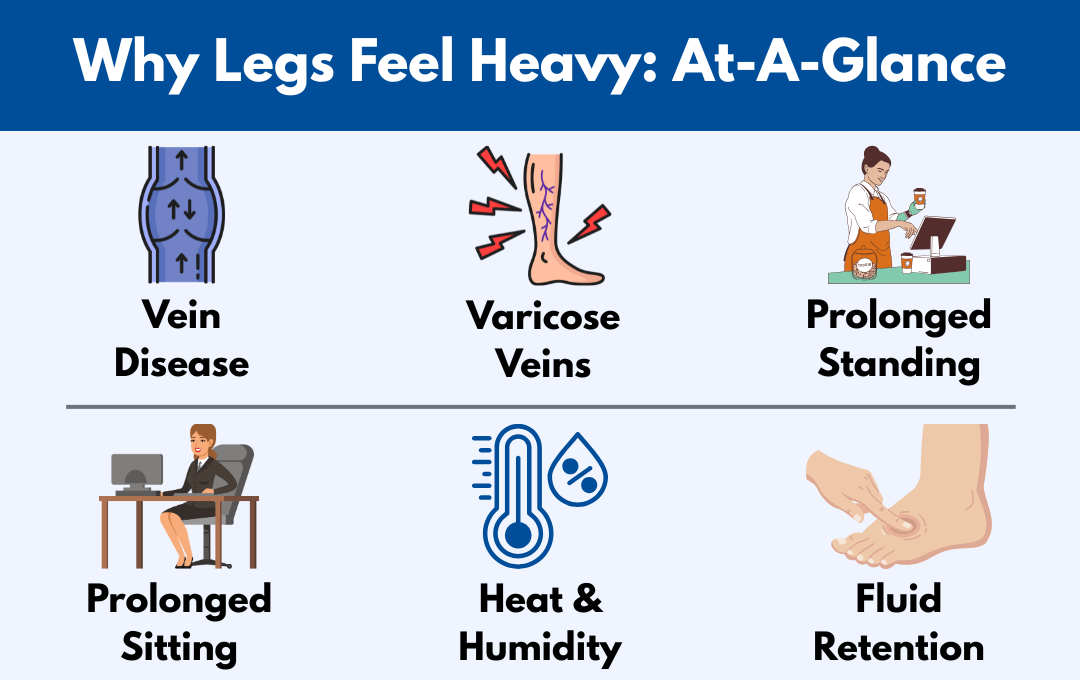
Leg heaviness is often a primary symptom of underlying vascular issues. These conditions affect how blood moves through your legs.
Common Vascular Causes
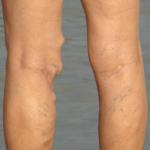
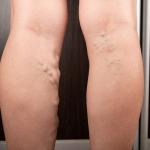
- Varicose veins: These are bulging, twisted veins in the legs commonly associated with vein disease. When blood pools, it increases pressure on the veins, causing them to dilate and bulge beneath the skin. The added pressure creates a distinct “weighted” sensation because blood is not effectively cycling from the legs to the heart.
- Chronic venous insufficiency (CVI): occurs when the tiny valves in your veins fail, allowing blood to flow backward and pool. Unlike the sharp pain of an injury, CVI causes a persistent “fullness” and swelling that makes every step feel like an effort.
- Peripheral artery disease (PAD): This is an arterial condition in which fatty deposits narrow the pathways that deliver oxygen-rich blood to your muscles. This lack of fuel causes legs to feel heavy, weak, or cramped, a sensation known as claudication, especially during physical activity.
- Deep vein thrombosis (DVT): occurs when a blood clot forms in a vein deeper inside the leg, causing significant pain and swelling on one side. This condition can also cause one leg to feel heavy; however, it should be evaluated promptly, as it can become life-threatening.
Red Flags: Is It CVI?
If your leg heaviness is caused by chronic venous insufficiency, it rarely occurs in isolation. Look for these accompanying “red flag” symptoms:
- Aching, pain, or cramping
- Swelling
- Fatigue
- Restless legs, typically at night
- Itchy, dry, or hardened skin
These symptoms will continue to worsen if left untreated. Early diagnosis and treatment for CVI symptoms can lead to better health outcomes.
Other Conditions That Cause Legs to Feel Heavy
Vein disease is not the sole cause of heavy legs. Other medical conditions have been linked to heavy and tired legs, including:
- Lymphedema: characterized by a blockage of lymph fluid. Damaged lymphatic vessels can’t circulate fluid throughout the body, causing it to pool in the legs or arms. The buildup of lymph fluid can create feelings of fullness, tightness, fatigue, or heaviness in the legs.
- Lumbar spinal stenosis: the narrowing of the spinal canal can pinch the spinal cord or the surrounding nerves. These nerves control muscle movement, and interrupting the signal between the nerves and muscles can make the legs feel heavy or as if they are “giving out.”
- Hormonal changes: Changes from pregnancy or menopause can cause the veins to dilate, which makes it harder for veins to efficiently pump blood back to the heart. This can lead to increased fluid retention and a persistent, heavy or fatigued sensation in the legs.
Treatment for Heaviness in Legs
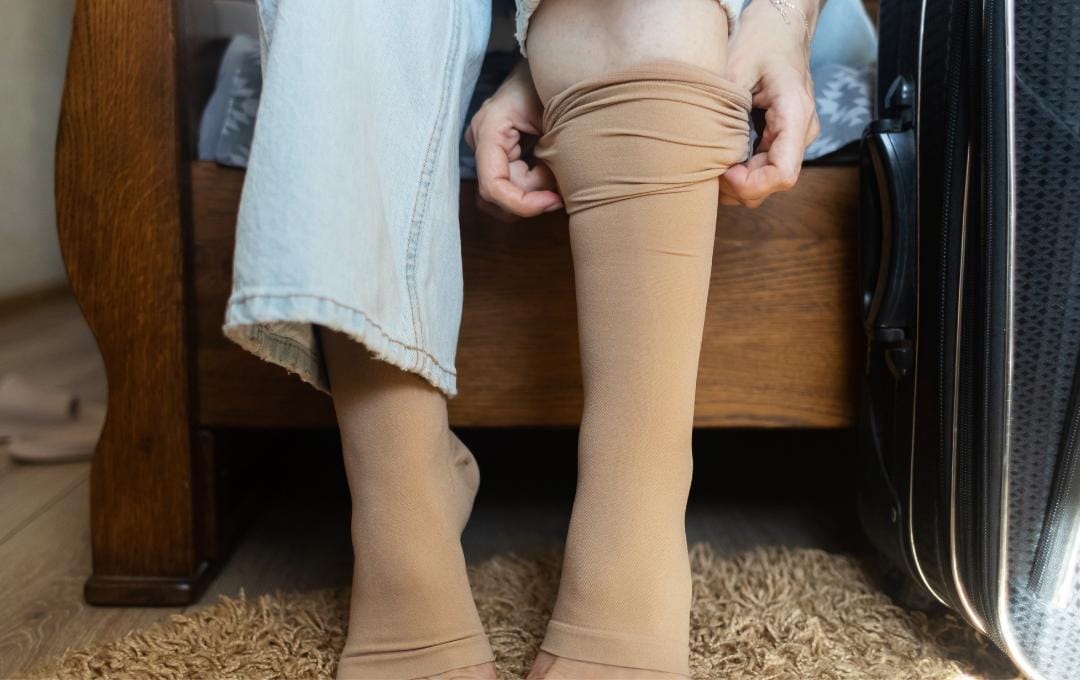
Self-care methods can help temporarily alleviate heavy legs caused by vein disease. This includes elevating your legs, wearing compression socks, maintaining an active lifestyle, staying hydrated, eating a balanced diet, and avoiding crossing your legs or remaining in one position for too long.
While these methods can help, they cannot reverse the damage from vein disease. Medical treatment is necessary to resolve symptoms and reduce leg heaviness.
USA Vein Clinics offers multiple, minimally invasive vein treatments that address heavy legs caused by vein disease. These treatments can be performed in-office and done quickly, allowing patients to return home the same day.
What makes these treatments effective is that each is designed to close malfunctioning veins, improve circulation, and reduce venous pressure. As a result, the legs can feel lighter and visible veins will gradually fade, reducing leg heaviness, swelling, and fatigue.
These treatments include Endovenous Laser Vein Treatment (EVLT), ClariVein®, VenaSeal™, Varithena™, ultrasound-guided sclerotherapy, visual sclerotherapy, and radiofrequency ablation (RFA).
Learn More About Treatment Options
When to See a Vein Specialist for Heavy Legs
You may want to see a vein specialist when heavy legs become persistent, interfere with daily activities, or occur alongside other signs of vein disease. Because vein disease is a progressive condition, symptoms often worsen without treatment.
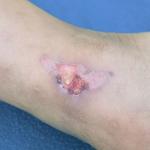
Consult a vein specialist if you notice persistent heaviness, swelling, or throbbing pain in your legs. Skin changes, such as discoloration, itchiness, dryness, and slow- or non-healing sores, would also warrant a visit.
Patients with vein disease are also at a greater risk of developing deep vein thrombosis. If the blood clot were to break off from the vein and travel to the lungs, it can turn into a pulmonary embolism—a life-threatening emergency. Early evaluation helps confirm the cause of heavy legs, prevent complications, and guide timely treatment.
Contact USA Vein Clinics
Any symptoms of vein disease, including heavy legs, should be evaluated by a vein doctor who specializes in diagnosing and treating the condition. USA Vein Clinics is staffed by experienced vein specialists who have treated thousands of patients seeking relief from heavy legs, pain, swelling, and varicose or spider veins in over 160 locations nationwide.
In addition to expert vein care, we offer:
- Accredited network of physicians held to the highest standards for patient safety and care.
- Treatment plans are tailored to fit each patient’s unique condition.
- Instant insurance verification when patients schedule online or call to speak with a Care Team member.
USA Vein Clinics accepts most major insurance plans, including Medicare and Medicaid. Patients can verify their insurance coverage during the scheduling process online or by calling (888) 768-3467.
If your legs are feeling heavy, achy or are swollen, find a vein clinic near you.
FAQs About Legs That Feel Heavy
How do I stop my legs from feeling heavy?
You can temporarily reduce leg heaviness by elevating your legs, wearing compression socks, maintaining a balanced diet, staying well hydrated, and doing low-impact exercises. However, medical treatments, such as Endovenous Laser Vein Treatment, provide longer-lasting relief from heavy legs.
Why do my legs feel heavy when I walk or stand?
Your legs may feel heavy or weak when you walk or stand because your veins are fighting against gravity to return blood to the heart. If your blood flow is affected by conditions such as vein disease, blood may pool in your legs, causing a heavy sensation, especially when standing for extended periods.
Why do my legs feel heavy when I lie down?
Heaviness in the legs when you lie down often results from fluid buildup, especially after long days on your feet or sitting. Conditions like chronic venous insufficiency may also play a role, as weak or damaged veins can cause blood and other fluids to pool in the legs and seep into surrounding tissues.
What kind of doctor treats legs that feel heavy?
A vascular or vein specialist can treat heavy legs if they’re caused by chronic venous insufficiency (CVI) or vein disease. They have tools, such as venous ultrasound, that can accurately identify vein issues and tailor an effective treatment plan to relieve heavy legs.
Medically Reviewed By:
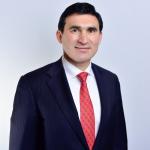
Dr. Yan Katsnelson is a philanthropist, business owner, and highly skilled cardiac surgeon. He is the Founder and CEO of USA Vein Clinics, which is part of USA Clinics Group, the parent company of USA Fibroid Centers, USA Vascular Centers, and USA Oncology Centers, with more than 100 facilities nationwide. Dr. Yan has established himself as a strong advocate for accessibility and affordability of the most advanced medical care close to home. His mission is to create a positive experience for each patient with compassionate, personalized, and expert care.