
Medically reviewed by
Dr. Yan Katsnelson, M.D., Cardiology
Reviewed: November 2026
Varicose veins burn because damaged vein valves allow blood to pool in the legs, building pressure that irritates surrounding tissue and nerves. This burning sensation is one of the most common symptoms of chronic venous insufficiency (CVI), a progressive vein condition that develops when the one-way valves inside your leg veins stop working properly.
If the burning in your legs feels persistent, worsens as the day goes on, or flares up at night, your veins are signaling something worth a closer look. What follows covers what drives that burning sensation, when it becomes a warning sign, and what a vein specialist can do about it.
What Causes the Burning Sensation in Varicose Veins?
How Venous Reflux Creates Burning
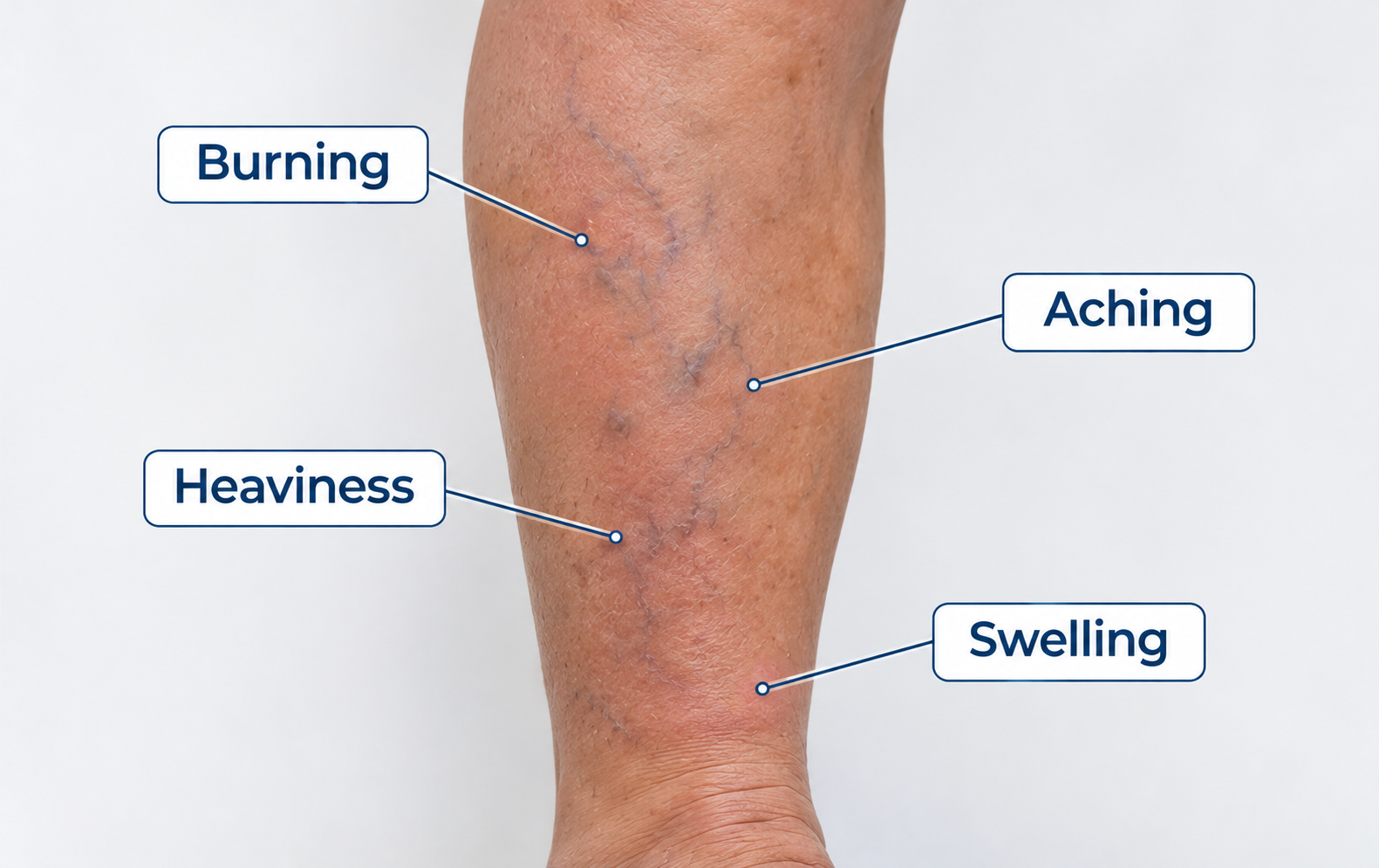
Healthy leg veins contain small one-way valves that push blood upward toward the heart. When those valves weaken or fail, blood flows backward and pools in the lower legs, a process called venous reflux. The pooled blood increases pressure inside the varicose veins and surrounding tissue. Over time, this elevated venous pressure causes fluid to leak into nearby tissue, triggering inflammation and irritating the surrounding nerves.
The result is a burning sensation that tends to follow a predictable pattern: it often starts as a mild warmth or tingling, then intensifies after prolonged standing or sitting. The burning may be accompanied by leg heaviness, aching, visible vein bulging, and swelling around the ankles.
Other Conditions That Can Cause Burning
Not every burning sensation in the legs traces directly to varicose veins. Two vein-related conditions can also produce burning:
Varicose eczema (stasis dermatitis): Poor circulation causes fluid to collect beneath the skin near the ankles. The skin becomes dry, red, and scaly, with an itching or burning sensation that can worsen without treatment.
Superficial thrombophlebitis: When a small blood clot forms in a vein near the skin surface, the area becomes inflamed and tender. This condition, known as superficial thrombophlebitis, can produce a sharp burning feeling along the path of a vein, often with visible redness and a firm, cord-like area beneath the skin.
Both conditions are rooted in the same underlying problem: impaired venous circulation that allows blood to stagnate in the lower extremities.
When Burning Varicose Veins Signal Something More Serious
Burning varicose veins are most often a symptom of progressive vein disease, not an emergency. But one serious cause of sudden leg burning requires prompt attention: deep vein thrombosis (DVT), a blood clot that forms in a deep vein rather than a surface vein.
DVT presents differently from ordinary vein disease burning. Key distinguishing signs include:
- Sudden onset of burning or warmth in one leg, not both
- Visible swelling that develops quickly in one leg
- Skin that appears red, feels hot to the touch, or looks tight
- Tenderness along a vein that is not normally sensitive
Medical notice: If burning or warmth in one leg is accompanied by sudden shortness of breath, chest pain, or a rapid heart rate, call 911 immediately. These may be signs of a pulmonary embolism, a medical emergency that occurs when a clot travels to the lungs.
If your burning is gradual, affects both legs, and follows a predictable pattern that worsens with activity or heat, it is more consistent with chronic venous disease than a clot. Still, any new or significantly worsening leg burning is worth evaluation by a vein specialist.
Why Burning Varicose Veins Feel Worse at Night
Many people with varicose veins notice that the burning intensifies in the evening or during nighttime rest. This pattern is directly linked to how pressure builds up in the legs over the course of a day.
After hours of standing or sitting, venous pressure in the lower legs reaches its peak. Blood has been pooling throughout the day, and the surrounding tissue has accumulated more fluid than it can efficiently clear. When you lie down, the body attempts to redistribute that fluid, which can trigger the nerves surrounding the engorged veins to become more active.
This is why restless, uncomfortable legs at night often accompany a burning sensation. If you are also noticing why varicose veins hurt at night, the cause is likely the same underlying venous pressure pattern. Elevating the legs above heart level during rest can reduce this temporary pressure buildup, but it does not resolve the valve damage causing it.
How Vein Specialists Evaluate Burning Leg Symptoms
If you see a vein specialist for burning varicose veins, the evaluation will typically start with a review of your symptoms, including how long they have lasted, what affects them, and whether you have developed swelling, skin changes, or other signs of chronic venous insufficiency.
The key diagnostic tool is a duplex ultrasound, a non-invasive imaging study that maps blood flow through your leg veins. It identifies exactly where venous reflux is occurring, which veins are affected, and how severe the insufficiency is. This imaging guides treatment planning and confirms whether the burning is caused by venous disease rather than another condition.
Find a vein specialist near you to discuss your symptoms.
Minimally Invasive Treatments That Target the Root Cause
Closing the Diseased Vein
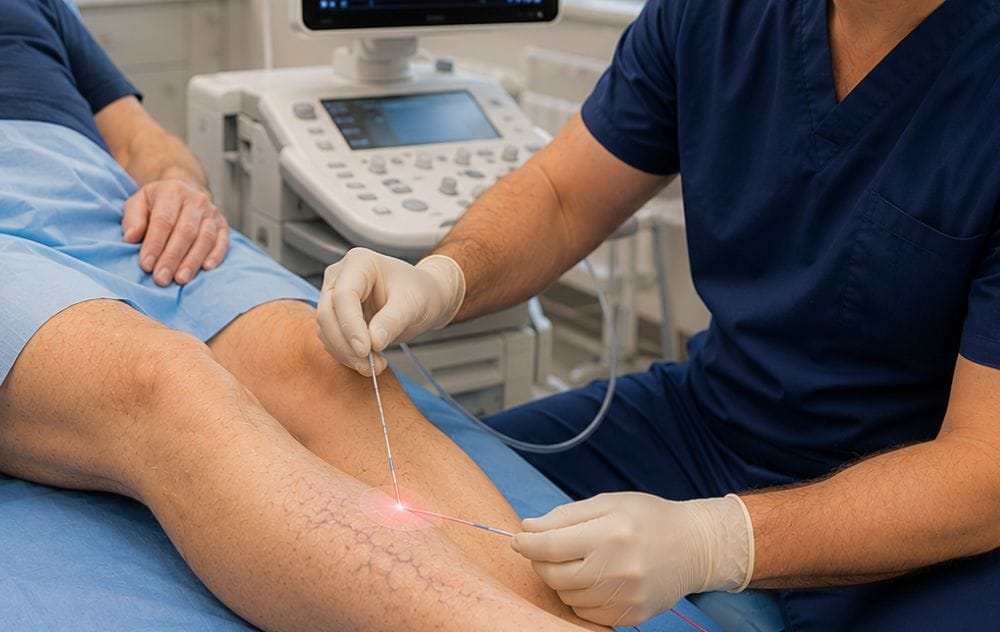
Treatment for burning varicose veins typically involves sealing the affected vein so blood can reroute through healthier veins nearby. USA Vein Clinics offers several varicose vein treatment options performed on an outpatient basis, without general anesthesia and with minimal recovery time.
Endovenous Laser Treatment (EVLT) uses targeted laser energy to seal the faulty vein from the inside. Radiofrequency Ablation (RFA) achieves the same result using radiofrequency energy. VenaSeal uses a medical-grade adhesive to close the vein. For smaller or branching varicose veins, ultrasound-guided sclerotherapy, Varithena, or ClariVein may be recommended depending on the pattern and severity of reflux.
A vein specialist determines the right approach after reviewing your duplex ultrasound results and discussing your symptoms. Most procedures take under an hour and allow patients to walk immediately afterward. Burning, heaviness, and swelling may begin to improve as circulation restores through the treated area.
Next Step
Find Out Whether Your Burning Is Caused by Vein Disease
Burning varicose veins rarely improve on their own when underlying vein disease is the cause. The longer venous reflux goes unaddressed, the more symptoms can develop.
A vein specialist can evaluate your symptoms, perform a duplex ultrasound, and discuss which minimally invasive treatment may be right for your situation. Find a location near you to take the next step.
FAQs About Burning Varicose Veins
- Cleveland Clinic. Venous Insufficiency. my.clevelandclinic.org/health/diseases/16872-venous-insufficiency
- National Heart, Lung, and Blood Institute. Varicose Veins. nhlbi.nih.gov/health/varicose-veins
- American Venous Forum. Chronic Venous Insufficiency Overview. venousforum.org
- Journal of Vascular Surgery. Chronic venous disease and venous hypertension: clinical classification and pathophysiology. 2020.
Medical disclaimer: This content is educational and informational only. It does not constitute medical advice, diagnosis, or treatment recommendations. Always consult with a qualified healthcare provider before making health decisions. USA Vein Clinics and its physicians are not responsible for actions taken based on this information.