

Philadelphia Eagles quarterback Jalen Hurts‘ diagnosis of deep vein thrombosis (DVT) and bilateral pulmonary embolism (PE) has brought national attention to the potentially life-threatening complications of blood clots.
According to an October 19, 2026, statement from the Philadelphia Eagles and Hurts’ agent, the quarterback was initially diagnosed with a superficial blood clot in his left calf. [1] Further medical testing confirmed DVT and blood clots in both lungs. Hurts was reported to be clinically stable and undergoing treatment.
His diagnosis highlights an important health concern: blood clots can affect anyone, including young, physically active individuals.
What Is Deep Vein Thrombosis (DVT)?
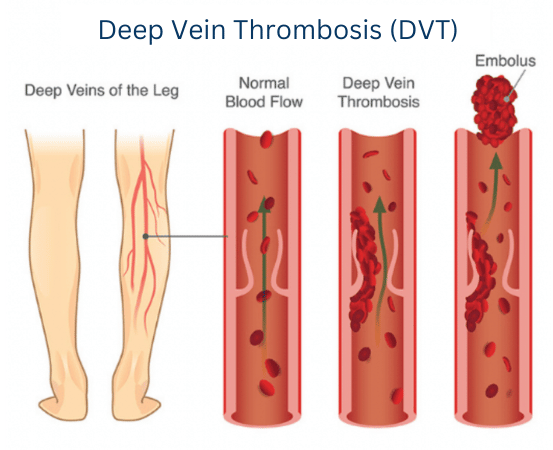
Deep vein thrombosis (DVT) occurs when a blood clot forms in a deep vein, most commonly in the leg.
DVT can become life-threatening if part of the clot breaks loose and travels to the lungs, causing a pulmonary embolism (PE).
Some people experience noticeable symptoms, while others may have few or no warning signs.
What Are the Early Warning Signs of DVT?
Common symptoms of a blood clot in the leg include:
- Swelling in one leg
- Calf pain, tenderness, or cramping
- Warmth in the affected area
- Redness or unusual skin discoloration
Although these symptoms can overlap with other vein conditions, including varicose veins, DVT requires urgent medical evaluation.
Emergency warning: Sudden shortness of breath, chest pain, coughing up blood, or fainting may indicate a pulmonary embolism. Call 911 immediately if these symptoms occur.
What Increases the Risk of Deep Vein Thrombosis?
DVT can develop when blood flow slows, the blood becomes more likely to clot, or a blood vessel is injured.
Common risk factors include:
- Prolonged immobility, including extended travel or bed rest
- Recent surgery or physical injury
- Pregnancy and the postpartum period
- Certain hormonal medications
- Cancer and some inherited clotting disorders
- Smoking and obesity
Understanding your personal risk factors and recognizing potential symptoms can help you seek medical attention when necessary.
How Can You Reduce Your Risk of Blood Clots?
While not every blood clot can be prevented, certain habits may help reduce the risk:
- Move regularly and avoid prolonged periods of immobility.
- Exercise consistently to support healthy circulation.
- Maintain a healthy weight.
- Avoid smoking.
- Discuss personal risk factors and medications with your healthcare provider.
- Use compression stockings when recommended by a qualified medical professional.
Individuals with a history of blood clots or additional risk factors should discuss personalized prevention strategies with their healthcare provider.
Understanding Your Vein Health Matters
Jalen Hurts’ diagnosis is an important reminder that serious blood clots are not limited to older or inactive individuals.
Recognizing symptoms, understanding risk factors, and seeking timely medical evaluation are essential steps in protecting your health.
To learn more about DVT, its symptoms, and treatment options, visit the USA Vein Clinics Deep Vein Thrombosis Resource Center.
For non-emergency concerns about chronic vein symptoms, you can also explore USA Vein Clinics.
- https://www.philadelphiaeagles.com/news/eagles-and-jalen-hurts-agent-nicole-lynn-provide-an-update-on-qb-jalen-hurts?