
Medically reviewed by
USA Vein Clinics Medical Review Team
Experienced physicians specializing in venous disease
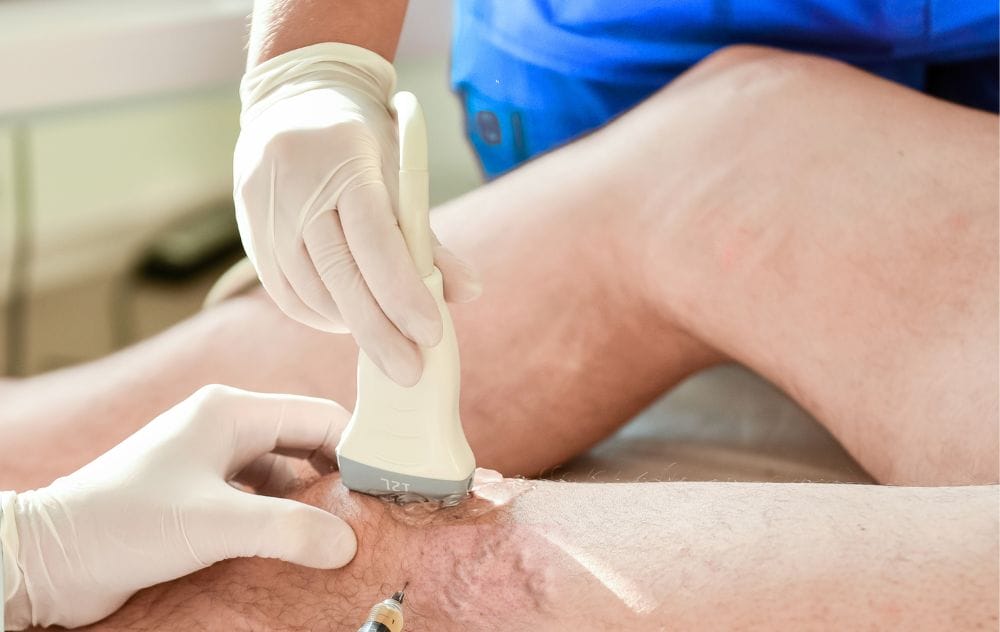
Ultrasound-guided sclerotherapy (UGS) is used to treat varicose veins that are too deep beneath the skin to be seen or treated visually. Using real-time ultrasound imaging, your vein specialist can accurately identify these veins and deliver targeted treatment.
One of the most common forms of this procedure is ultrasound-guided foam sclerotherapy (UGFS), which uses a specialized foam solution to close diseased veins and redirect blood flow to healthier veins. UGFS has been used throughout the United States for more than 20 years and is recognized as a safe and effective treatment for many venous conditions.1
If you have vein disease, also called venous insufficiency, you may deal with swelling, aching, or heaviness. Standing or walking can feel uncomfortable. UGS may help improve circulation and help you find relief.
Below, you’ll learn how ultrasound-guided sclerotherapy works, how it compares with other vein treatments, and what you can expect if your doctor recommends this procedure.
What Is Ultrasound-Guided Sclerotherapy?
UGS is a minimally invasive vein treatment. It treats varicose veins and other signs of venous insufficiency, especially when the veins sit deep in the tissue rather than close to the skin. A vein specialist uses duplex ultrasound to map these deep veins before treating them. This makes UGS a good fit for complex, winding networks of small veins that feed into bigger ones.
Visual sclerotherapy, by comparison, treats spider veins and small varicose veins near the surface without imaging. Learn more about visual sclerotherapy to see how it differs. EVLT is usually used for bigger trunk veins. A vein specialist can help you decide which approach, or mix of approaches, fits your case after reviewing your symptoms and ultrasound results.
How Does Ultrasound-Guided Sclerotherapy (UGS) Treat Varicose Veins?
UGS treats moderate to severe vein disease in the legs. It closes bad veins from the inside. First, a vein specialist uses ultrasound to map the diseased veins and plan treatment. Next, they inject a sclerosant solution into the affected veins. This solution irritates the vein wall and causes the vein to collapse and seal shut. Blood flow then moves to healthy, nearby veins. Over time, the treated vein is absorbed by the body. There is no need to remove it with surgery.
UGS is an outpatient procedure. It typically takes under fifteen minutes per session. It uses local numbing, not general anesthesia, so downtime is minimal. After treatment, your provider places a bandage over the injection site. Most patients can drive home, return to work, and resume light activity the same day.
How Effective Is Ultrasound-Guided Sclerotherapy?
UGS can help treat small to moderate varicose veins and related symptoms of vein disease. Research on this treatment shows that results can vary by vein size and type.2 Smaller veins tend to respond better than larger veins. Some patients need more than one session to fully treat their veins, especially when veins are larger or the case is more advanced. A vein specialist can help determine whether you are a good candidate and how many sessions you may need.
What Is the Recovery Like for Ultrasound-Guided Sclerotherapy?
Recovery from UGS is usually straightforward. You can typically return to normal daily activities the same day, though your vein specialist may ask you to avoid heavy exercise, hot baths, and prolonged sun exposure on the treated area for a short time. Wearing compression stockings as directed helps the treated vein stay sealed and supports healthy circulation while it is absorbed by the body.
Some mild bruising, tenderness, or discoloration at the injection site is common and usually fades within a few weeks. Walking regularly after treatment is encouraged, since it helps blood flow through the deeper veins. Full results can take several weeks to appear, and larger veins may take longer to fade than smaller ones. Your vein specialist will let you know what to expect for your specific case and when to schedule a follow-up.
UGS vs. Other Vein Treatments
Choosing between UGS, EVLT, RFA, and visual sclerotherapy depends on where your veins sit and how they look on ultrasound. UGS usually treats deeper, non-visible veins and complex branching networks. EVLT and RFA usually treat bigger, straighter trunk veins closer to the surface, using laser or radiofrequency energy to close the vein. Visual sclerotherapy treats small, visible spider veins without imaging.
UGS isn’t typically used to treat spider veins directly. It’s used to treat the deeper, non-visible feeder veins that are causing the spider veins to persist or recur. If you treat only the visible spider vein with visual sclerotherapy, without addressing a larger reflux source feeding it, the spider veins are more likely to return. UGS closes that hidden source.
Unlike traditional vein stripping, which involves surgical incisions, general anesthesia, and a longer recovery, these minimally invasive procedures are performed in an outpatient setting using only local numbing. There is no need to surgically remove the vein. It is simply closed off and naturally absorbed by the body over time.
Our guide to comparing sclerotherapy and laser treatment covers these differences in more detail, including recovery time for each. Underlying vein disease, also called chronic venous insufficiency (CVI), is the root cause behind most veins that need this kind of treatment.
Vein Treatment Options
Real Relief Starts With the Right Diagnosis
We understand that choosing a vein treatment can feel overwhelming. That is why our specialists are committed to ensuring patients feel informed. We take the time to explain the condition, review your treatment options like USG, and help determine the best approach for your individual needs.
USA Vein Clinics offers minimally invasive, outpatient vein treatments performed without general anesthesia and with minimal downtime. A vein specialist can evaluate your symptoms and discuss which treatment may be right for you.
Frequently Asked Questions
- Centers for Medicare & Medicaid Services (CMS). Local Coverage Determination (LCD): Sclerotherapy for Varicose Veins and Telangiectasia. cms.gov, LCD ID 39121.
- Peer-reviewed vascular surgery literature on ultrasound-guided sclerotherapy outcomes, indexed on PubMed (National Institutes of Health).
- American College of Phlebology. Patient Guide to Varicose Veins.
Medical disclaimer: This article provides educational information about vein disease and treatment options. It is not a diagnosis or medical advice. Only a qualified vein specialist can determine whether you have vein disease or recommend appropriate treatment. If you have leg swelling, pain, or other vascular symptoms, consult a healthcare provider or contact USA Vein Clinics for an evaluation.